Portuguese
  Spanish


Minister says negotiation with Mota-Engil is advanced and foresees resumption of works in 2026, along with a new deadline for section delivery by 2033.
The federal government is working to unlock Fiol 1, one of the most sensitive sections of the East-West railway corridor, and the current bet is on Mota-Engil. According to agenciainfra.com, the Minister of Transport, George Santoro, stated that the Portuguese group is awaiting authorization from ANTT to take over the concession currently controlled by Bamin, which has not been fulfilling the planned works.
The movement could change the pace of a project that has become a key piece for logistics in the Northeast and for the connection with Porto Sul, in Ilhéus (BA). Santoro said that the procedures with the regulator are “well advanced” and that the expectation is to sign the addendum by August, with resumption of works still in 2026.
The plan also brings a number that shows the weight of the bet: about R$ 7 billion in investments, including the development of Porto Sul. According to the outline presented by the minister, the delivery of the section is expected by 2033.
-
Global Food Prices Drop for Second Consecutive Month, but Meat Hits Record High and Vegetable Oils Rise Again, Despite Relief from Sugar, Cereals, and Dairy

-
Brazil’s Tax Authority Unveils 2026 Income Tax Data, Highlighting Professions with Highest Average Declared Wealth
-
Brazilian President Urges Citizens to Brace for Gasoline Price Changes Following Petrobras Chief’s Remarks on Upcoming Adjustments
-
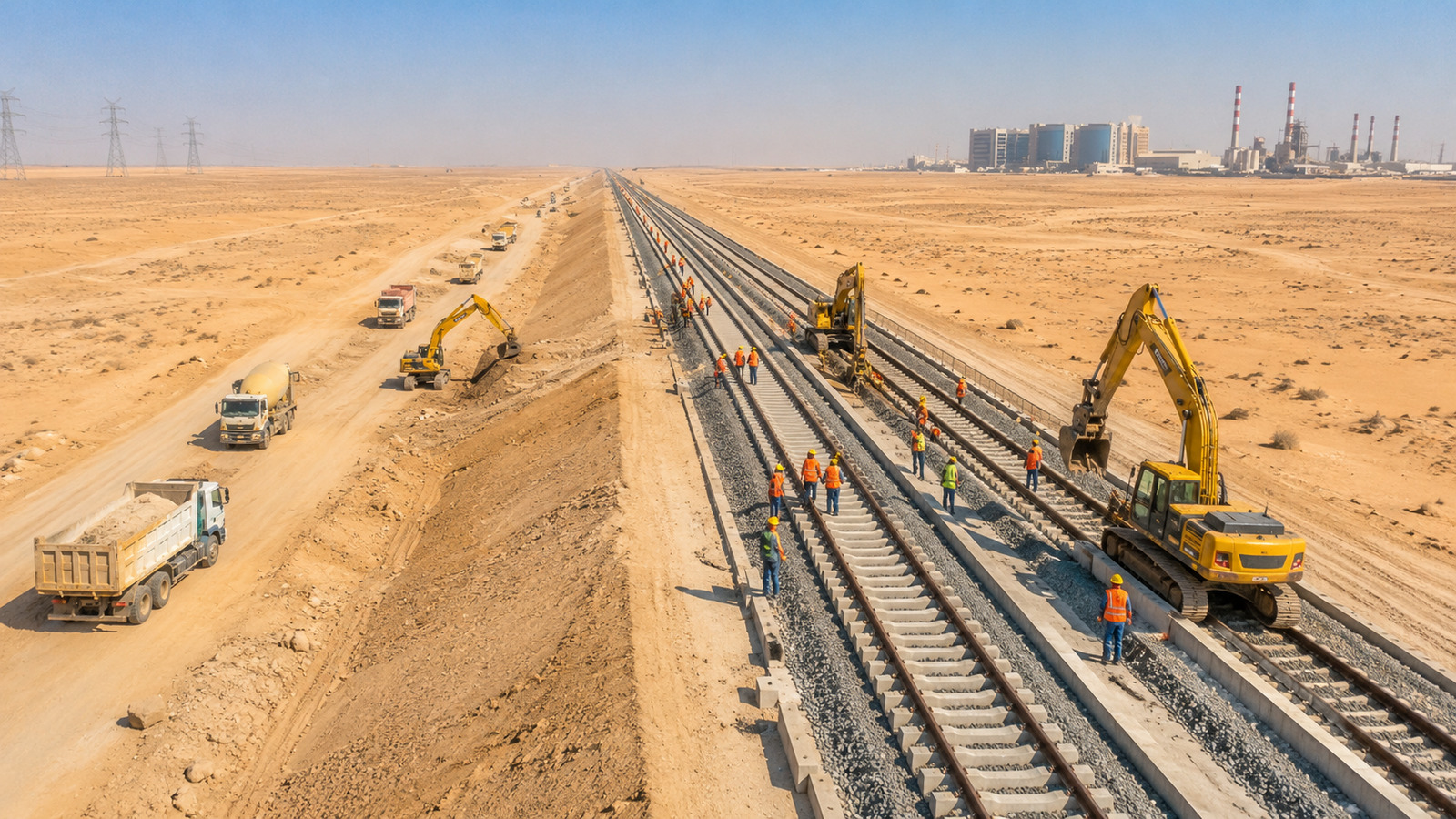
Saudi Arabia to Connect Border with Kuwait to UAE with Massive 672 km Railway as Part of 2,186 km Megaproject to Transform Gulf Transport


Negotiation advances with deadline for signing by August
Santoro stated that the operation to transfer the concession is at an advanced stage at ANTT. The future entry of Mota-Engil depends on this regulatory step, and after that, the process will still proceed to analysis by the Federal Court of Accounts.
The section is currently with Bamin, which was cited by the minister as being in default with the works. The potential change of operator is seen as an attempt to get the project back on track after successive delays and uncertainties surrounding its execution.
Mota-Engil has the Chinese CCCC as a shareholder, a factor that reinforces the government’s view that the project can attract foreign capital for the railway and the enterprises associated with the corridor.
R$ 7 billion and the bet on a railway that depends on Porto Sul
The amount mentioned by Santoro includes the connection with Porto Sul, in Ilhéus, a point considered decisive for the viability of the corridor. Without the port, the attractiveness of the future railway network is weaker, according to the assessment presented by the ministry itself.
The Fico-Fiol corridor comprises sections at different stages and depends on a sequence of works and decisions to come to fruition as an integrated system. Therefore, the resumption of Fiol 1 is not just an isolated work: it affects the financial and logistical engineering of the entire project.
The government’s official estimate is that the works could resume in 2026, but the total completion of the corridor is still treated as a long-term goal. Santoro mentioned the forecast for the section’s delivery by 2033 and, for the entire network, a deadline between 2037 and 2038.
Railway corridor still depends on other stages to gain scale
In January, the Ministry of Transport completed the final concession project for Fico-Fiol, called the East-West railway corridor, and sent the modeling to ANTT. After the regulator’s analysis, the proposal will still have to pass through the TCU.
The design follows the structure taken to public consultation last year, but without including the Fiol 1 section. Fiol 2, between Caetité and Barreiras (BA), adds up to almost 500 kilometers and is under construction by the federal government.
After that, the plan foresees the activation of Fiol 3, up to Mara Rosa (GO), with almost 900 kilometers. From there, Fico 1 enters, with 364 kilometers to Água Boa (MT), and then Fico 2, to Lucas do Rio Verde (MT), which should remain as a non-mandatory investment of the future concession.
Government tries to unlock a network that can reach five ports
In his speech this Tuesday, Santoro also emphasized that the fully operational railway could transport cargo to at least five existing ports: Itaqui (MA), Aratu (BA), Vitória (ES), Rio de Janeiro (RJ), and Santos (SP), in addition to the projected port for Ilhéus.
It is precisely this breadth that makes the government treat the corridor as a strategic piece. If the structure comes to fruition, it tends to enhance the connection between production areas and port terminals, as well as reduce bottlenecks in different regions of the country.
Meanwhile, the Ministry of Transport is still working to fit the next stages of the project into the concession calendar. Also this week, the government is expected to announce a new BNDES financing line aimed at the railway sector, in a move that could attract new investors for long-term works.
The progress of Fiol 1 has become a kind of test for the future of the East-West railway corridor. If the negotiation with Mota-Engil materializes, the government gains a concrete chance to get the project moving; if it stalls, the railway remains surrounded by the same doubts that have been delaying its consolidation.
If you follow infrastructure, railways, and investments in the country, it’s worth keeping a close eye on this negotiation — and sharing your thoughts on the possible change in the comments.