





 Portuguese
  English
  Spanish
  3 min of reading
  0 comments


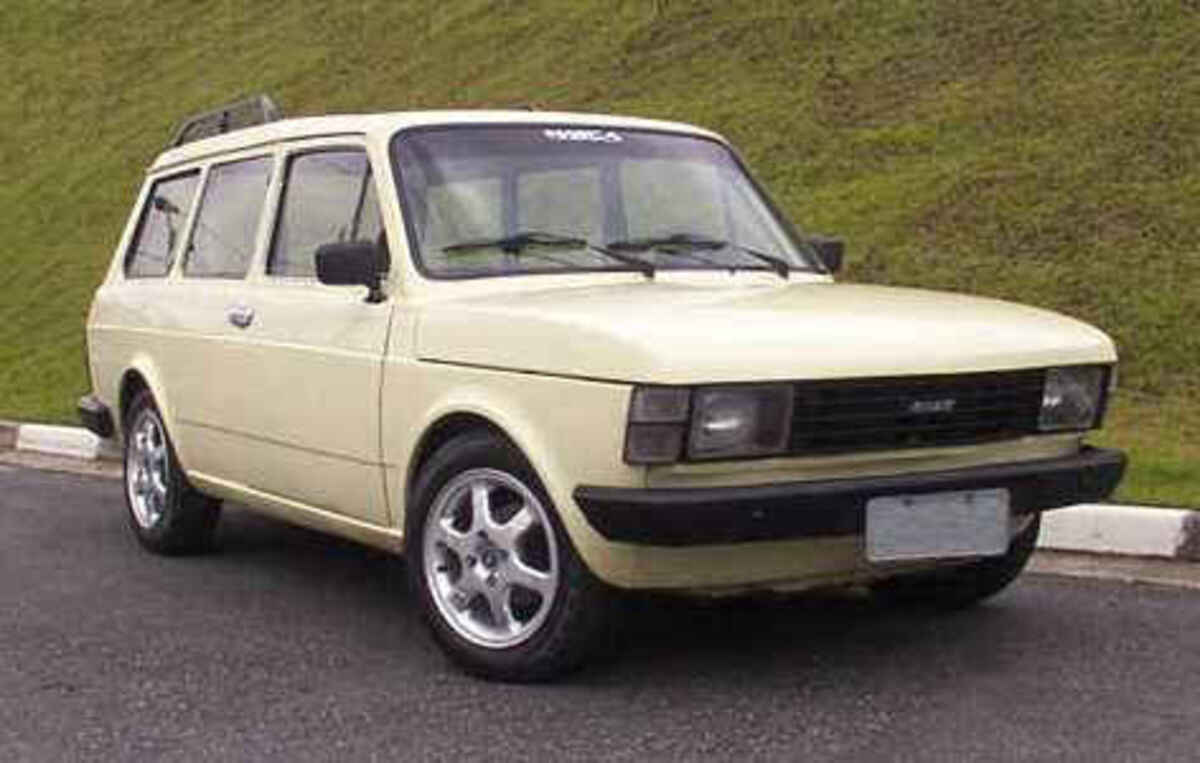
Fiat Panorama Completes 45 Years As A Symbol Of Italian Innovation In Brazil And A Milestone In The National Compact Station Wagon Segment
In 1980, Fiat launched the Fiat Panorama in Brazil, its first national compact station wagon. With this, the Italian brand took an important step in the Brazilian automotive market, entering a booming segment at the time. The model, derived from the Fiat 147, brought innovative solutions for the time, combining generous interior space with modern mechanics.
First Station Wagon From Fiat In The Country
The Fiat Panorama appeared four years after Fiat debuted in Brazil. The brand already had the 147 and its commercial versions, such as the Pickup and the Van. The novelty was the Panorama, which debuted with the first restyling of the 147 line, called the Europa line.
It had a modern design, excellent space utilization, and good urban performance. It was designed for families and small businesses that needed space but did not want to give up the economy and practicality of a small car.
-
A war machine of over 10,000 tons, capable of destroying entire cities, cannot simply become scrap, and dismantling a retired nuclear submarine has become one of the most dangerous industrial operations on the planet, with radioactive reactors that need to be buried for centuries.

-
Labor shortage concerns return to Canada: retirements are already removing 25,500 workers per month from the market, and the country may face a lack of workers again even with unemployment still high.

-
In Brazil, fishermen become “cleaners” of the mangroves and remove 46 tons of trash in an attempt to revive natural nurseries suffocated by plastic, tires, sofas, and more than 1 million discarded items in the bays of Guanabara and Sepetiba.

-
A Canadian who has lived in Sri Lanka, India, and Portugal chose the small town of Timbó, in the interior of Santa Catarina, to raise his three children, attracted by the safety and climate, in a sincere account of the advantages and also the limitations of life as a foreigner in southern Brazil.


Space And Functionality As Highlights
Based on the Fiat 147, the Panorama was 18 centimeters longer. The rear section featured a raised roof, ensuring more comfort and spaciousness. The name Panorama referred to the large glazed area of the body, which increased the feeling of space.
One of the advantages of the model was the trunk: with 730 liters to the ceiling, and up to 1,440 liters with the rear seat folded down. The spare tire was located in the front, alongside the engine, freeing up even more space in the back.
Mechanical Improvements And Urban Performance
The car featured technical advancements. The rear suspension was softer, and the transmission received a new lubrication system, which improved driving smoothness.
Since the Panorama was heavier—about 25 kg more than the 147—it used the 1.300 engine. In the gasoline version, it had 61 hp and 9.9 kgfm of torque. With ethanol, it delivered 62 hp and 11.5 kgfm.
Evolution In Design And Finishing
In 1983, the model underwent updates. It received changes from the Spazio line: plastic bumpers, larger side moldings, and a new dashboard.
It gained a five-speed transmission and two finishing versions, called C and CL. The alterations added more sophistication to the visual appeal and improved internal comfort.
End Of Production And Legacy
The production of the Fiat Panorama ended in 1986. The reason was the arrival of the Fiat Elba, a station wagon derived from the Uno line. Even with a short trajectory, the Panorama was a pioneering model.
It paved the way for other successes of the brand in this segment, such as the Tempra SW, Palio Adventure, and Marea Weekend. The Panorama helped consolidate Fiat in the Brazilian station wagon market.
With information from Stellantis.






Be the first to react!