






 Portuguese
  Spanish


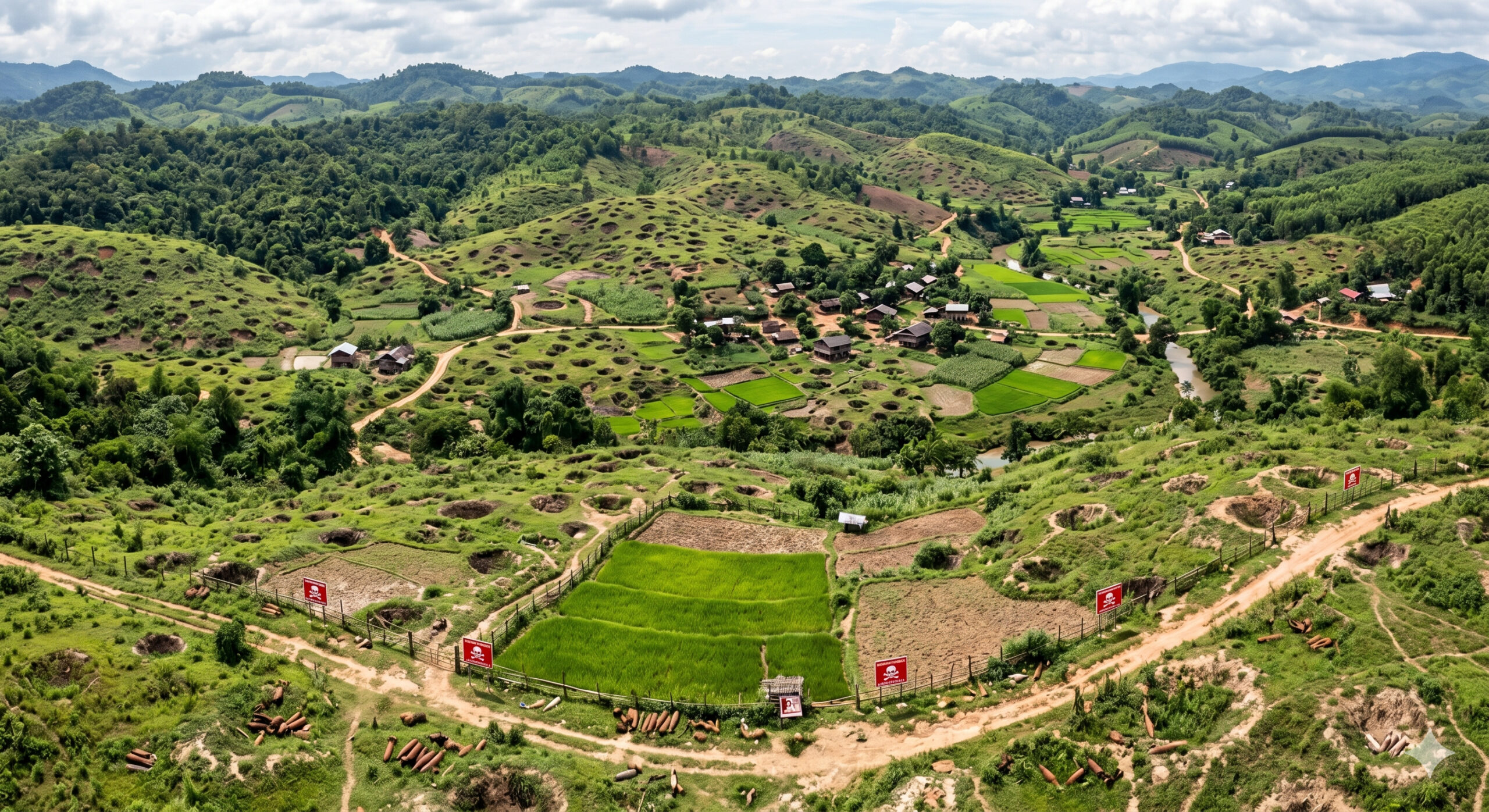

Laos still lives with about 80 million unexploded bombs that contaminate the soil, threaten crops, and maintain one of the largest active war legacies in the world.
In 2026, the Democratic People’s Republic of Laos remains among the countries most affected by explosive remnants of war in the world. In a study released by UNDP on January 29, 2026, the organization states that the country still lives with about 80 million unexploded submunitions, scattered across the territory since the bombings carried out between 1964 and 1973 during the conflict in Southeast Asia.
These artifacts, classified as UXO by the national UXO Lao initiative, are not just historical remnants. They remain active, unstable, and potentially lethal, primarily affecting rural communities and farmers who depend on the land for planting, circulation, and survival. In a statement published by UNDP on July 11, 2025, the country’s demining sector reported that contamination still restricts the safe use of land and continues to require large-scale clearance operations to free areas for agriculture, infrastructure, and livelihoods.
Massive bombings left one of the largest fields of unexploded explosives on the planet
During the war, Laos was the target of one of the most intense bombing campaigns in history. It is estimated that more than 2 million tons of explosives were dropped on the country, particularly cluster bombs that released hundreds of small submunitions.
-
Award-Winning Japanese Restaurant Reveals It Has Preserved Part of the Same Frying Oil for 66 Years

-
American Youth Transforms from Severe Obesity to U.S. Air Force Enlistment, Losing 90 Kilograms in Two Years
-
11-Year-Old Entrepreneur Sells 60 Homemade Sweets Daily, Mastering Cost Calculation, Social Media Promotion, and Client Negotiation Since Age 7

-
Peruvian Mountain’s 5,200 Aligned Holes May Unveil Ancient Indigenous Market for Corn and Cotton


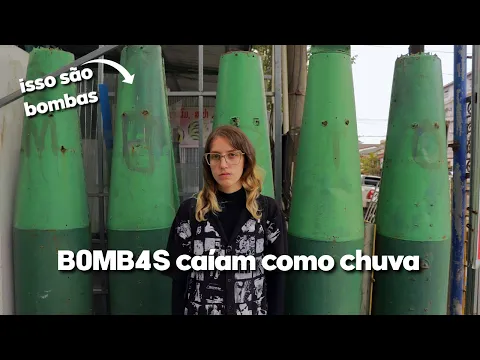

A significant portion of these submunitions did not explode upon impact, remaining buried or partially exposed in the soil.
Decades later, these devices remain present in agricultural fields, forests, and inhabited areas, creating a scenario where the war past remains physically active in the daily lives of the population.
The density of UXOs in some regions is so high that basic activities, such as plowing the land, building houses, or opening roads, become risky operations.
Degradation of explosives raises concerns about the release of heavy metals in the soil
Over time, the metal casings and chemical components of buried munitions begin to deteriorate.
This process can release potentially toxic substances into the environment, including heavy metals present in the composition of some explosives and their coatings. Among the elements associated with this type of contamination are:
- Lead
- Cadmium
- Arsenic
The presence of these metals in the soil is a cause for concern, as they can accumulate in agricultural environments and pose risks to human health when they enter the food chain.
However, it is important to highlight that there is no robust scientific consensus that directly and generally proves that this contamination from UXOs is being absorbed by crops such as rice on a large scale in Laos.

Environmental studies indicate that contamination by heavy metals can occur in specific areas, but the extent and direct impact on food are still subjects of research.
Agriculture under constant risk turns food production into a dangerous activity
Agriculture in Laos, especially rice production, heavily relies on land that, in many cases, is contaminated by UXOs.
This creates a unique situation in the world: agricultural fields that simultaneously function as productive areas and explosive risk zones.

Farmers often report the presence of artifacts during routine activities, such as:
- Soil preparation
- Planting
- Harvesting
In addition to the immediate risk of explosions, this reality limits the full use of the land, reducing productivity and restricting rural development.
Thousands of hectares remain unused or underutilized due to the presence of explosives, even decades after the end of the conflict.
De-mining programs are advancing, but the pace is still insufficient
Since the end of the war, international and national efforts have been made to clear the territory. Organizations such as:
- UXO Lao
- UNDP
- MAG (Mines Advisory Group)
work on the identification and removal of explosives.
Despite the progress, the pace of demining faces significant challenges, including:
- High cost of operations
- Technical complexity
- Geographical extent of the problem
Estimates indicate that, at the current pace, it may take decades for the country to be completely free of these artifacts. This scenario prolongs the impact of the conflict long after its official end.
Human impact continues to be one of the most severe in the world
Laos has recorded, for decades, accidents related to UXOs, many of which involve civilians. Children and farmers are among the most vulnerable groups, often exposed to risk during everyday activities.
The effects of these accidents include:
- Deaths
- Amputations
- Permanent injuries
The legacy of unexploded bombs is not only environmental or economic but deeply human, affecting generations born long after the end of the war.
Environmental contamination is still a subject of study and scientific debate
Although the presence of heavy metals in soils contaminated by military activities is recognized in various global contexts, in the specific case of Laos, the direct relationship between UXOs and large-scale food contamination has not yet been fully established.
Research indicates that:
- The degradation of explosive materials can release contaminants
- The mobility of these elements in the soil depends on factors such as pH, moisture, and soil composition
- The absorption by plants varies according to species and environmental conditions
This means that the risk exists, but cannot be generalized without specific scientific evidence for each region. Transparency on this point is essential to avoid exaggerated or unproven interpretations.
Laos becomes a global symbol of the long-term effects of war
The situation in Laos is often cited as an extreme example of how armed conflicts can leave lasting impacts.
Even after more than 50 years, the country still faces direct consequences from past military decisions.
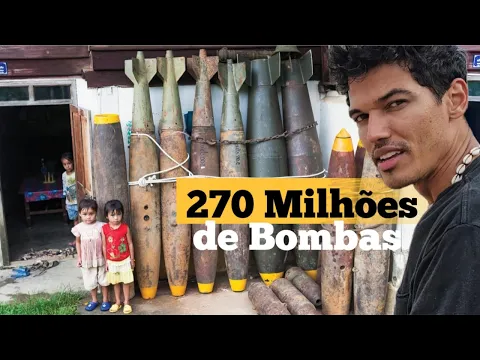
The presence of millions of active explosives turns the territory into one of the largest examples of a war that has never completely ended.
This scenario also raises debates about international responsibility, reparation, and funding for cleanup and victim assistance programs.
What is at stake for the future of the country
The removal of UXOs is considered essential for the development of Laos. Without complete cleanup of the territory, the country faces limitations in areas such as:
- Agriculture
- Infrastructure
- Urban expansion
- Foreign investments
Each bomb removed represents not only the elimination of a risk but the release of an area for productive use.

Progress in this process could determine the pace of the country’s economic growth in the coming decades.


