Portuguese
  Spanish


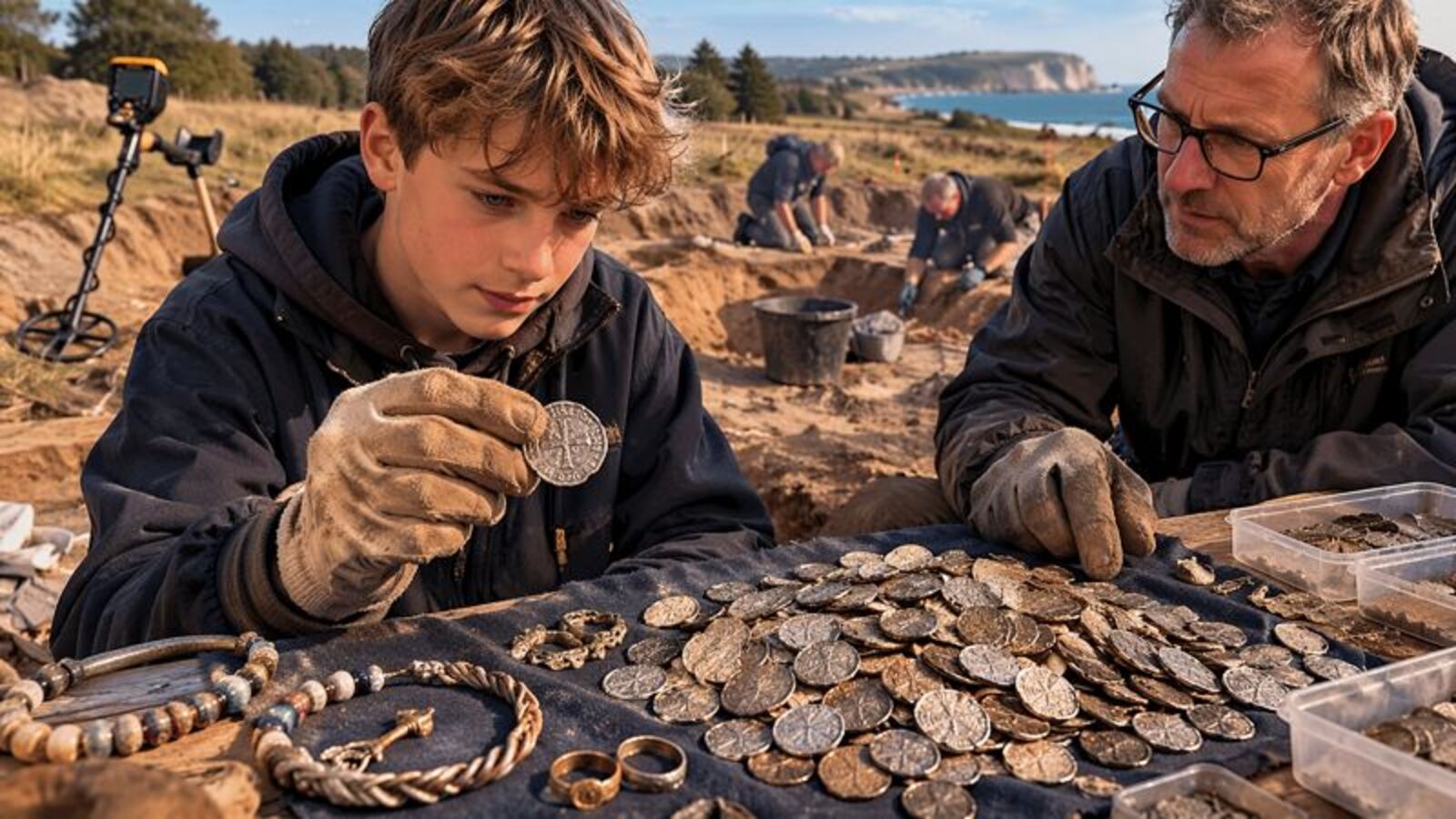

Findings made by detectorists on the island of Rügen revealed almost 600 coins and Viking objects linked to Harald Bluetooth, turning a search into a historical discovery
In January 2018, a detectorist and his student found Viking silver on the island of Rügen, Germany, paving the way for an excavation that revealed almost 600 coins and objects linked to King Harald Bluetooth.

Find in the field of Rügen
Rene Schoen and Luca Malaschnitschenko were spending a weekend in Rügen, using a metal detector near a field, as many amateurs do.
The device indicated a point, and the two picked up something that seemed like just dull aluminum.
-
Iraq floats and sinks under an arm of the Euphrates 10 giant concrete boxes of 46,000 tons and 125 meters each to assemble a 2.4 km submerged tunnel and open a new land route between Asia and Europe.

-
Scientists use more than 20,000 artificial birds and solar speakers to “trick” seabirds, reactivate nesting routes, and revive a colony on an island that seemed abandoned.

-
She spent 73 years breathing inside an iron lung, survived the aftereffects of polio, and became the last woman in the United States dependent on the equipment before dying at 78 years old.
-
Brazilian students created a $1 filter using pine bark, cotton, and 3D-printed parts to clean cassava wastewater, reduce the toxicity of a hazardous waste, and transform contaminated water into biofertilizer.




After looking closer, they realized it was not scrap. The piece was Viking silver. The find, small at first glance, ended up initiating a full excavation on the Baltic coast, one of the most significant in recent years in the region.
Viking treasure: What came out of the earth
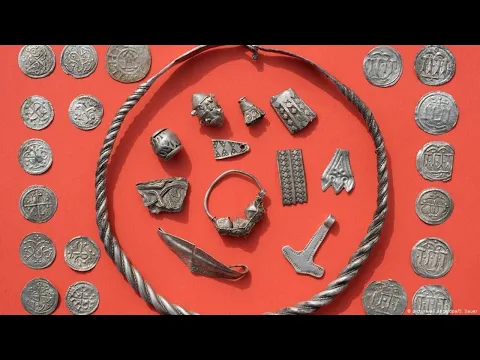
With the professional excavation, archaeologists found necklaces, pearls, rings, and almost 600 coins.
The discovery turned a weekend outing into a medieval treasure, associated with one of the most well-known names in the Viking world.
Some of the coins were dated directly from the reign of Harald Bluetooth, who ruled Denmark from 958 to 986 AD. Some pieces are ancient, with examples dating back to the 8th century.
The oldest coin recovered is a dirham from Damascus dated 714. The most recent is a penny from 983.
Among the almost 600 coins, about 100 specifically belong to the period of Harald Bluetooth.
These coins stand out because they are among the first from Denmark to feature Christian crosses.
This detail reinforces the importance of the material and helps situate the Viking treasure at a decisive moment in the medieval history of Northern Europe.
Direct link to Harald
The excavation director, Michael Schirren, classified the discovery as the largest found with Bluetooth coins in the southern Baltic Sea region.
For archaeologists, this makes the collection extremely important for understanding that period.
Experts believe that the Viking treasure may have been buried during a crisis. One hypothesis is that this occurred when Harald fled Denmark after his son, Svein Forkbeard, took power in the 980s.
Previous finds of treasures on nearby islands strengthen the idea that Harald Bluetooth and his followers hid valuables during their escape.
There is no confirmation of this, but the dating of this set makes this possibility plausible.
From the King to Bluetooth Today
The name of the Bluetooth technology was born in honor of King Harald. In 1997, two engineers working on a wireless standard were reading about Vikings and adopted Bluetooth as the codename for the project.
The official name considered at the beginning was PAN, but it was seen as too generic to stand out in search engines.
Jim Kardach, an engineer at Intel, recalled that the group decided to launch the SIG using the codename Bluetooth.
Harald received this nickname because of a dead tooth with a bluish hue. Over eleven centuries, this detail connected a Viking king to a technological protocol used worldwide to this day.
With information from Daily Galaxy.