Portuguese
  Spanish


Silent film released in 1926 followed Polynesian customs, marked Robert Flaherty’s trajectory, and returned to debate because of the Disney franchise
Released in 1926, the silent film was directed by American filmmaker Robert Flaherty and presented a depiction of life in Samoa.
The work also gained historical importance for helping to popularize the use of the word “documentary” in cinema.
-
Study in Barcelona Reveals Giraffes Can Add Quantities and Memorize Changes, Surprising Scientists

-
After Losing 16-Year-Old Son in Accident Caused by Pothole, Merchant Takes Action by Mapping Road Defects and Filling Around 1,500 Potholes in Mumbai Area

-
Dinosaurs Spark Children’s Curiosity, Boost Cognitive and Emotional Development, and Build Essential Future Skills
-
From Orphan to Leader: Geraldo Now Runs One of Latin America’s Largest Truck Recycling Companies



Interest in the feature grew again before the premiere of the live-action version of Moana, scheduled for July 10, 2026.
No direct inspiration was officially confirmed by Disney. Even so, historians point out similarities between the two productions.
Robert Flaherty’s success before Moana
Robert Flaherty had already gained recognition with Nanook of the North, released in 1922.
The production followed the daily life of the Inuit and showed scenes of kayaks, ice, and walrus hunting.
The commercial success paved the way for the filmmaker to develop a new project in a distant region.
Flaherty chose Samoa imagining producing an adventure story involving a great sea monster.
The reality found on the islands, however, was quite different from the planned scenario.
According to film historian Bruce Posner, the director found a peaceful community without the imagined danger.
The project ended up being transformed into a portrait of local routine, accompanied by a young man named Moana.
Filming in Samoa lasted more than a year
The recordings were carried out for more than a year on the islands of Samoa.
The material produced did not completely correspond to what the studio expected to receive.
Harmless sea turtles occupied the space that would be destined for threatening creatures.
The narrative began to follow Moana and the members of his supposed family in everyday activities.
Experimental sessions held in New York recorded strong public interest.
The wider commercial release, however, did not repeat the same performance.
A critic of the time stated that the film was interesting but not entertaining.
How Moana Helped Define Documentary Cinema
The production gained historical relevance even without achieving great commercial success.
The Scottish critic John Grierson published an analysis of the film on February 8, 1926, in the newspaper New York Sun.
The review highlighted that the work presented “documentary value”.
The British Film Institute and the Grierson Trust point to this record as the first printed application of the term “documentary” directly related to a film.
Moana was not necessarily the first documentary produced in history.
The work, however, became the first film production publicly associated with the term that would define the genre.
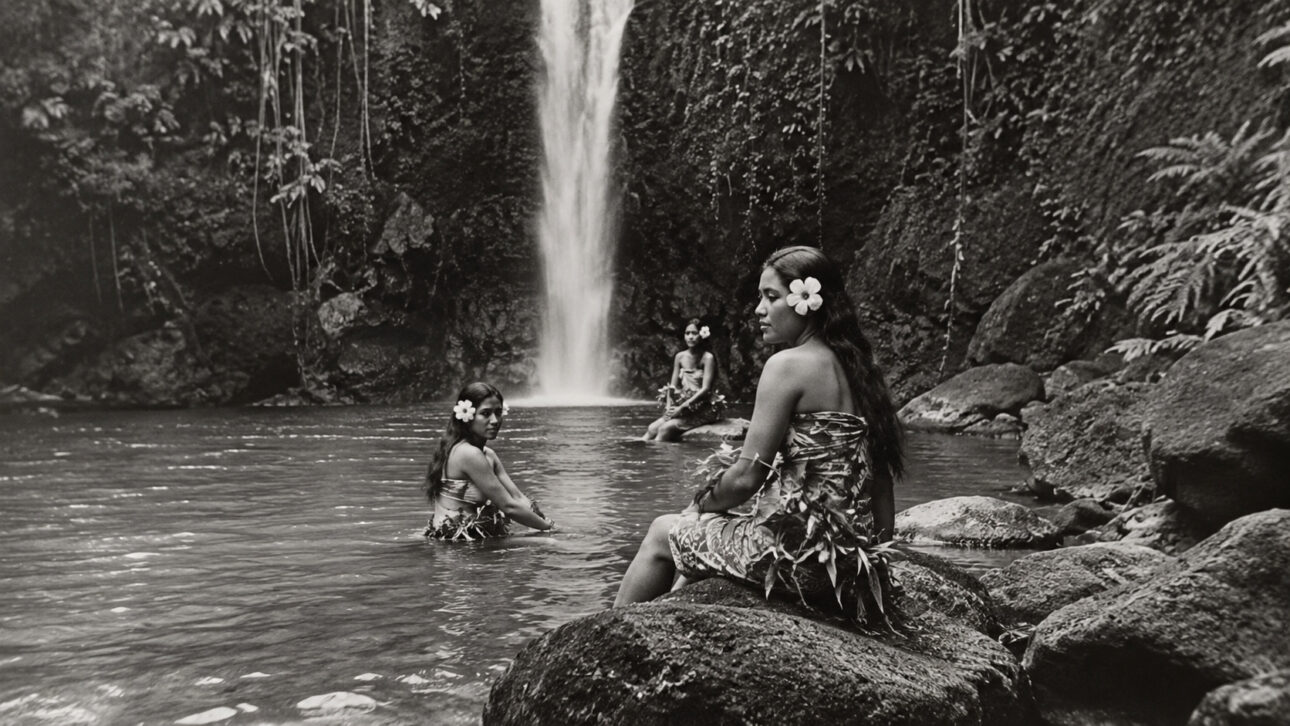
Scenes Were Staged to Reconstruct Ancient Customs
Various situations presented in the film did not happen spontaneously.
Moana and the other members of her “family” were not truly related.
Flaherty chose each participant according to appearance and acting ability.
The name Moana itself was also selected by the director.
Some customs depicted were no longer normally practiced by Samoans during the 1920s.
Residents and elders participated in the reconstruction of these traditions during filming.
The result did not exactly present Samoa of that period.
The production recorded a staged memory of ancient ways of life, reconstructed with the collaboration of the local community.
Residents’ Participation Marked the Production
Frances Flaherty, wife and co-producer of the director, stated that the community actively participated in the work.
Elders of the village helped to recover practices considered ancient or forgotten.
The collaboration allowed the film to present habits that were no longer part of the routine at that time.
The content can be analyzed today as a mixture of cultural record, staging, and artistic interpretation.
The participation of the Samoans also shows that the work was not constructed solely from the director’s perspective.
Did the original Moana inspire Disney’s production?
Researchers identify possible connections between the 1926 film and the franchise created by Disney.
Both productions share the name Moana, the Pacific Ocean setting, and references to Polynesian cultures.
The animation released by Disney on November 23, 2016 was developed with the participation of scholars and experts from the Pacific islands.
Flaherty’s work emerged in a period prior to the current ethical and technical standards of documentaries.
Bruce Posner considers it unlikely that all the similarities are merely accidental.
Direct influence, however, remains without official confirmation.
A century-old film that still sparks debate
Moana remains as a landmark of the presence of Pacific peoples in the history of cinema.
The production also helps to understand how the documentary genre was constructed throughout the 20th century.
The film brings together memory, staging, Polynesian customs, and artistic choices made during the 1920s.
The comparison with the Disney franchise has once again broadened the interest in this century-old work.
Do the similarities between the two productions indicate inspiration or do they represent just a cultural coincidence? Share your opinion!