Portuguese
  Spanish


Lynx M20S model from Chinese DEEP Robotics combines articulated legs, wheels, LiDAR sensors, and IP67 protection to operate in locations where cold, water, mud, altitude, and electrical risk make human presence more dangerous
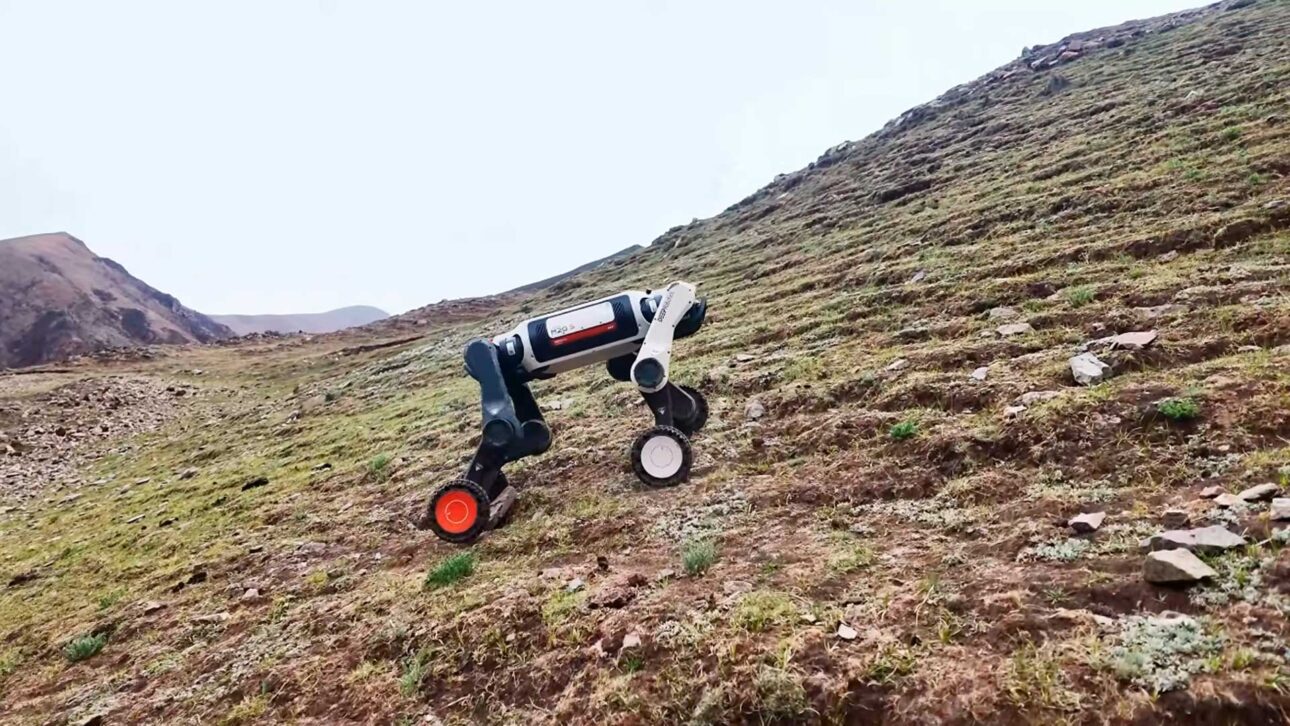
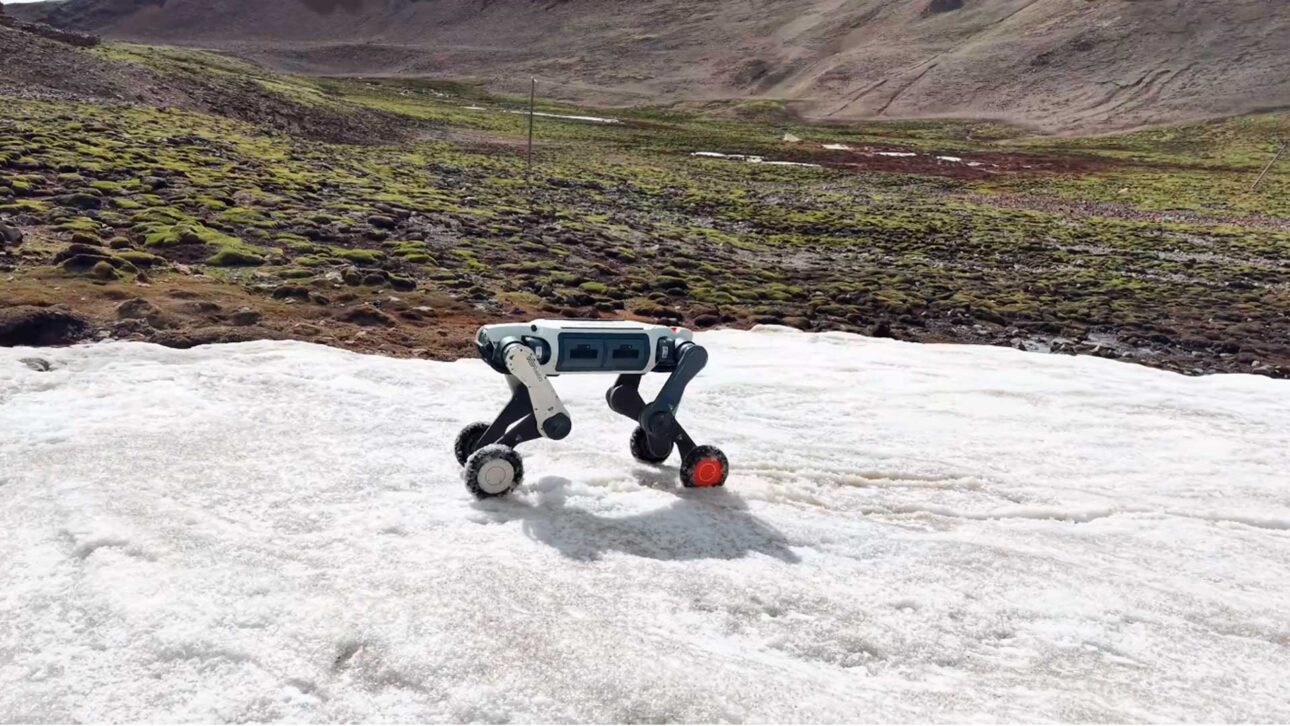
The Lynx M20S, a new robot dog from Chinese DEEP Robotics, caught attention when it appeared in tests crossing flooded sections, ice, and inclined terrain under extreme cold.
The equipment was designed for industrial inspections, emergencies, logistics in difficult areas, and scientific missions in environments where human teams face physical risk.
According to CNN Brazil, in a report published on June 30, 2026, the robot was shown crossing rivers up to 80 centimeters deep, operating at -30 °C, and facing slippery inclines of 45 degrees in a demonstration conducted at an altitude close to 5,177 meters.
-
Researchers Develop “Electronic Nose” to Detect Spoiled Food and Allergen Traces

-
Massive Leak Puts iPhone 18 Pro in Spotlight Months Before Launch as Hackers Release Over 200,000 Confidential Apple Documents

-
Ghost Particle Travels Billions of Years Through Deep Space, Detected in Antarctic Ice, Leads Scientists to Hidden Galaxy 11 Billion Light-Years Away
-
Researchers Identify Factor Influencing Dementia Risk Beyond Age and Genetics


The difference compared to other robotic quadrupeds lies in the wheels installed on the legs. On regular ground, the Lynx M20S can roll faster. When it encounters an obstacle, stairs, mud, or stone, it uses its articulated legs to maintain stability and overcome the terrain.
What seems like a demonstration robot targets an expensive and dangerous routine in companies
The most concrete application of the Lynx M20S is far from curious videos in the snow. The manufacturer positions the model for inspection of electrical networks, industrial areas, tunnels, ducts, plants, flooded zones, and locations affected by disasters.
In these environments, the problem is usually simple and expensive. A technician needs to enter an energized area, walk on uneven ground, measure equipment temperature, check instruments or look for failures after rain, fire, landslide, or operational failure.
According to the technical page of DEEP Robotics, the Lynx M20S measures 820 mm by 430 mm by 570 mm, weighs 35 kg, has a declared payload of 35 kg on conventional terrain, and supports a maximum load of 100 kg. The autonomy without load ranges between 3.5 and 5 hours, with a range of 16 km to 20 km, while the autonomy with payload goes from 2.5 to 3.5 hours, with a distance of 12 km to 15 km.
These numbers explain why the robot is treated as a mobile platform, and not just as a locomotion machine. It can carry cameras, thermal sensors, gas detectors, communication modules, and other equipment used in field inspections.
Wheels on the legs help gain speed without losing stability


The hybrid format is the main technical point of the Lynx M20S. Robots with only legs tend to perform well on obstacles but consume more energy and move slower on flat surfaces. Robots with wheels are efficient on regular surfaces but struggle with steps, stones, tracks, mud, and uneven terrain.
In the Chinese model, both strategies appear together. In industrial corridors, internal roads, substation floors, and tunnels, the wheels reduce mechanical effort. On stairs, platforms, ditches, and broken terrain, the articulated joints help the robot change posture.
The manufacturer states that the M20S version reaches 9 m/s in limit test, but notes that the actual product is limited for safety to 3 m/s. The robot also climbs continuous steps of 30 centimeters, overcomes an isolated step of up to 100 centimeters, and operates on inclines of up to 45 degrees.
Protection has also been upgraded. While the Lynx M20 has IP66, the M20S appears on the Chinese sheet with IP67, a rating associated with dust protection and greater resistance to water ingress compared to lower levels. The declared operating range goes from -30 °C to 55 °C.
LiDAR sensors and cameras give the robot vision to walk in places without human reference
To navigate, the Lynx M20S uses two 96-line LiDAR sensors, with a field of view of 360° by 90° and an approximate generation of 860 thousand points per second, in addition to two wide-angle cameras. This set allows for creating maps of the environment, detecting obstacles around, and orienting itself even in dark places.
In practice, LiDAR works as a three-dimensional reading of space. The sensor emits laser beams, calculates the distance to objects, and helps the system identify walls, machines, holes, stairs, pipes, vehicles, or nearby people.
DEEP Robotics states, in material aimed at the electrical sector published on June 23, 2025, that wheeled and legged robots can operate in ultra-high voltage substations, where there are risks of manual inspection, many nearby equipment, and low efficiency in measurements made only by on-site teams.
This type of use is relevant because substations, cable tunnels, and industrial areas do not have the same design as a clean factory. There are gutters, grates, rain, oil, heat, noise, metallic objects, and points where a worker needs to enter with heavy protective equipment.
The market already has competitors and the competition is not just about the robot’s appearance
The Lynx M20S enters a competition that already involves Chinese and Western companies. Unitree, also from China, sells industrial quadruped robots like the B2 and the B2-W, the latter with wheels and focused on long-distance travel. The manufacturer reports that the B2-W reaches 15 km/h, has a battery above 2 kWh, and a declared range of up to 25 km with a 40 kg load.
In the United States, Boston Dynamics helped popularize the category back in the 2000s, with projects like BigDog. DARPA itself records that BigDog was funded to operate on difficult terrains, ran at 10 km/h, climbed 35-degree slopes, and carried up to 150 kg in demonstrations.
The difference now lies in the attempt to take robots out of the lab and put them into routines paid for by companies. They need to operate in rain, dust, limited battery, unstable communication, predictable maintenance, and integration with inspection systems already used by energy, mining, sanitation, logistics, and security companies.
The movement follows the expansion of professional service robots. The International Federation of Robotics reported, in a 2025 report, that sales of this type of robot reached almost 200 thousand units in 2024, a growth of 9% in the year, with a lack of qualified labor as one of the factors for adoption.
There is still no price or forecast for Brazil, but the message to the industrial sector has already been given
Even with the disclosed specifications, important commercial information is still missing. There is no confirmed public price for the Lynx M20S, nor an estimated arrival in Brazil. There is also, so far, no indication of local contracts for use in energy, mining, or civil defense dealerships.
This point limits any reading on immediate adoption. Robots of this type require technical assistance, parts, training, software, integration with sensors, and adaptation to each country’s regulations. The real cost is not just in purchasing the machine.
Even so, the launch shows a clear direction for field robotics. The goal is not to replace all workers, but to remove people from areas where extreme cold, water, electricity, height, smoke, collapse, or contamination increase the risk of accidents.
If these models can operate for hours, carry useful sensors, and send reliable data, they can change the way companies conduct inspections in dangerous locations. The practical question remains: would you trust a robotic dog to enter a risk area before a human team? Leave your opinion in the comments.