





 Portuguese
  English
  Spanish
  3 min of reading
  0 comments


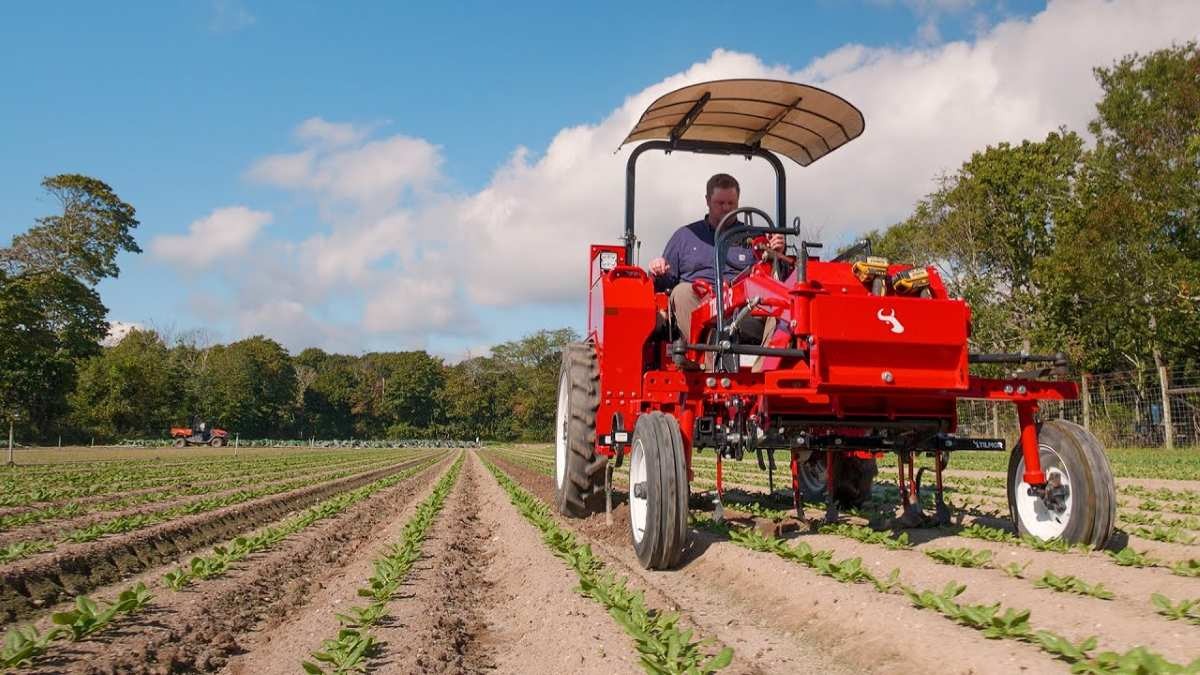
Electric Tractor Super E Arrives In The Field With Silent Operation, Adjustable Autonomy Of Up To 8 Hours And Total Focus On Precision For Small And Medium-Sized Rural Properties
Tilmor introduced the Super E, a fully electric tractor aimed at small and medium-sized rural properties. The equipment was developed to handle cultivation tasks, mechanical weed control, and fertilization, offering an alternative to diesel at a time when many farmers seek to reduce costs and simplify operations in the field. The proposal combines adjustable autonomy, silent operation, and lower maintenance needs.
The model adopts a 48-volt electrical system and a base battery of 3.5 kilowatt-hours, allowing each producer to extend operating time based on property demand.
To achieve this, up to four batteries can be added, reaching about 8 hours of continuous work. A full recharge takes approximately 3 hours with a standard charger or 1.5 hours with a fast charger, which simplifies the daily routine.
-
The city between two continents that is sinking 13 cm per year: satellite radar reveals ground deformations in Istanbul, the historical jewel of Turkey

-
While solar plants require constant sun, engineers are creating a solar system that continues to desalinate even without strong light, eliminates fragile membranes, and produces potable water by recycling heat in a nearly continuous cycle.
-
Brazilian technology surprises NASA and appears on astronauts’ wrists on the Artemis II mission en route to the Moon, revealing national innovation used without prior notice by scientists.

-
New ‘inexplicable’ stainless steel created in Hong Kong can cheapen green hydrogen, resist seawater, and challenge expensive materials used today in electrolyzers



Precision Functions In The Field
The Super E was designed to perform tasks that require smooth movements and high visibility, especially in sensitive crops like vegetables, cut flowers, and nursery plants.
In these activities, precision is more important than power, and the electric tractor excels by working without noise and vibration. This benefits operations near homes, greenhouses, or sheds, environments where the absence of gas emissions is even more relevant.
This scenario accompanies changes in the agricultural market. U.S. states have created incentive programs for low-emission equipment, and some cooperatives have adopted goals for reducing fossil fuels in their sustainability plans. In this context, the Super E emerges as a practical, compact solution aligned with new requirements.
Practical Advantages In Daily Use
The open cabin and chassis design allow the operator to clearly observe the implements positioned below the structure, which is essential for the mechanical removal of weeds without damaging young plants.
The silent operation changes the whole work experience, allowing one to hear ambient sounds, notice irregularities, and quickly identify problems with the engine or implements. This level of perception helps avoid mistakes and reinforces safety.
The reduced maintenance also makes a difference. The tractor does not require filters, engine oil, or care for the exhaust system. In small properties with limited resources, the decrease in the risk of breakdowns and downtime is as significant as fuel savings.
During the 2025 harvest, farmers from various regions in the United States tested prototypes of the equipment. Sam from Long Season Farm in New York reported that working in the evening with a silent machine gave the feeling of being more connected to the crops and less focused on workshops and repairs.
Capacity, Tools, And Compatibility
The Super E offers 56 centimeters of ground clearance and 122 centimeters of tool storage space, ensuring compatibility with different types of implements. Since 2012, Tilmor has been developing specific tools for small rural properties and now offers a series of accessories ready to attach to the tractor. This integration facilitates activity planning and expands the possibilities for using the equipment.
The starting price is $19,500. Although this amount is considered high for a compact tractor, it can be offset by the reduction in operational costs and the availability of subsidies in some U.S. states aimed at acquiring electric machines.
Why The Launch Is Important
The Super E shows that agricultural electrification is no longer exclusive to large farms with high budgets. The technology reaches small farmers who spend long hours in the field, need precision, and want to reduce dependence on diesel.
For properties focused on organic farming or local production, the tractor enables mechanical weed control without the use of herbicides, keeps the environment quieter, and reduces emissions without altering the production model.
This advancement can also generate new dynamics in the sector. With the increasing demand for small electric tractors, networks for technical support, more resilient batteries, and specific training programs are likely to emerge.
This movement recalls the growth of manual implements a decade ago when small properties gained visibility and economic relevance.








Be the first to react!