Portuguese
  Spanish


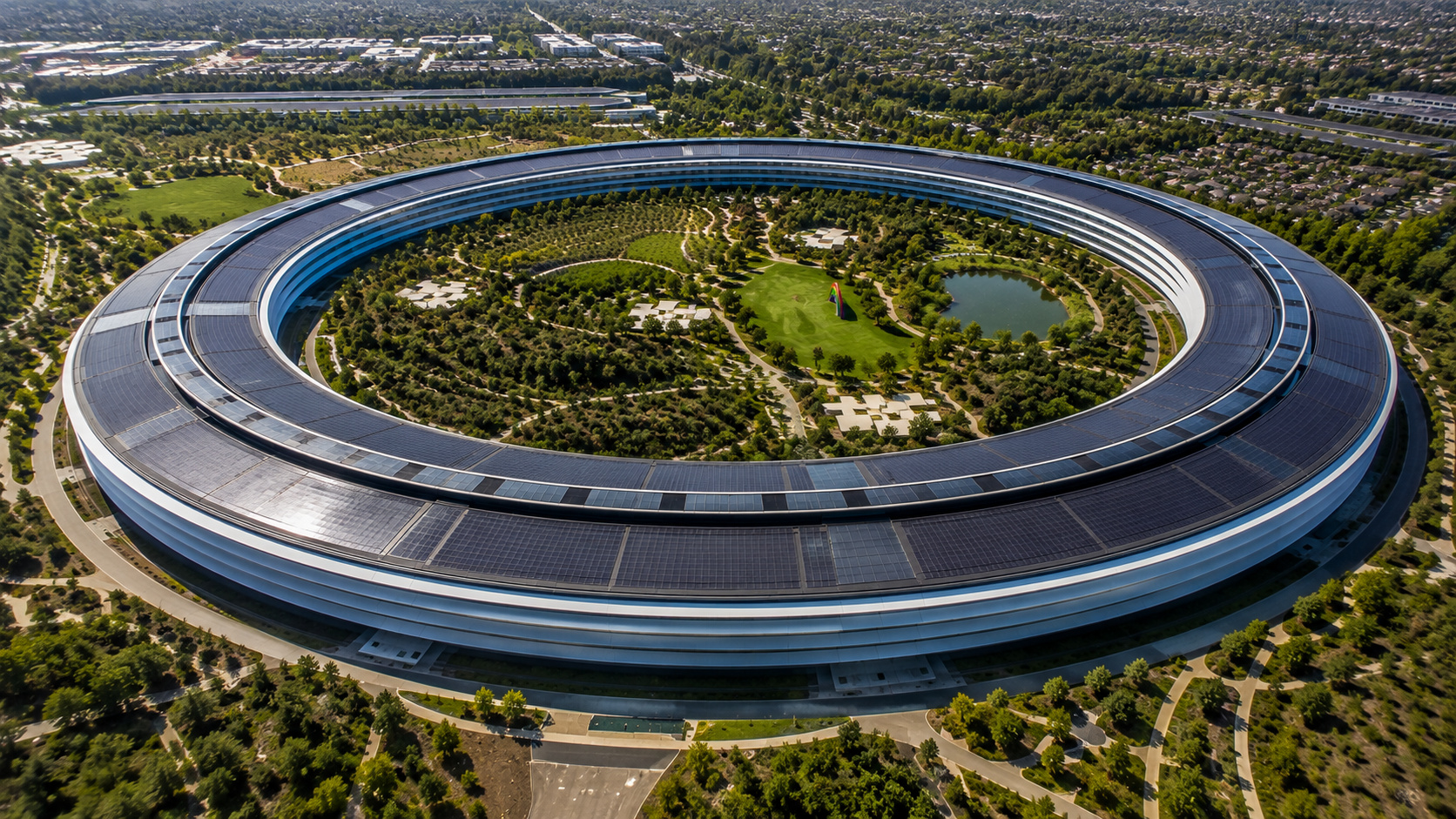


With a circular shape of 1.6 km in circumference, innovative project in Cupertino combines minimalist design, advanced technology, and environmental solutions that transform the concept of modern corporate environments
Apple Park, located in Cupertino, California, represents much more than Apple’s administrative headquarters. It symbolizes one of the greatest advancements in modern corporate architecture. Known as “The Ring”, the building stands out for its impressive scale: 260 thousand m² of built area and 1.6 km in circumference, in addition to housing the world’s largest continuous curved glass panel.
The information was released by “Neo”, based on specialized analyses that explore the engineering and design of Apple Park, highlighting the project as one of the most innovative in contemporary architecture.
From the beginning, Steve Jobs and architect Norman Foster envisioned Apple Park with a clear objective: to create a space that united technology, nature, and collaboration. To achieve this level of excellence, the team faced unprecedented challenges and developed solutions that today serve as a global reference.
-
City Hall spends almost R$ 2 million on a wooden bridge only 2.5 meters wide to prevent the isolation of 5,000 people, but information about lifespan, load, and maintenance does not appear in public disclosures.

-
More than 2,100 trucks transported 16,200 cubic meters of concrete without interruption to create the foundation of the tallest skyscraper in the western United States and break a world record.

-
The man who started in construction with his own house founded a company in 1957, went through a banking crisis in 1987, and ended up connected to 16,500 houses in Houston.

-
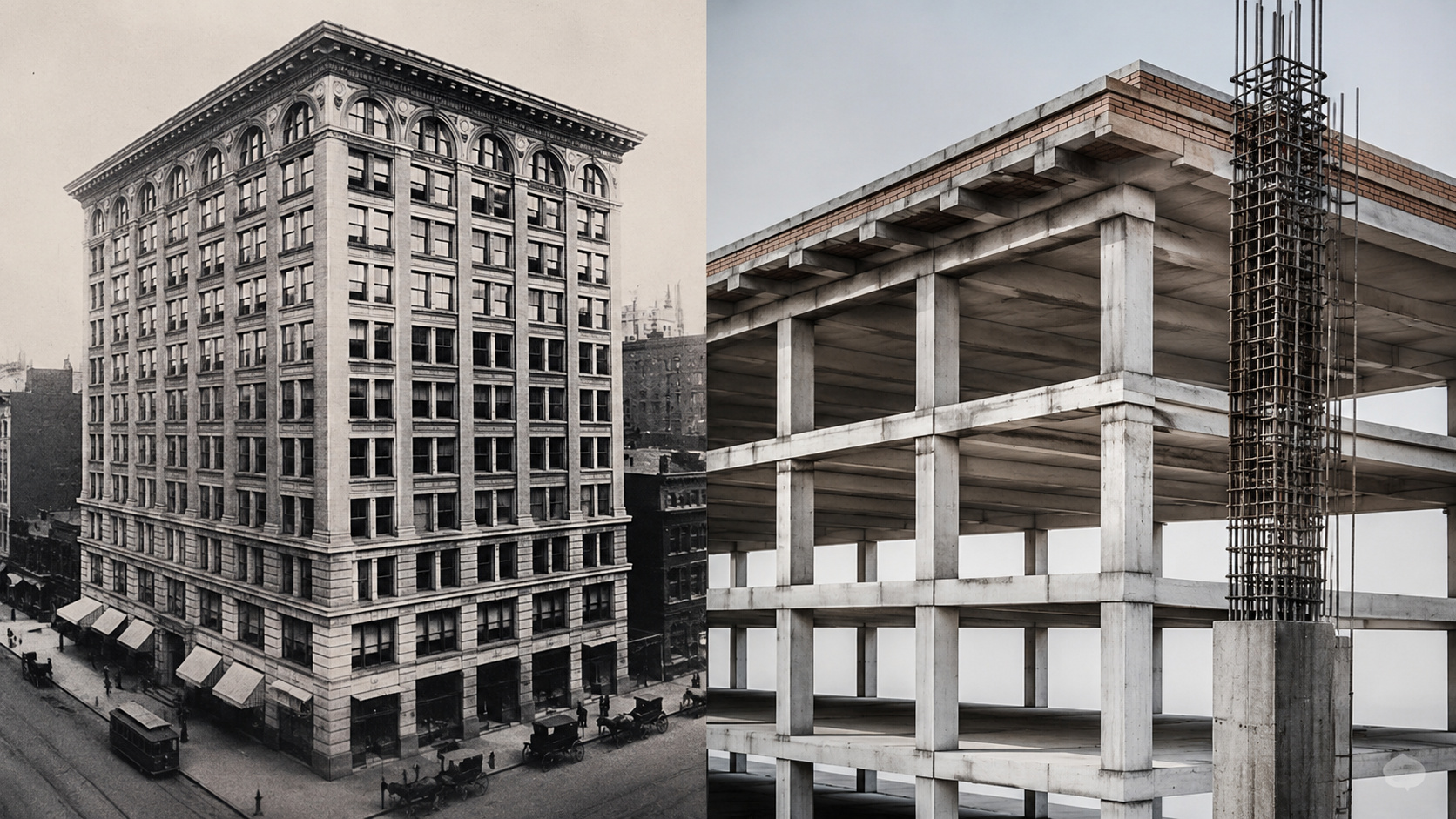
Builders challenged experts, erected a 16-story building using only reinforced concrete when the known limit was six floors, and proved that skyscrapers would never be the same again.



How engineering created the world’s largest curved glass facade
To turn this vision into reality, engineers had to reinvent the way they work with glass on a large scale. They developed gigantic panels up to 14 meters high, molded in custom ovens in Germany.
Furthermore, specialists ensured an extreme level of precision to avoid any visual distortion. This allowed users to see the external landscape with complete clarity, reinforcing the integration between the internal environment and nature.
At the same time, the team faced a complex logistical challenge: transporting and installing these panels without using visible frames. To solve this, professionals positioned each piece with millimeter precision, ensuring structural resistance even in the face of intense thermal variations.
As a result, Apple Park features a practically invisible facade, which creates a continuous sense of transparency and lightness.
Why the circular format transformed work dynamics
Unlike traditional offices, Apple Park uses a circular design that eliminates rigid divisions between spaces. This format encourages constant interaction among the more than 12,000 employees who work on site.
Furthermore, the continuous corridor encourages spontaneous encounters, which strengthens collaboration between teams. At the same time, the 30-acre central courtyard offers a natural environment that reduces stress and improves quality of life at work.
Therefore, the design does not act merely as an aesthetic element. It directly influences people’s behavior, making the environment more dynamic and integrated.
Sustainability and efficiency: how Apple Park functions without excessive effort
Apple Park also stands out for its sustainable solutions that reduce energy consumption. The project uses protruding flaps (canopies) that block direct sunlight, while internal systems allow for natural air circulation.
As a result, the building does not require air conditioning for up to nine months of the year, which significantly reduces its environmental impact.
Furthermore, the complex operates on 100% renewable energy, consolidating its position as a benchmark in sustainable construction.
In the inner courtyard, thousands of native trees — including apple orchards — reinforce integration with the environment. This space not only improves the internal climate, but also contributes to the well-being of employees.
Another highlight is the Steve Jobs Theater. In this project, engineers created an underground auditorium with a carbon fiber roof supported exclusively by glass cylinders, without using any concrete columns. This solution eliminates visual barriers and practically translates Apple’s philosophy: simplicity and efficiency.
Why Apple Park redefines corporate architecture
Apple Park proves that large structures can combine scale, efficiency, and sustainability. Furthermore, it raises the standard of civil construction by demanding extreme levels of precision in every detail.
Today, architects and engineers analyze the project as a true innovation laboratory. More than an office, Apple Park has become a symbol of how architecture can evolve alongside technology.
Ultimately, it represents something greater: the idea that physical space can also be designed with the same level of perfection as a technological product.
Would you work in an environment like Apple Park or do you prefer more traditional offices in your daily life?