






 Portuguese
  Spanish


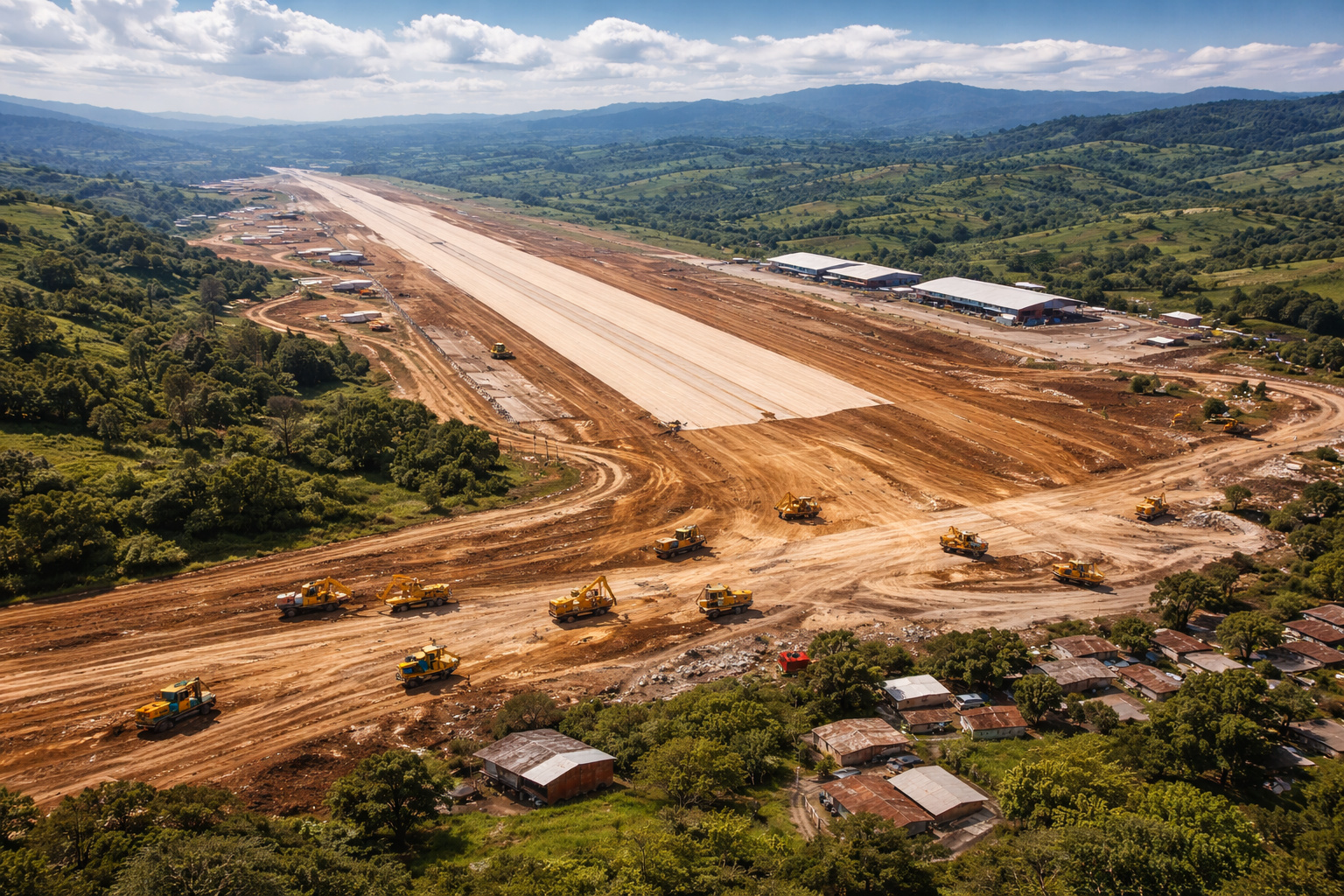


Aerocafé Project Advances After Decades of Waiting, Boosts Air Logistics in Caldas, but Imposes Strong Social Impact on Local Communities
At the same time, although the project raises economic expectations, the progress of the work reveals recurring challenges. Technical and administrative obstacles are delaying the schedule and imposing a high social cost, as they require the relocation of entire communities occupying the area designated for the infrastructure.
Technical Structure of the Airport Aims for Regional Development and Air Integration
The Aerocafé Airport project focuses on regional development. The proposal includes a 1,460-meter runway, capable of accommodating large aircraft, which enhances Caldas’ air connectivity. According to the technical planning released by local authorities, the new infrastructure is expected to attract investments and increase tourist flow.
-
Mexico Develops 3D-Printed Concrete from Corn Waste, Cutting Emissions by 70% and Reducing Construction Waste by 90%

-
Traditional Mortar to Decline by 2026: ACIII-E Solution for Large Porcelain Tiles Offers Better Adhesion and Reduces Risk of Loose Pieces in Floors and Facades

-
72-Year-Old Man Spends Six Years Building a Rotating House for His Wife, Completing a Full Turn in 22 Seconds
-
Chinese Residential Building Surrounded by Circular Overpass After Residents Reject Compensation




Currently, teams are preparing the land and starting equipment movement. Even in this initial phase, the project already stands out as one of the most complex and expensive in the recent history of the department, both for the financial volume involved and the technical requirements.
Displacement of Families Reshapes the Territory and Raises Social Concerns
Despite the economic potential, the execution of the project directly affects the local population. Approximately 250 families live around the area designated for the runway and operational structures and will need to leave their homes and businesses. The plan includes the displacement of houses, rural properties, small businesses, and a gas station, which deeply alters the occupation of the territory.
This scenario reinforces a recurring dilemma in large infrastructure projects. The challenge lies in balancing economic growth, urban planning, and social justice without compromising entire communities.
Government Announces Planned Resettlement and Financial Compensation
The Government of the Caldas Department, together with the Civil Aeronautics of Colombia (Aerocivil) and the Ministry of Transport, stated that affected residents will be relocated to a planned neighborhood, with homes considered equivalent to or better than their current ones. Additionally, the plan includes temporary financial compensation while the resettlement occurs.
However, the process depends on the progress of environmental licenses, the holding of public hearings, and the fulfillment of technical requirements that are still under review. Even with institutional guarantees, the psychological impact of leaving their homes and routines remains one of the most sensitive issues of the project.
Canceled Bids and Lack of Oversight Delay the Start of Construction
Despite the preparations, the official start of the main works remains undefined. In December 2025, a strategic bidding process to hire the company responsible for the technical supervision of the work failed, after competitors did not meet legal and technical requirements.
By early 2026, the schedule required another adjustment. International companies interested in oversight requested more time to submit certifications. Without a formally contracted oversight body, the works are not advancing to the main phase. The most optimistic estimate points to March 2026 as a possible milestone for the effective start of construction.








La moneda de Colombia es el peso colombiano “COP$”