





 Portuguese
  English
  Spanish
  3 min of reading
  1 comment


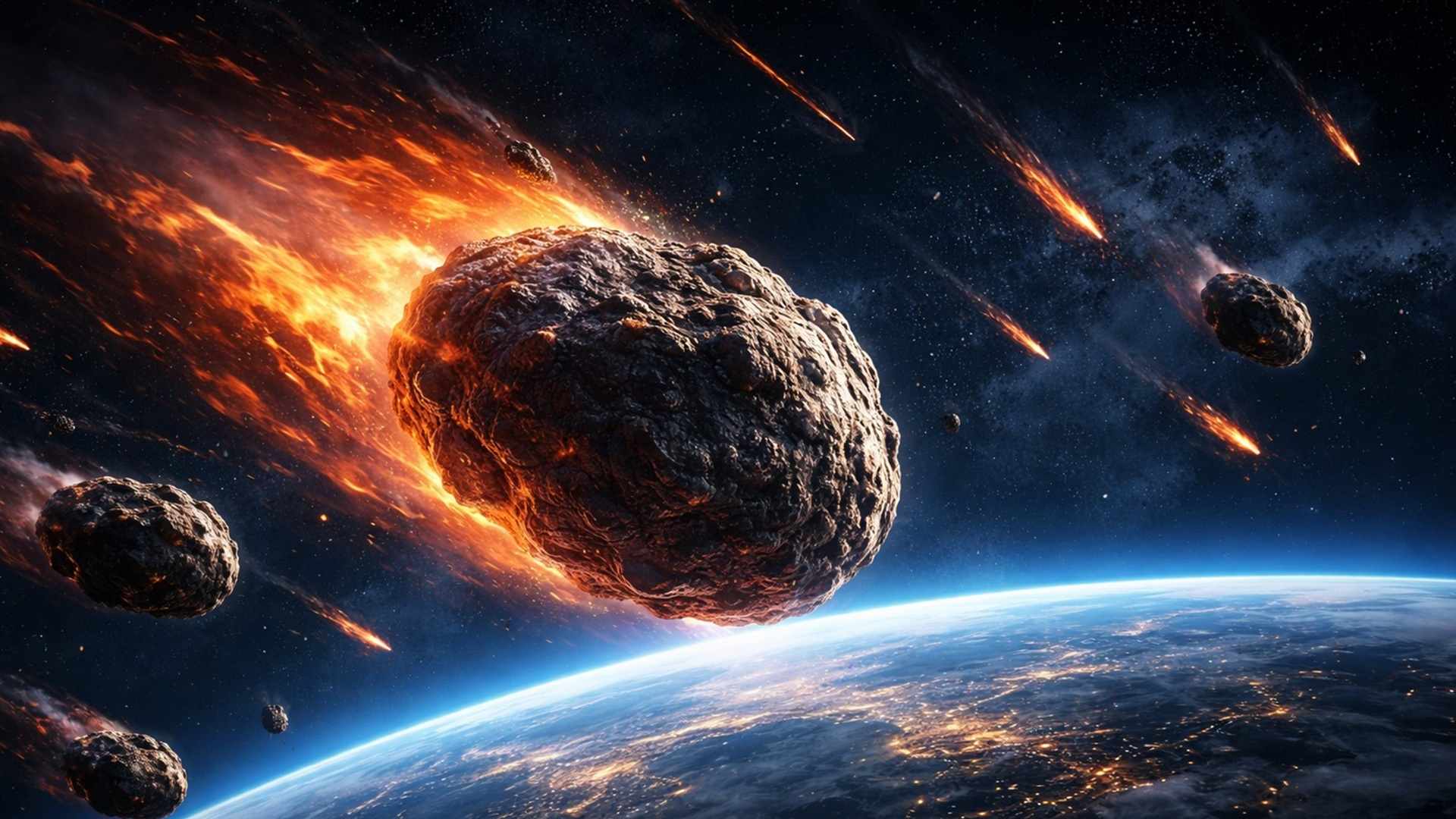


Alert Done by NASA Planetary Defense Official Points Out That Up to 15,000 Near-Earth Asteroids Have Not Been Detected, While Only 40% of an Estimated Total of 25,000 Bodies of About 150 Meters Are Mapped, Revealing Current Limitations in the Capacity for Impact Prevention Capable of Destroying Cities
A NASA scientist stated that humanity is defenseless against up to 15,000 undetected near-Earth asteroids capable of destroying cities, highlighting that these objects of about 150 meters pose a real risk and keep her awake at night.
Expert Says Unknown Asteroids Are the Biggest Threat
Kelly Fast, NASA’s planetary defense official, warned during a speech at the American Association for the Advancement of Science in Phoenix, Arizona, that what concerns her are the asteroids that have yet to be identified.
According to her, it is not the large ones, whose locations are already known, nor the small ones that hit the planet frequently. The focus is on objects approximately 150 meters in size, capable of causing significant regional damage.
-
AI may be close to discovering new laws of physics, but scientists have found a frightening error: the technology reduces expensive simulations by more than 10 times and yet may overlook unprecedented clues hidden in the universe.

-
China has deployed snake-shaped robots to slide along power lines, where they have already inspected over 130 kilometers of cables using cameras and sensors to detect damaged wires, worn-out parts, and overheating.

-
Students create a Lego boat to collect plastic from beaches, focus on clean energy, and aim to combat marine pollution.

-
Scientists create an artificial photosynthesis system that “mimics” plants, transforms water and CO2 into solar fuel, and even works without relying on expensive batteries to control the energy.


These medium-sized asteroids are described as “city killers,” and according to released information, there are about 25,000 passing near Earth. Only about 40% have a known location.
Detection Difficulty and Limitation of Telescopes
Fast explained that the size of these asteroids makes detection complex, even with the best available telescopes. They follow the Earth in orbit around the Sun, which complicates the reflection of sunlight and hampers visual identification.
To overcome this limitation, scientists plan to launch the Near-Earth Object Surveyor space telescope next year. The equipment will use thermal signatures to detect dark asteroids and comets previously hidden from Earth.
According to Fast, about 15,000 of these nearly-Earth bodies have not yet been accounted for. She stated that her responsibility is to “find asteroids before they find us” and develop methods to reach them before a potential impact.
DART Test Showed Deflection, But Application Is Limited
In 2022, NASA conducted an experiment by deliberately crashing the DART spacecraft, which stands for Double Asteroid Redirection Test, into the mini-moon Dimorphos at 22,532 km/h. The test demonstrated that asteroids can be deflected from their trajectory.
However, Nancy Chabot, leader of the DART mission and planetary scientist at Johns Hopkins University, stated that replicating this mechanism against a “city killer” would be difficult.
According to her, there are no deflector ships ready for immediate use. “We would not be able to actively deflect one of these impacts right now,” she declared.
Chabot also noted that space agencies do not maintain funding to keep planetary defenses on standby. For her, it would be possible to be prepared, but it would require investment and appropriate measures.
YR4 Case Reignites Debate on Planetary Defense
The discussion about asteroids gained new momentum with the case of the asteroid YR4, monitored since 2024. Scientists warn that it has a 4% chance of hitting the Moon in 2032.
To prevent a lunar collision, space defense experts proposed the possibility of destroying it with nuclear weapons, in a solution likened to a science fiction plot.
The scenario reinforces the concern about intermediate asteroids that have yet to be identified. Fast stated that the issue deeply concerns her, as it involves objects that can cause regional damage and remain off the radar.
Despite technological advances, statements indicate that at the moment, humanity lacks active means to prevent such an impact.
The alert highlights that the ability to locate and track asteroids remains the main challenge. Without early detection, response options remain limited, which, according to experts, may require preemptive planning and continuous investment in planetary defense.






Louvado seja Deus Todo Poderoso!❤️🔥❤️🔥❤️🔥