





 Portuguese
  English
  Spanish
  3 min of reading
  0 comments


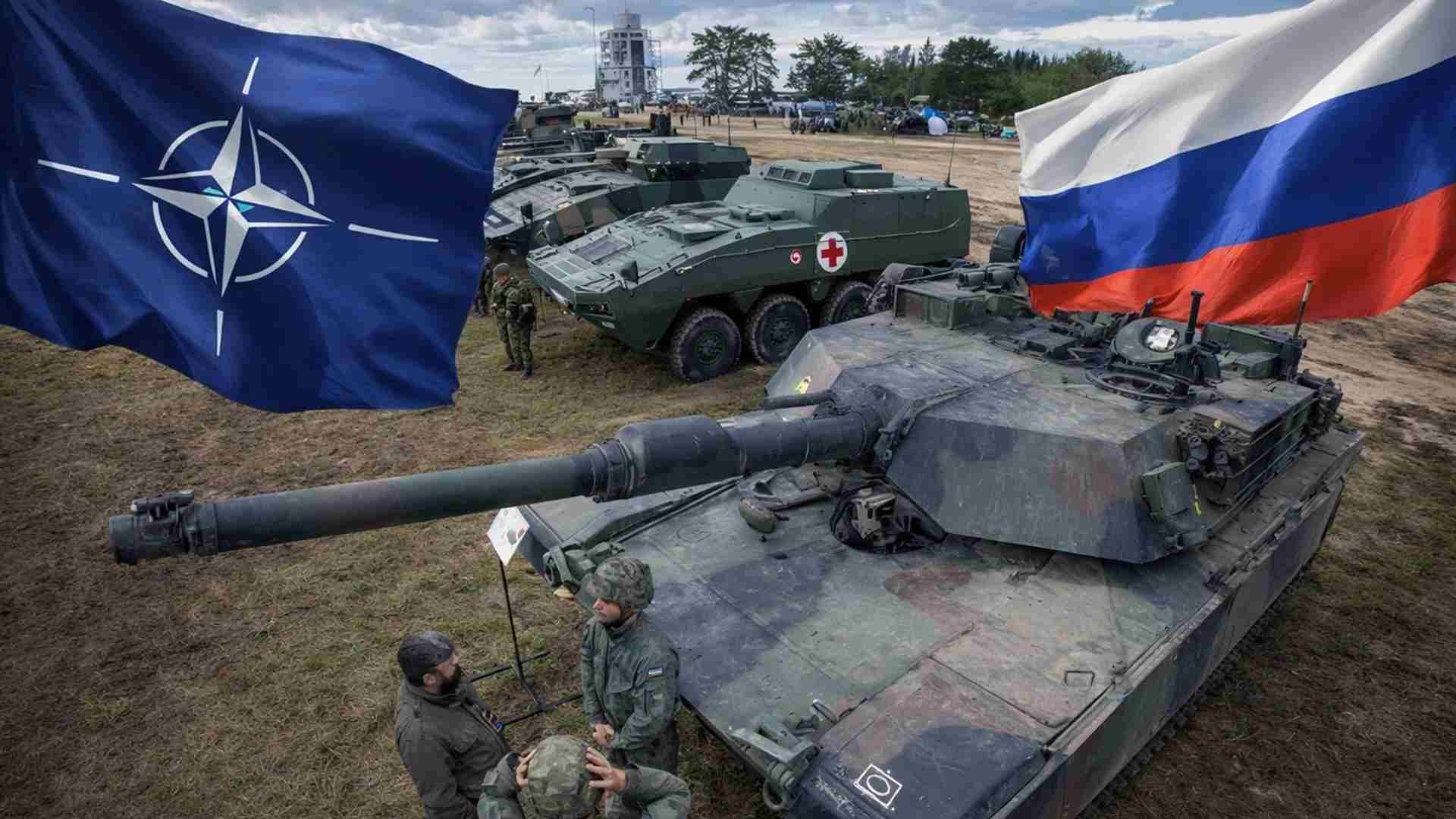
NATO Plan Foresees the Creation of an Unmanned Defense Zone Along Thousands of Kilometers on the Borders with Russia and Belarus, Integrating Ground, Air, Space, and Digital Sensors, with the Use of Artificial Intelligence, Drones, and Robots, and Expectation of Full Operation by the End of 2027
NATO plans to create an automated defense zone along its eastern borders with Russia and Belarus, using robots, drones, and sensors guided by artificial intelligence to detect and delay incursions, according to information revealed in 2025 and with an expectation of operation by 2027.
Concept of Automated Defense in Multi-Layered Defenses
The plan envisions a “non-manned defense zone” that would function as a high-surveillance buffer area, capable of identifying hostile movements and triggering initial containment responses. The proposal has been described as a “hot zone” to breach enemy lines in the early stages of a conflict.
This information was revealed by General Thomas Lowin, deputy chief of operations of the alliance, in an interview with the German newspaper Welt am Sonntag.
-
A street cleaner who earns R$ 2,100 per month put her cell phone aside for a few minutes and returned to find a Pix transfer of R$ 203,000 mistakenly deposited into her account, an amount that, according to her, she wouldn’t be able to save even if she worked for a hundred years.

-
R$ 5,000 scattered on the street, a lost wallet, and an honest decision: the case in Goiás that moved even those who only read the story

-
Dissatisfied with seeing people sleeping on the street, a man named Ryan Donais started building small mobile homes so that homeless people can escape the cold, each equipped with a bed, running water, electricity, and heating.
-
ET in Paraná? After intriguing videos, mysterious sounds in the forest, and theories that dominated social media, the Brazilian Air Force reveals what its radars recorded and increases the mystery about the alleged UFO seen in Campo Largo.




According to him, the goal is to delay or deter invading forces before the direct engagement of deployed troops.
The multi-layered defense concept combines continuous surveillance and limited automated responses, integrating existing technologies with new systems based on artificial intelligence, without completely replacing the conventional means currently employed on the front line.
Sensors, Platforms, and Data Integration
According to Lowin, the alliance’s surveillance on the east coast will integrate data from ground, air, space, and digital sources. Sensors would be positioned on land, in space, in cyberspace, and in the air, covering an area of several thousand kilometers.
These sensors would be capable of detecting enemy movements, weapon positioning, and suspicious activities, transmitting information in real time to all NATO countries. Data collection would rely on fixed and mobile platforms, including radars, acoustic, and optical sensors.
The system would also be supported by satellites, drones, and reconnaissance aircraft. According to the general, the AI-guided architecture would reinforce the current weapon systems of the alliance and the forces already deployed on the front line, enhancing the capacity for initial response.
Use of Robots, Drones, and Limits on Lethal Deployment
The automated system would include drones, semi-autonomous combat vehicles, ground robots, and automated air defense and anti-missile systems. These means could be activated after the detection of threats by sensors distributed along the border.
Lowin stated that, despite the high degree of automation, any actions involving lethal weapons will always remain under human responsibility. The model seeks to combine technological speed with direct human control over critical decisions, avoiding irreversible autonomous actions.
The proposal also envisions that the systems operate in a remote or semi-automated manner, forming the first line of detection and response, before the eventual deployment of conventional forces on a larger scale.
National Preparations and Implementation Timeline
According to reports, Poland and Romania are already studying the installation of the system. In November 2025, it was reported that both were working on developing a new AI-based weapon system to combat Russian drones.
Poland is also preparing to sign a contract described by its Minister of Defense, Wladyslaw Kosiniak-Kamysz, as “the largest anti-drone system in Europe,” in an interview with the newspaper Gazeta Wyborcza. The value and the consortium involved have not been disclosed.
Preparations are occurring amidst growing concerns that Russia may expand its military reach into European Union territory. There are reports that Denmark would also adopt the system, with the expectation that the entire structure will be operational by the end of 2027.


-

-

2 people reacted to this.