






 Portuguese
  Spanish


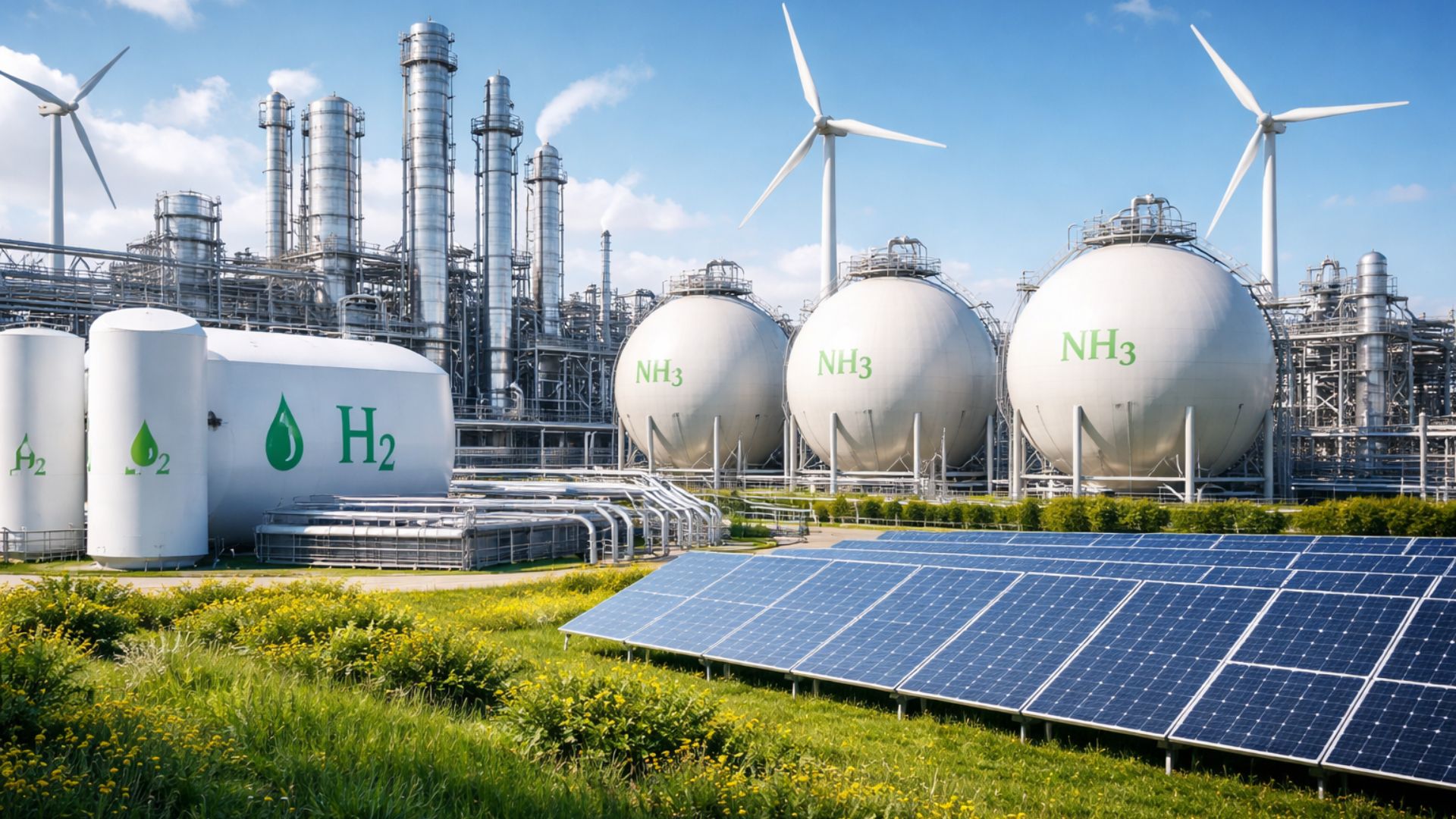

Federal Investment of the New Industry Brazil Enables New Green Hydrogen and Ammonia Plant in Paraíba, Strengthening Sustainable Fertilizers, Job Creation, and Energy Transition in the Northeast
On December 23, 2025, the federal government confirmed one of the most significant investments for the Brazilian energy transition. Through the New Industry Brazil program, over R$ 59 million will be allocated for the implementation of a new green hydrogen and ammonia plant in Paraíba, focusing on the production of sustainable fertilizers, job creation, and strengthening the green industry in the Northeast.
The project will be installed in the municipality of Conde, on the Paraíba coast, and is part of a national strategy to encourage industrial sectors deemed strategic for the low-carbon economy. In addition to public resources, the venture will have R$ 20 million in private investments, totaling nearly R$ 80 million in initial contributions, according to information released by Brasil 247.
New Industry Brazil Drives New Green Hydrogen and Ammonia Plant in the Northeast
The New Industry Brazil is an industrial policy of the federal government created to stimulate strategic areas such as clean energy, decarbonization, technological innovation, and sustainability. Within this context, the implementation of the new green hydrogen and ammonia plant in Paraíba emerges as an emblematic project.
-
Brazilian scientists are simultaneously advancing two research projects on clean hydrogen and driving solutions that could transform the energy matrix, enhance industrial competitiveness, and accelerate large-scale emission reduction targets.

-
Advancement in renewable energy: A R$ 150 million project launched by Petrobras and Finep aims to create state-of-the-art electrolyzers for green hydrogen, strengthening national research and preparing Brazil to compete in a billion-dollar energy market.
-
Illiterate or semi-literate grandmothers were trained to repair solar systems, open rural workshops, and light up homes that still depended on kerosene.
-
The world has bet on green hydrogen as the fuel of the future, but now faces the side effect: producing 1 kilogram requires about 9 liters of ultrapure water, and the largest projects on the planet are precisely in the driest regions of the Earth, where water is already scarce for people.





The coordination of the venture is led by the Brazilian Network for Certification, Research and Innovation (RBCIP), in partnership with private companies and institutional support from the federal government.
Three companies are part of the consortium responsible for executing the project, with only one of them officially disclosed: Green World Energy Hydrogen (GWE). The others remain under confidentiality agreements.
The central goal is to create an integrated industrial complex capable of producing green hydrogen, green ammonia, and sustainable fertilizers, serving both industry and agribusiness.
Project Structure and Production Capacity of the New Plant in Paraíba
The new green hydrogen and ammonia plant will be installed on an area of approximately 12 thousand square meters, with implementation planned over four years. The project foresees the integration of different technological routes, allowing for operational flexibility and future scalability.
According to the information released, the estimated annual production capacity includes:
- Continuous production of green hydrogen
- About 5 thousand tons of green ammonia per year
- Approximately 20 thousand tons of sustainable liquid fertilizers
These numbers place the venture among the most relevant industrial projects in the Northeast aimed at the energy transition. The financial expectation points to an annual return of R$ 31.1 million starting from the third year of operation, reinforcing the economic viability of the investment.
The Role of Green Hydrogen and Ammonia in the Brazilian Energy Transition
Green hydrogen is produced from the electrolysis of water, a process that separates hydrogen and oxygen using electricity from renewable sources such as solar and wind energy. Since there are no carbon emissions during production, this energy vector is considered essential for decarbonizing energy-intensive sectors.
Heavy industry, long-distance transport, and energy storage are among the segments that benefit the most from green hydrogen. In Brazil, the potential is high due to the abundant availability of renewable sources. Meanwhile, green ammonia results from the combination of green hydrogen with nitrogen extracted from the air, also using clean energy.
In addition to being essential in the manufacture of fertilizers, green ammonia has been studied as an energy alternative for maritime transport and as an energy export vector. The joint production of green hydrogen and ammonia strengthens entire industrial chains, reducing emissions and dependence on fossil inputs.
Sustainable Fertilizers and Impact on Agribusiness
One of the main differentiators of the project supported by New Industry Brazil is the focus on producing sustainable fertilizers. Currently, a large part of the fertilizers used in Brazil depends on imported inputs and highly polluting processes.
With the new green hydrogen and ammonia plant in Paraíba, the country is making progress in replacing traditional fertilizers with alternatives that have a lower environmental impact. This represents direct benefits for agribusiness, both in terms of supply security and sustainability.
Local production reduces logistics costs, decreases external vulnerabilities, and strengthens the national industry, creating a virtuous cycle between clean energy and food production.
Job Creation and Workforce Training in Paraíba
In addition to the industrial and environmental impacts, the project also stands out for its social and educational effect. RBCIP announced that it intends to invest in local workforce training, through partnerships with federal universities and educational institutions.
The goal is to create a knowledge and innovation hub in clean energy in Paraíba, training professionals to work in areas such as engineering, chemistry, industrial automation, and maintenance of advanced energy systems. This movement contributes to retaining talent in the state, as well as expanding qualified job opportunities in the Northeast.
Green Hydrogen and Ammonia as Vectors of Economic Growth
Studies reinforce the economic potential of this production chain. A survey conducted by the Brazil-Germany Cooperation for Sustainable Development (GIZ), in partnership with the Ministry of Mines and Energy, indicates that green hydrogen could add R$ 61.5 billion to the Brazilian Gross Domestic Product by 2050.
In this scenario, projects like the new green hydrogen and ammonia plant in Paraíba act as catalysts for this growth. RBCIP itself estimates that similar initiatives, especially in the Midwest and Northeast, could generate around R$ 2 billion by 2030.
A New Chapter for the Green Industry in Brazil
The investment from New Industry Brazil in the new green hydrogen and ammonia plant in Paraíba marks a decisive moment for Brazilian industrial policy. The project combines technological innovation, environmental sustainability, job creation, and regional development into a single initiative.
More than an isolated venture, the plant represents a model of how national industry can grow in line with global climate demands. By integrating clean energy, sustainable fertilizers, and professional training, the project lays solid foundations for a new phase of economic development in the Northeast.
Paraíba is now firmly on the map of the Brazilian energy transition, as the country advances towards building a more resilient, competitive, and sustainable industry.




