Portuguese
  Spanish


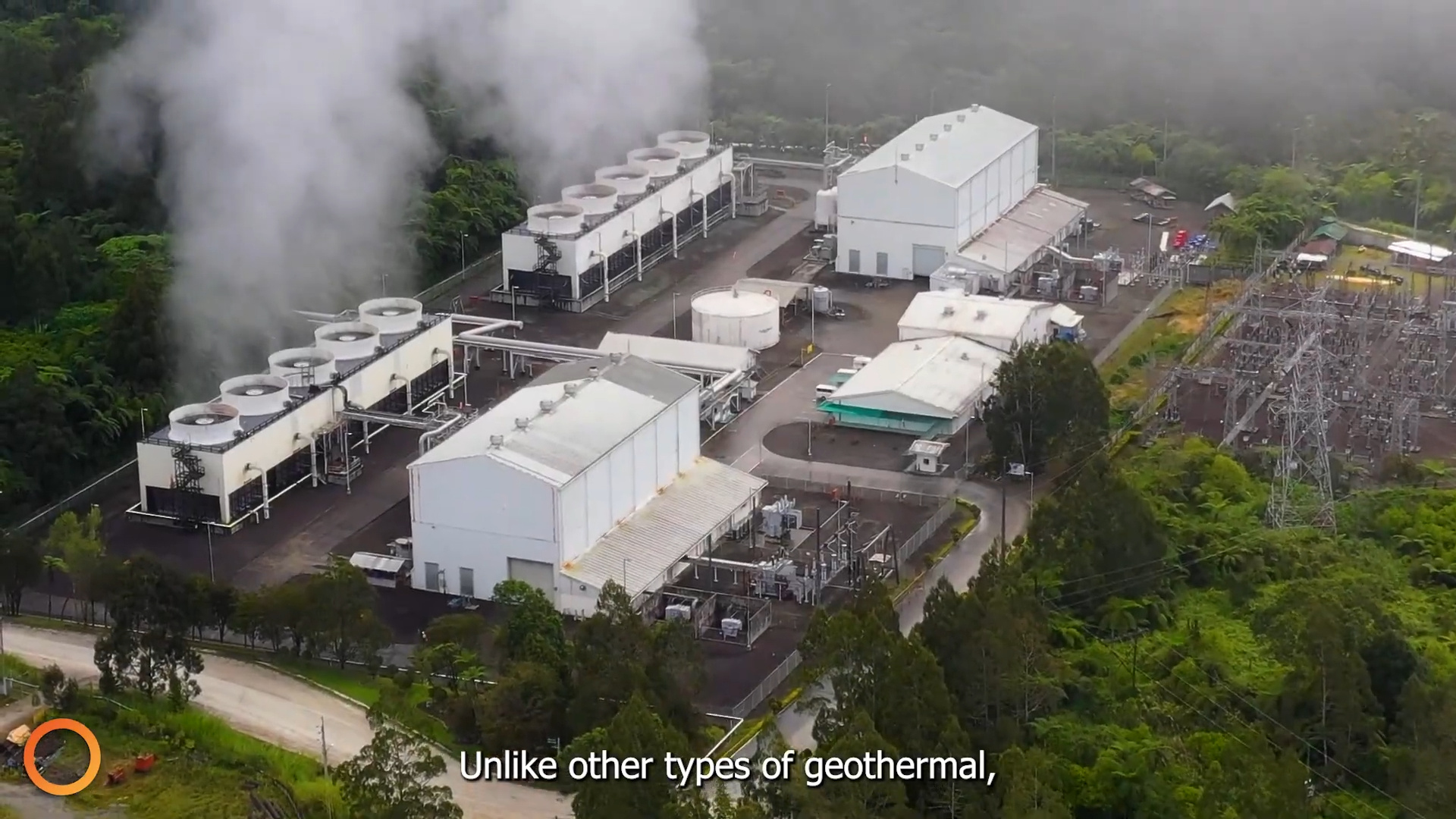


Innovative geothermal system drills 90 km of wells in Germany and generates energy without using groundwater, connecting electricity to the grid in 2025.
According to Eavor Technologies, on December 4, 2025, the company delivered the first electrons generated by a multilateral closed-loop geothermal system to Germany’s commercial power grid. The project was implemented in Geretsried, a city of about 15,000 inhabitants in southern Bavaria, approximately 40 kilometers from Munich. The land had previously been used for a conventional geothermal exploration attempt, abandoned in 2013 after hot, but dry rock with insufficient permeability for underground fluid circulation was identified.
Limitations of conventional geothermal energy restrict use to less than 1% of the planet’s surface
Traditional geothermal energy depends on the natural existence of underground reservoirs with hot water or steam. This type of formation occurs in geologically specific regions, such as Iceland, Kenya, New Zealand, and parts of the western United States.
Globally, these conditions represent less than 1% of the Earth’s surface. Although heat is present in virtually all of the Earth’s crust, the absence of fluid and porosity limits the use of conventional technology.
-
Brazil Aims to Become a Global Exporter of Green Hydrogen, the Clean Fuel Set to Generate Billions

-
Brazil to Hold First Offshore Wind Energy Auction, Aiming to Become the Country’s New Hydropower
-
Brazil to Hold First Auction for Batteries to Store Solar and Wind Energy from the Northeast
-
Brazilian scientists are simultaneously advancing two research projects on clean hydrogen and driving solutions that could transform the energy matrix, enhance industrial competitiveness, and accelerate large-scale emission reduction targets.

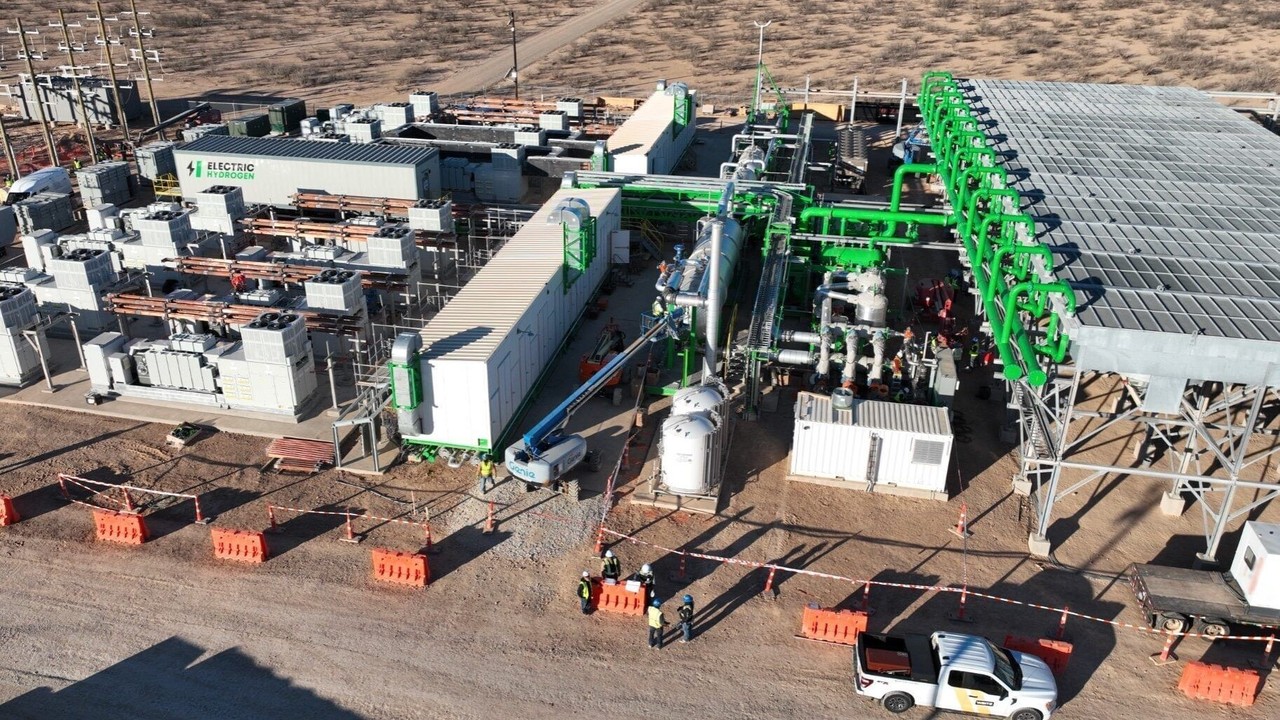


Eavor Loop system eliminates need for groundwater with sealed closed-loop
Eavor’s proposal is based on a closed-loop system known as the Eavor Loop. The concept functions as an underground radiator. A fluid circulates through a set of sealed pipes installed in hot rocks, absorbing heat and returning to the surface without ever coming into contact with the geological environment.
This model eliminates the need for aquifers, prevents fluid loss, and avoids hydraulic fracturing, reducing operational and environmental risks.


The project engineering involves drilling two vertical wells separated by about 220 meters, reaching depths of approximately 4.5 kilometers.
From these points, interconnected horizontal galleries are opened, forming a continuous closed loop. Each loop is about 3 kilometers long, with multiple connections forming an underground network. The complete system foresees about 90 kilometers of total drilling distributed among four loops.
Thermosiphon circulation allows geothermal system operation without mechanical pumps
The system uses the thermosiphon principle for fluid circulation. The cold fluid naturally descends, absorbs heat from the rock, becomes less dense, and returns to the surface. This process occurs continuously without the need for active pumping.
The absence of moving parts reduces energy consumption and simplifies operation. The chosen location for system implementation had been considered unfeasible for conventional geothermal energy due to the rock’s lack of permeability.

For the Eavor model, this characteristic becomes an advantage, as the system does not depend on the natural circulation of fluids. The dry, hot rock, previously seen as an obstacle, became an ideal condition for closed-loop operation.
Investment exceeding 350 million euros gathers support from European Union, European Investment Bank, and major global companies
The project received €91.6 million in funding from the European Commission’s Innovation Fund and a €45 million loan from the European Investment Bank.
In addition, it received contributions from investors such as OMV, Chubu Electric Power, bp Ventures, BHP Ventures, and Microsoft Climate Innovation Fund. The total investment exceeded €350 million.

The project execution faced significant challenges, especially in horizontal drilling through hard rock. One of the main obstacles was ensuring that horizontal wells met with precision kilometers deep.
To solve this, the company developed the **Eavor-Link AMR** tool, which allows electromagnetic communication between drilling systems, reducing the time required for alignment by more than 80%.
New drilling technologies increase efficiency and reduce operational costs
Another advancement was the development of thermally insulated drilling pipes, allowing operation in high-temperature environments.
These innovations increased tool durability by up to three times and significantly reduced drilling time.
Throughout the project, there was a reduction of about 50% in execution time per segment and more than 40% in construction costs.
System delivers 8.2 MW of electricity and 64 MW of heat for urban heating in Bavaria
The first operational loop provides 8.2 megawatts of electrical energy and 64 megawatts of heat for district heating systems.
The plant operates flexibly, prioritizing heat in winter and electricity in summer, according to demand.
The complete project includes four interconnected loops, with expansion underway. Eavor has already begun planning for a new system in Hanover, with the capacity to meet between 15% and 20% of the city’s urban heating demand.
Closed-loop technology can expand geothermal energy to regions without conventional natural resources
The main innovation of the project lies in the possibility of application in locations without natural geothermal reservoirs.
By eliminating dependence on groundwater and rock permeability, the system significantly expands the geographical potential of geothermal energy.

Drilling industry experts indicate that the same infrastructure used in the oil sector can be adapted for this type of energy generation.
Now we want to know: can closed-loop geothermal systems transform energy generation on a global scale?
The **Geretsried project** demonstrates an alternative for exploring subterranean heat in regions previously considered unfeasible.
In your view, does this technology have the potential to become a global basis for energy generation, or does it still face barriers to large-scale expansion?