






 Portuguese
  Spanish


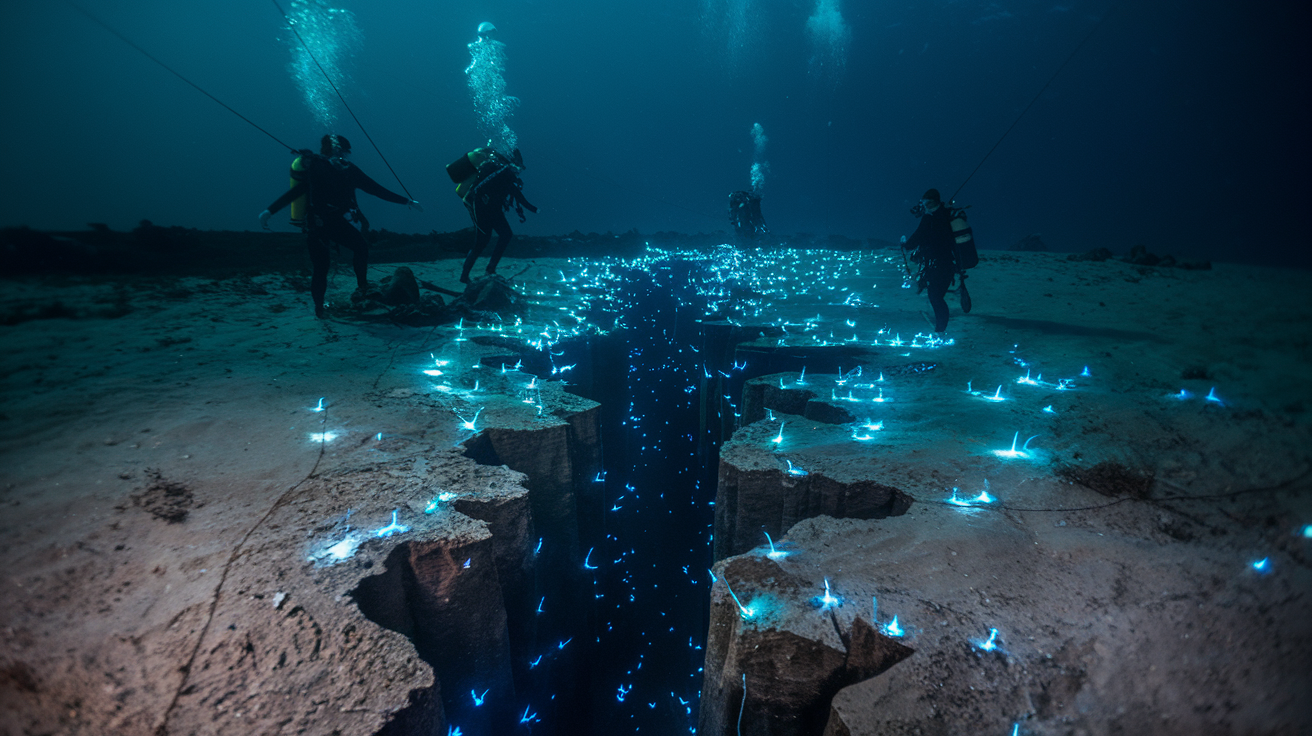


Pacific Ocean: Cracks on the Seabed Intrigue Scientists and May Cause Worrisome Impacts. Understand Why the Earth Is Opening and What the Possible Risks Are!
A study conducted by scientists from Canada and Turkey revealed an intriguing mystery in the Pacific Ocean: cracks on the seabed that may change the understanding of tectonic plate behavior. The research indicates that these plates, including the Pacific Plate – the largest on Earth – are not as rigid as previously thought. Instead of remaining stable until they reach subduction zones, where one plate dives beneath another, they begin to deform long before this process. This discovery challenges previous theories and raises questions about potential geological and environmental impacts in the region.
Earth Opening on the Bottom of the Pacific Ocean May Generate Impacts
Published in Advancing Earth and Space Sciences, the scientists’ research analyzed four major underwater plateaus (Ontong Java, Shatsky, Hess, and Manihiki) and found cracks on the seabed, faults, and signs that these regions were “stretching” as they traveled across the ocean.
However, scientists believed the plates were rigid while circulating through the ocean, and this type of deformation would only occur when they were close to colliding or diving beneath another. Now, there is land opening up on the bottom of the Pacific Ocean.
-
Eight Artists Secretly Lived in a Hidden 70m² Apartment Inside a Shopping Mall in Brazil for Four Years

-
Artist Lives in Giant Wooden Egg Over a UK River to Observe Tides and Environmental Changes
-
Over 20 Metal Drums Repurposed into School Transport Train Boost Attendance in Australian Aboriginal Community

-
Abandoned Coal Crane at Copenhagen’s Old Port Transformed into Luxury Waterfront Retreat with Spa and Ship Views



With the land opening up on the bottom of the Pacific Ocean, the authors of the article believe that these damaged plateau areas are more fragile because they have a thicker crust. Even thousands of kilometers away, they feel the “pull” from the subduction zones.
These sudden movements, which cause cracks on the seabed, increase the risk of earthquakes and tsunamis in coastal regions.
However, they are much less intense than those in subduction zones, like those occurring in Japan, for example. Additionally, the chance of a tsunami is very low, though possible, since these phenomena are a mystery in the Pacific Ocean, far from populated areas.
Understand Why the Earth Is the Only Planet with Tectonic Plates
Now that we understand the mystery in the Pacific Ocean, it is important to remember that tectonic plates are crucial for maintaining the formation of mountain ranges, earthquakes, and continental movement, as well as generating fundamental conditions for terrestrial life. However, no other planet currently has tectonic plates.
According to geodynamicist Bradford Foley from Penn State, it is still unclear why only Earth has plates, and he believes this is considered one of the major unresolved issues in geophysics today. The Earth’s lithosphere, composed of the crust and the rigid upper mantle, is divided into about 15 plates that are in constant motion.
These plates continuously slide past, collide, and pull apart from one another, although scientists do not know exactly how the lithosphere was fragmented. Certain aspects of Earth’s geology support the functioning of this mechanism.





Tem algumas frases de péssimo entendimento que diz que “as placas se movimentam pelo oceano”. Sem noção ou má tradução. Declaração meio perturbadora é afirmar que só a Terra tem placas tectônicas e NADA científica pois, desconheço pesquisas desta natureza em outros planetas do nosso sistema planetário e muito menos de outros. Porque afirmar uma coisa com esta “certeza”?