Portuguese
  Spanish


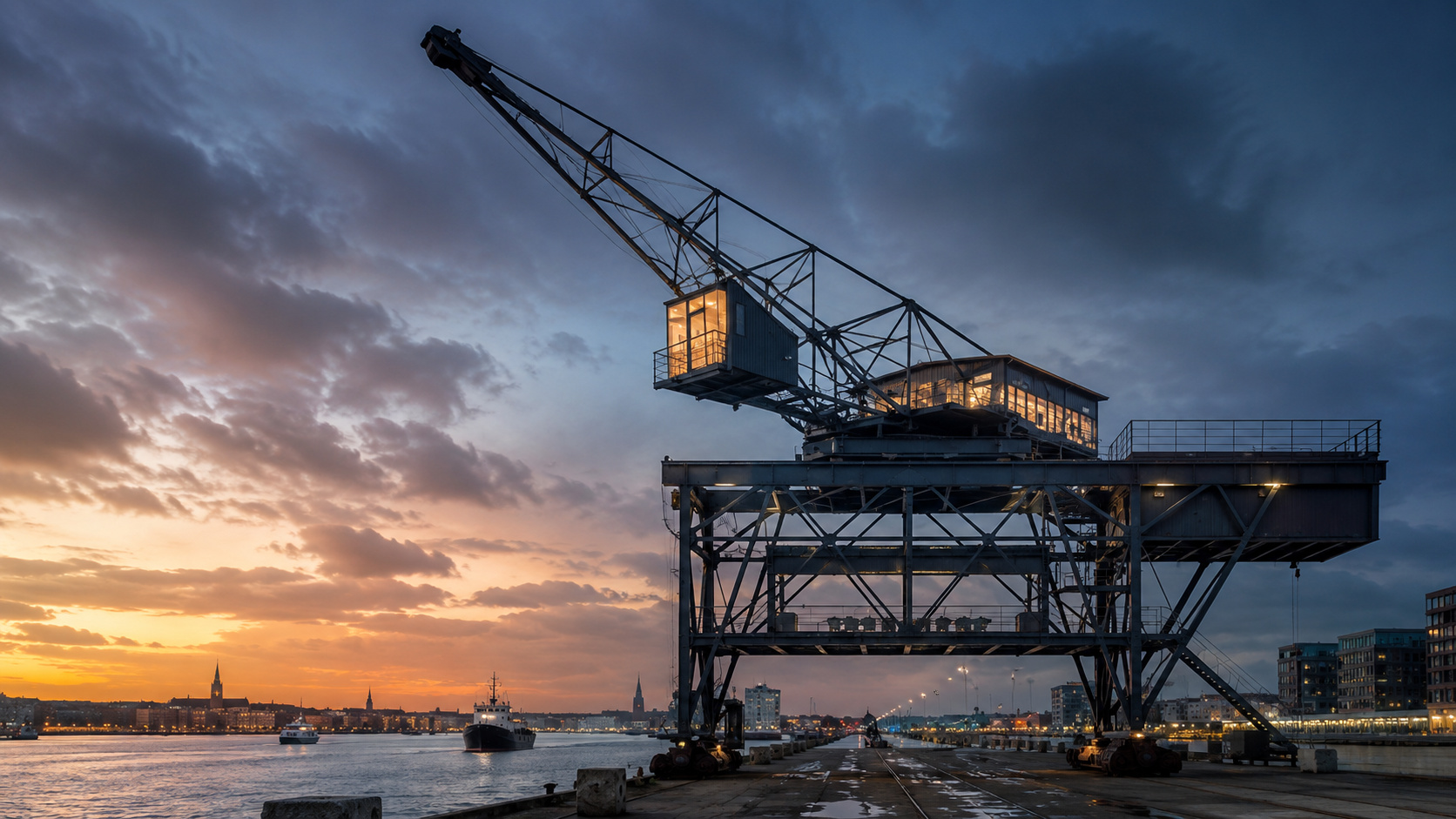

Old coal crane in Copenhagen gained a new tourist function with room, spa, and water view, showing how port infrastructure can emerge from abandonment without erasing its industrial memory
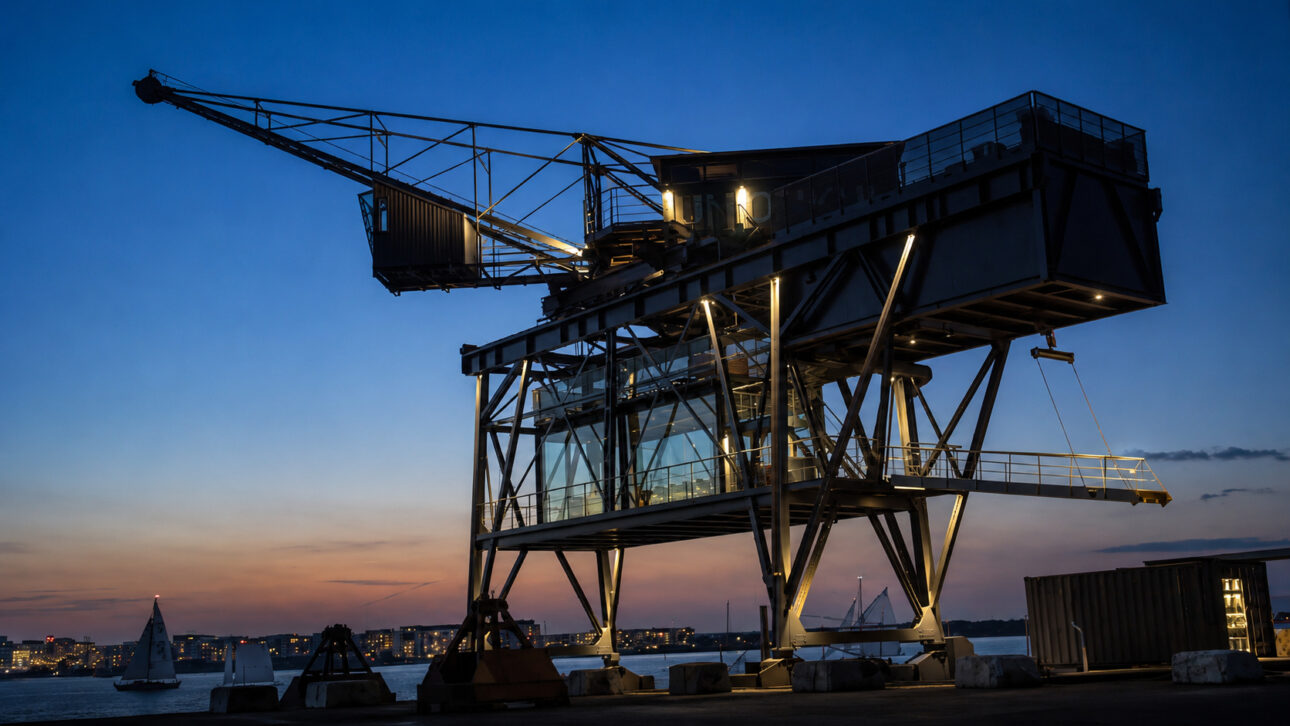
An old coal crane from the port of Copenhagen has become The Krane, a luxury retreat over the water with a room, spa, and view of ships. The structure, once associated with heavy work on the dock, now hosts people in a very different experience from what it was built for.
The information was released by XAL, a company providing lighting solutions for architecture. The project shows how the reuse of port infrastructure can give new purpose to old equipment without erasing the connection to the city’s industrial past.
The case draws attention because it is not just about transforming an old piece into expensive accommodation. The crane preserves the image of a heavy machine, maintains the memory of the old port, and raises an important question: when does an industrial structure stop being scrap and become urban heritage?
-
Couple Sold Everything to Restore a 300-Year-Old Abandoned Mansion, Uncovering Ancient Books and Untouched Rooms

-
Couple Builds Sustainable Home from Straw Bales, Wood, and Clay in Brazil
-
At 64, Grandma Sônia Turned Homemade Recipes into a Family Business, Growing Casa de Bolos to Over 600 Locations and Expanding to Portugal

-
Brazilian Couple Builds Underground Bunker in Santa Catarina Amid Fears of Crises and Shortages, Spending $10,000 and Learning Construction from Scratch, Videos Go Viral


From coal to luxury room, the crane stopped carrying cargo and started receiving guests
The Krane is located in the north port of Copenhagen, in an area marked by former port activities. Before the conversion, the crane was used to move coal when ships arrived at the dock.


The structure was also part of the routine unloading of granite and other types of goods. In other words, it was not a decorative object. It was a working piece, linked to heavy logistics and the operation of the port.
The change in use transformed this past into part of the experience. Instead of hiding the industrial origin, the project kept the crane as a central element. The guest is not just in a room with a view of the water, but inside a structure that once participated in the productive life of the port.
The Krane shows how a heavy machine can gain a second life without losing its identity
Many old ports undergo urban renovations when they no longer serve the same industrial function. Warehouses, tracks, cranes, and cargo areas are often removed to make way for buildings, commerce, housing, and leisure areas.
The Krane took a different path. The structure was not erased from the landscape. It received a new function but retained a strong, dark appearance connected to its port past.
This type of repurposing is called adaptive reuse. In simple words, it means taking an old building or structure and preparing it for another purpose. In the case of Copenhagen, a piece made for heavy cargo became a space for accommodation, spa, meetings, and events.
Adapting a crane is not like renovating a regular house
A coal crane was designed to withstand heavy operation, wind, cargo, and work at the port. It was not made to have a bed, bathroom, spa, people circulation, and accommodation comfort.
Therefore, the adaptation requires care. It’s necessary to consider access, safety, lighting, maintenance, and comfort. There is also the challenge of maintaining the industrial appearance without turning the space into something cold or difficult to use.
The idea of repurposing does not mean just painting the structure and placing furniture inside. The project needs to bridge the gap between the machine’s past and its new use without creating an artificial copy of a common hotel.
Natural light, shadow, and internal control helped transform the space into a refuge
XAL, a company providing architectural lighting solutions, detailed that the project worked with natural light, shadow, and artificial lighting. As the crane is exposed to the open landscape, the light entry changes throughout the day.
This aspect is important for comfort. A beautiful view can lose its impact if the environment becomes too bright, too hot, or uncomfortable to stay in. Therefore, light control became part of the experience.
The project also included a control panel to save lighting settings. For the user, this makes the space simpler to use, as the light can be adjusted for relaxation, staying, or meetings without complication.
Industrial heritage or scrap, the answer changes when the city looks at its own past
An old crane standing still may seem like just an urban problem. It takes up space, requires care, and no longer fulfills its original function. At first glance, demolition seems like the easiest solution.
But structures of this type tell part of the story of a port city. They remind us of the work of ships, the movement of cargo, the strength of industry, and the relationship between port and city.
In The Krane, the machine is no longer seen merely as a remnant of the past. It has become a visual landmark and an urban tourism experience. The structure gained a new use but continues to tell visitors that this place once had another life.
Brazilian ports also face the challenge of renewing without erasing everything
The experience in Copenhagen helps to think about Brazilian port areas undergoing changes. Many cities seek to bring residents closer to the water, recover old spaces, and create new uses for regions that were once closed to the public.
Even so, the comparison must be made carefully. Each port has its own rules, costs, risks, access, tourist demand, and urban reality. There is no guarantee that an old crane in Brazil could become accommodation as it did in Denmark.
The most important lesson is another. Before treating every old structure as debris, the city can assess whether it has historical, visual, or urban value. Sometimes, preserving an industrial piece helps tell the story of the place better than an entirely new construction.
The case of Copenhagen shows that reusing infrastructure can be more than aesthetics
The old coal crane did not just become a backdrop for photos. It took on a new function, related to accommodation, relaxation, and urban experience over the water.
This type of project shows that heavy infrastructure can have a second life when there is planning. It also shows that industrial memory does not need to be confined to a museum, as it can appear in real uses of the city.
The Krane reinforces a simple idea: not every old structure needs to disappear for an area to be renewed. In some cases, the strength of the past can be precisely the element that makes the new use more interesting.
Do you think Brazilian ports should repurpose old cranes, warehouses, and machines in new urban spaces, or does modernization need to make way for entirely new constructions? Comment and share this discussion.