






 Portuguese
  Spanish


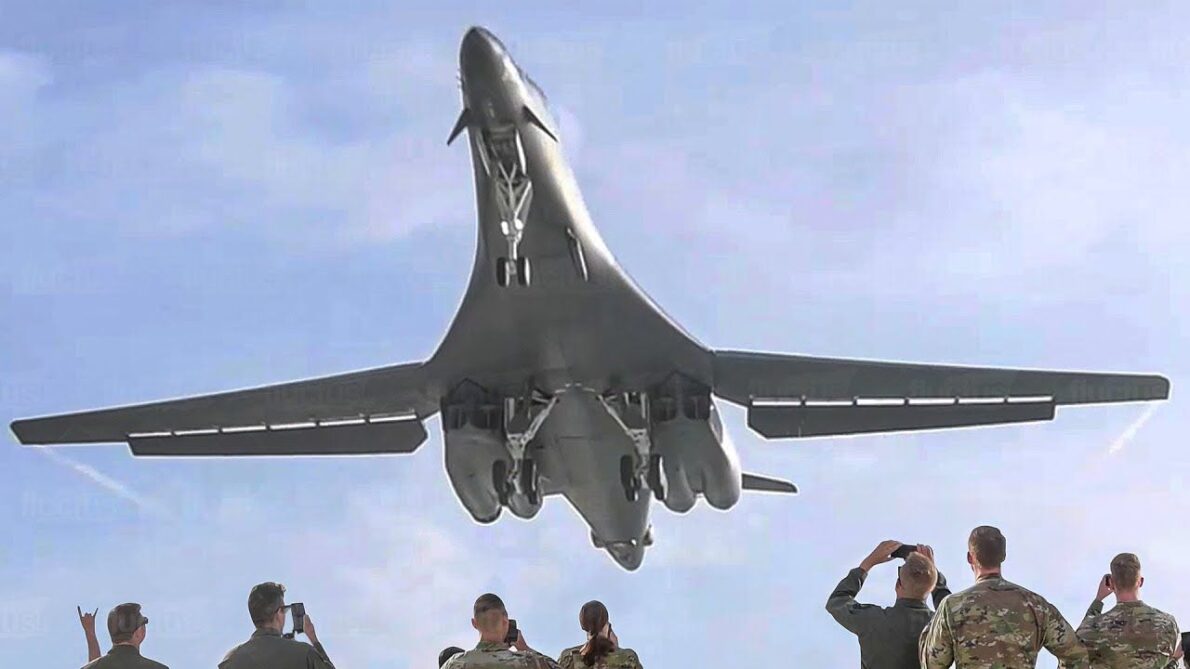

The Supersonic B1 Lancer Bomber, Developed by the United States, Is a Milestone in Military Aviation. With a Cost of 320 Million Dollars, This Powerful Aircraft Was Designed to Deliver Large Loads of Weapons Quickly and Accurately.
The supersonic bomber, B1 Lancer, was created in the 1960s, combining the speed of a fighter with the payload capacity of a heavy bomber. It can reach speeds of Mach 2.2 at high altitudes and fly long distances at Mach 0.85. This bomber can carry up to 75,000 pounds of weapons in its three internal compartments.
The weapons that the B1 Lancer can carry include guided missiles and precision bombs, such as the AGM-154 and the AGM-158, as well as general-purpose bombs like the Mark 82. The flexibility of its payload allows it to adapt to different types of missions and targets.
The Heart of the B1 Lancer Is Its Four General Electric F101 Engines

That Provide Incredible Power and High Efficiency. These engines enable the bomber to perform quick maneuvers and have extended range, essential for strategic missions. B1 Lancer pilots undergo rigorous training, focused on both aircraft control and strategic mission planning.
-
New Smart Radar Begins Issuing Fines to Solo Drivers in Carpool Lanes, Uses Cameras to Count Occupants, Changing Traffic Enforcement Rules on Busy European Roads

-
Brazil Welcomes Spanish Wamos Air and Nigerian Air Peace, Potentially Transforming International Routes and Increasing Competition
-
Why can the crane operator only obey the correct signalman on the construction site: among dozens of workers, a hand raised by the wrong person can confuse the maneuver and turn a load of tons into an immediate risk.
-
What changes with the new public transportation rules that can reduce pressure on fares and pave the way for zero fare in Brazil?




Before each flight, there is a detailed process of verifying and preparing the weapons, ensuring that the bomber is ready for any challenge.
During Missions, the B1 Lancer Can Be Escorted by Fighters, Such as the F-16s from the United States
For Protection Against Aerial Threats. These coordination exercises with other aircraft, such as tankers and early warning planes, are essential for the success of operations.
Despite its great offensive capability, the B1 Lancer also requires advanced skills for landing. It can stop on a runway of 3,500 to 4,000 feet, demonstrating its high-quality engineering and readiness for rapid mobilization and withdrawal.
The B1 Lancer represents the strength and advanced technology of the United States, being a crucial element in defense and global military operations.


Isso é porque os estudos unidos não conhecem o TU-160
O autor dessa matéria deve se informar primeiro para depois escrever
Os caras não são de brincadeira