






 Portuguese
  Spanish


Embraer buys the remaining stake of EZ Air, assumes 100% of the company in Mexico, integrates Safran Cabin operations in Jacareí, and strengthens control over the supply chain. In the aviation sector, the move seeks to reduce dependence on suppliers, protect margins, and respond to cost pressures in 2026 and global deliveries.
Embraer buys the remaining stake of EZ Air Interior Limited, in Mexico, and now controls 100% of the joint venture it had with Safran Cabin. The operation, announced on July 1, 2026, involves the acquisition of the remaining 50% of the Mexican company and assets linked to Safran Cabin operations in Brazil, especially in Jacareí, in the interior of São Paulo.
The coverage was presented by the channel Times Brasil, in a video published on July 2, 2026, with information about the Brazilian manufacturer’s strategy in the aviation sector. The Times Brasil report also highlighted that the financial values of the deal were not disclosed and that EZ Air produces components intended for the E-Jets aircraft segment.
Purchase puts Embraer in full control of a piece of its own chain
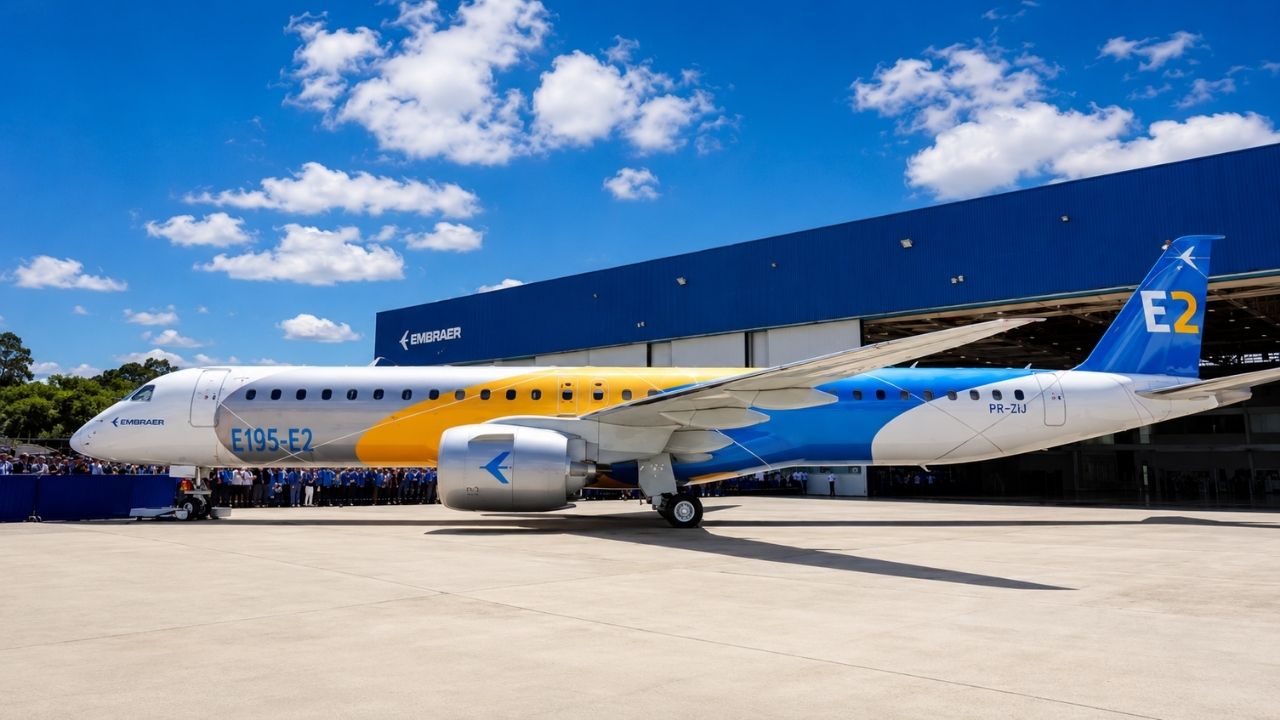
The decision does not just change a corporate stake. When Embraer buys the part that was still with Safran Cabin, it ceases to share control of a strategic interiors supplier and begins to fully command a structure that already served its own programs. EZ Air Interior Limited is located in Chihuahua, Mexico, and was created in 2012 as a joint venture between Embraer and C&D, now Safran Cabin.
-
Controversial Amazon Highway BR-319 to Receive $1.3 Billion for Road Upgrades and $570 Million for Territorial Governance in Brazil

-
Four Sanitation PPPs to Inject $4 Billion into 477 Brazilian Municipalities, Setting 2026 as a Record Year for the Sector

-
Brazil’s BNDES Approves $2.4 Billion for Major Urban Project Aiming to Serve 600,000 Passengers Daily and Reduce CO₂ Emissions by Over 200,000 Tons Annually
-
Brazilian Government Invests $140 Billion in Strategic Sectors like Fertilizers, Biopharmaceuticals, Sustainable Mobility, and Artificial Intelligence with BNDES Support


The company manufactures items such as luggage compartments, onboard kitchens, lavatories, and floor panels for the E-Jets family. These are parts that do not receive the same attention as engines or wings, but they are part of the operational and commercial experience of an aircraft. In a market pressured by costs, deadlines, and global competition, controlling this link can reduce risks within the supply chain.
The move reinforces the vertical integration of the Brazilian manufacturer
Vertical integration occurs when a company starts to control stages that previously depended on external partners. In the case of Embraer, the purchase expands its control over a part of cabin interior manufacturing, an area that needs to keep up with production volume, quality, certification, and delivery schedules.
This point is relevant because the aeronautical sector works with long, international chains that are highly sensitive to delays. When a supplier fails, the problem can affect assembly, delivery, and margin. By internalizing part of the operation, Embraer tries to reduce vulnerability to external bottlenecks, especially at a time when global manufacturers are competing for industrial capacity.
Safran Cabin exits the joint venture but does not completely disappear from the operation
The operation involves the purchase of the remaining stake of Safran Cabin in EZ Air and the integration of part of Safran Cabin’s activities in Jacareí, Brazil. According to Embraer itself, the operations incorporated in Jacareí are dedicated to the Brazilian manufacturer’s programs, while Safran Cabin Brazil’s engineering activities not related to Embraer remain with Safran.
This shows that the agreement is not a simple break, but an industrial reorganization. Safran had already announced in January 2026 a definitive agreement to sell its 50% stake in EZAir, then described as a 50/50 joint venture dedicated to manufacturing Embraer interiors in Chihuahua, Mexico.
Cabin components seem like accessories but weigh on the strategy
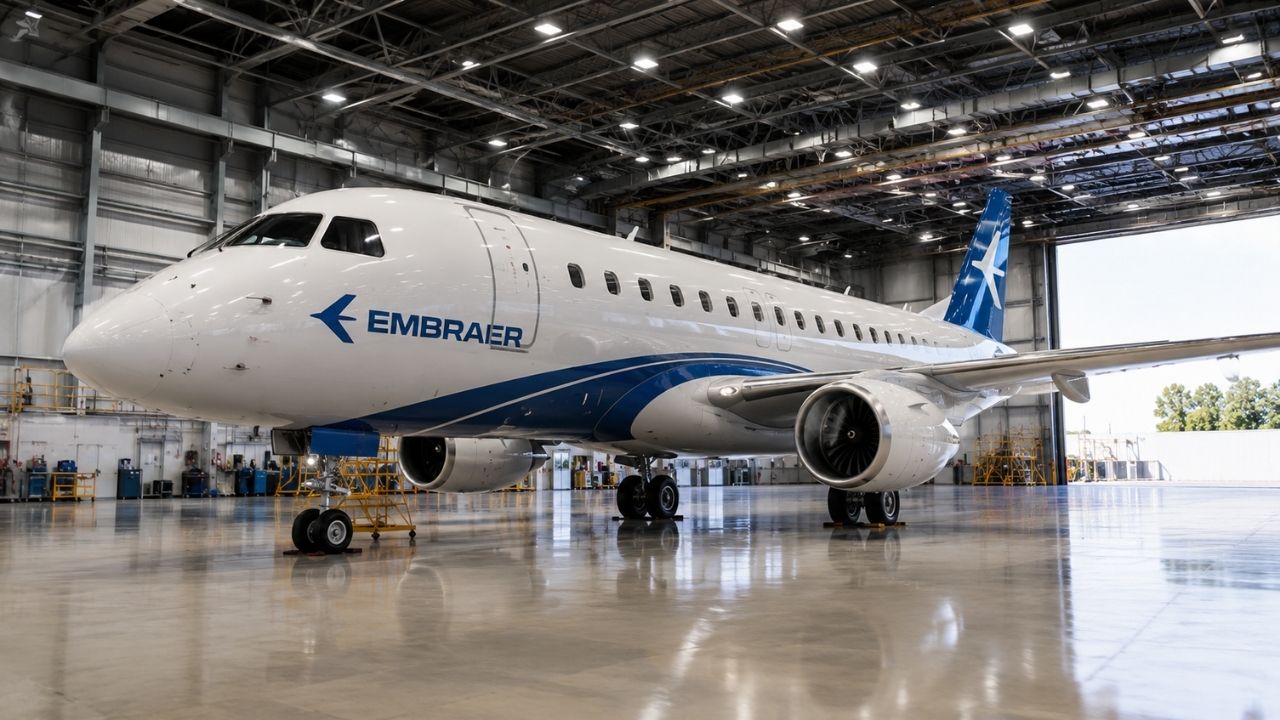
Kitchens, luggage compartments, lavatories, and floors are not the heart of an aircraft’s propulsion, but they are part of a chain that needs to function precisely. These items make up the cabin, interfere with assembly, finishing, use by airlines, and the delivery standard of jets.
When Embraer buys full control of EZ Air, the move signals that even components seen as secondary can gain strategic importance. In aviation, a delayed part can stall an entire assembly, and a more predictable supply chain tends to be valuable for those who need to deliver aircraft at a steady pace.
Operation occurs amid global pressure on suppliers
The global aviation sector is experiencing a phase where manufacturers and airlines are still dealing with supply challenges, industrial costs, and capacity reorganization. The Times Brasil transcript relates Embraer’s move to an attempt to expand possibilities within the supply chain and reduce costs throughout the production process.
The interpretation is consistent with the type of transaction announced. Embraer buys a supplier already connected to its programs to gain more control over production, quality, and deadlines. This does not eliminate all bottlenecks, especially in critical areas like engines, but it strengthens a part of the industrial structure under the company’s direct command.
Pressured stocks help explain the symbolic weight of the news
According to the Times Brasil coverage, Embraer’s shares had accumulated a drop of more than 6% in 2026 before showing recovery, with the stock cited in the report at R$ 82.76 and a 1% increase on the day of the announcement. The report also mentioned that the company had reached lower levels at the most challenging moment of the year.
This data helps understand why the purchase gained strategic interpretation. It is not just an operational acquisition; the market also observes whether the company can protect margins, reduce costs, and sustain deliveries. In a capital-intensive sector, confidence is built both with sales and with control of the industrial chain.
Operational results reinforce the context of the decision
Embraer reported on July 2, 2026, that it delivered 65 aircraft in the second quarter, its best performance for a second quarter in 16 years. The company also reported a 48% increase in deliveries compared to the previous quarter and a 7% growth compared to the previous year.
This background helps explain the timing of the operation. If deliveries are advancing, the company needs suppliers capable of keeping up with the pace. Buying the remaining stake of an interiors manufacturer may seem like a detail, but it gains relevance when production needs to scale without losing control.
Undisclosed values keep part of the interpretation open
The financial values of the deal were not disclosed, according to Times Brasil and the transaction’s own coverage. This point prevents an immediate assessment of the direct financial impact of the purchase, such as multiples, expected return, or the operation’s weight on cash flow.
Even so, the industrial logic is clear: Embraer now holds 100% of EZ Air and incorporates activities dedicated to its programs in Brazil. Without the agreement’s value, the safest analysis lies in the strategic effect, not in speculative financial projections.
Why this purchase draws attention in the aviation sector


The purchase draws attention because it occurs in a sector where supplier dependency can turn into delays, costs, and margin loss. Embraer operates in commercial aviation, executive aviation, defense, and agricultural aviation, in addition to offering services and support; therefore, its production structure depends on a broad network of parts, systems, and partners.
In this scenario, Embraer buys a small asset compared to the company’s total size, but directly connected to the production of E-Jets. The move is less about financial headlines and more about industrial control, a decisive area to compete in a tight global market.
The message behind the purchase of EZ Air
The acquisition of the remaining stake in EZ Air shows an Embraer trying to reduce exposure to suppliers, protect margins, and gain predictability in a sector where every production step matters. The operation also repositions the relationship with Safran Cabin, which leaves the Mexican joint venture, while part of the activities in Brazil becomes integrated into the Brazilian manufacturer’s programs.
Now the question remains: does this strategy of bringing suppliers into the operation strengthen Embraer in the long term or increase the company’s management complexity? Do you think controlling more stages of the chain is the right path to compete in the global aviation sector? Leave your opinion in the comments.


