Portuguese
  Spanish


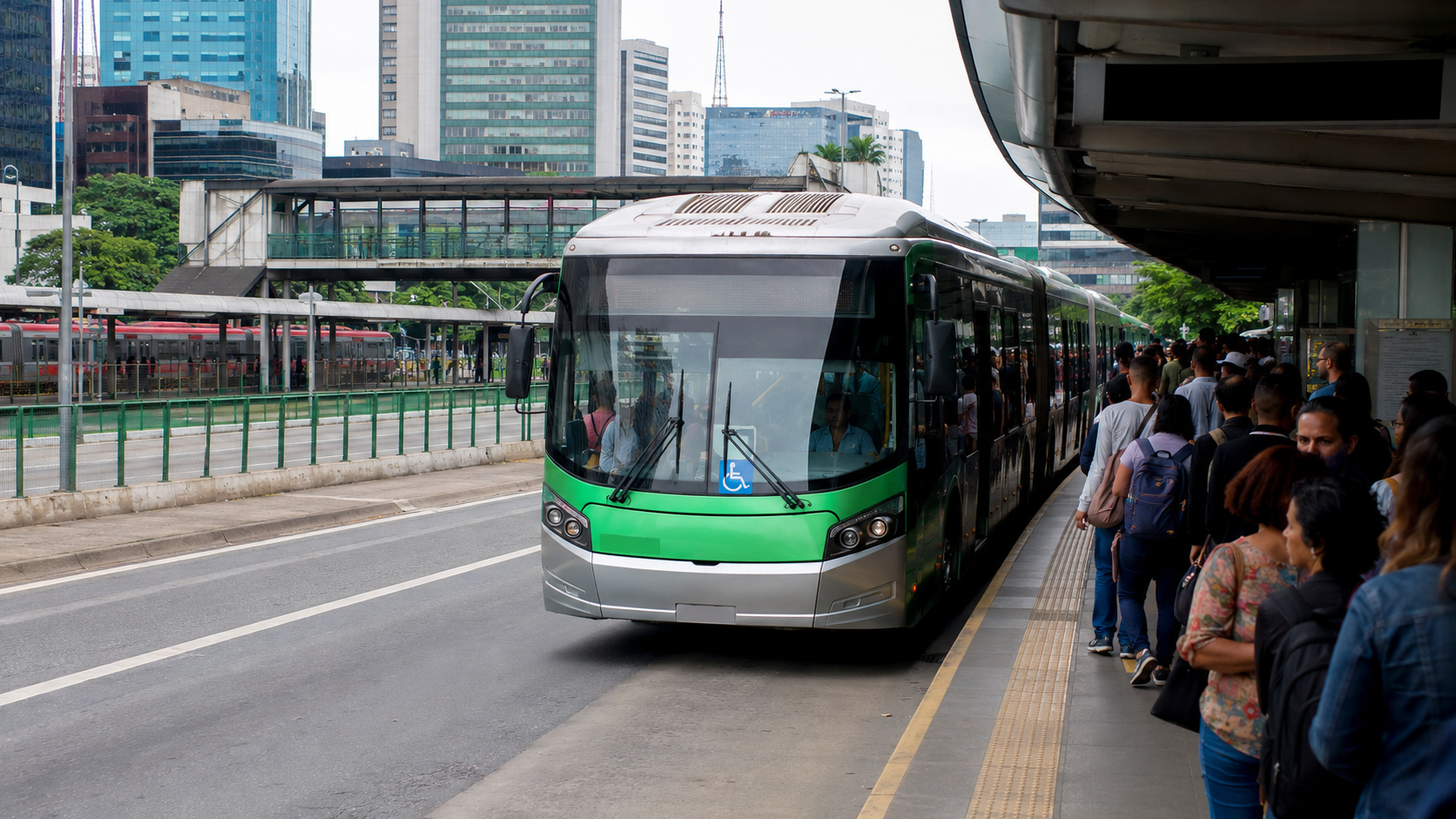

The new legal framework reorganizes the funding of urban mobility and changes how states and municipalities can finance buses, subways, and collective systems
A normative change with significant urban impact was recently sanctioned by the federal government, attracting national attention. Law No. 15,432/2026, originating from PL 3,278/2021, amends the Urban Mobility Law and provisions of the City Statute, reorganizing the way public collective transportation is financed in the country. The update represents the largest legal reform in the sector since 2012 and seeks to reduce the direct dependency on the fare paid by the user. This movement demonstrates that collective transportation is now treated as a social infrastructure with broad impact, as its effects also reach those who do not use buses, subways, or trains daily.
Technical reform reveals change in the role of the fare
The change arises from a structural review of the urban public transportation funding model and directly affects how states and municipalities can organize their networks. The fare paid by the passenger no longer solely bears the financial responsibility for the system. According to experts from the National Association of Public Transport, the old model reinforced the so-called fare vicious cycle, in which all operating costs pressured the final ticket price. Fuel, fleet maintenance, driver salaries, infrastructure, and service renewal ended up falling on the user. This format created a continuous problem because the fewer people used public transportation, the higher the fare tended to be for those who remained in the system.
Urban and social impacts of the new legislation
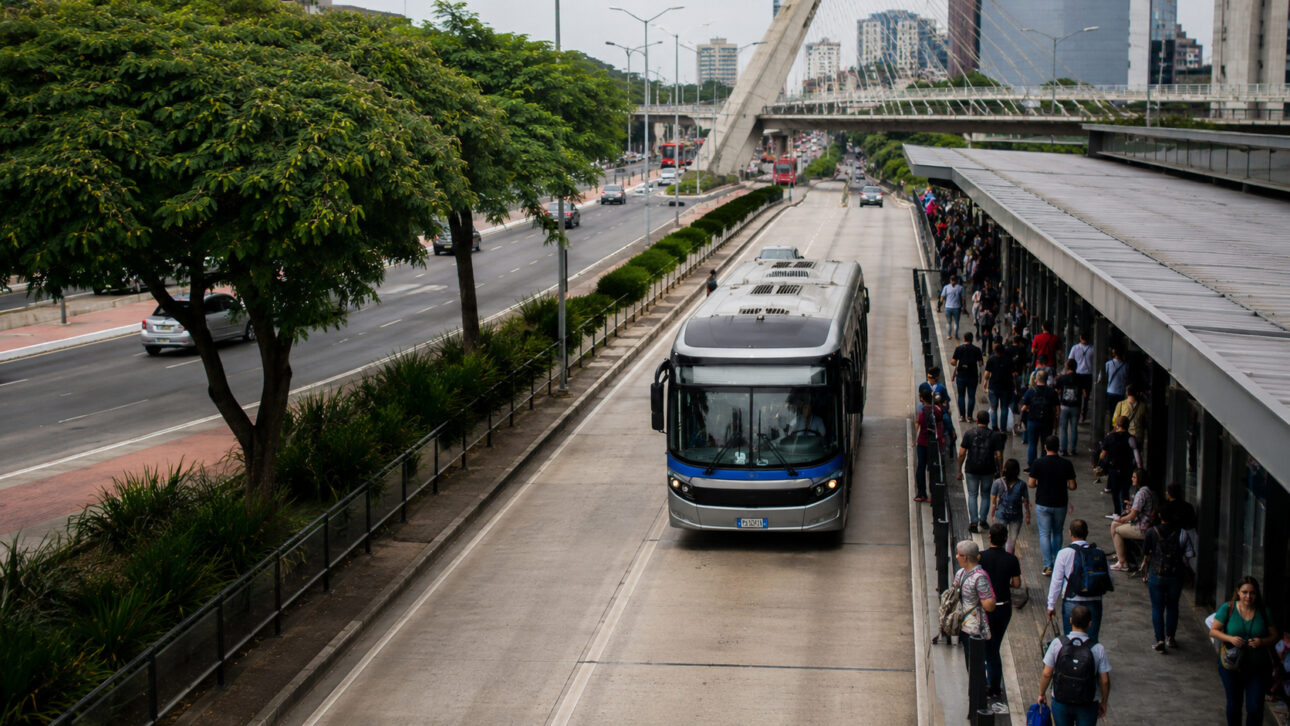
The new model is based on the idea that public transportation generates collective benefits and should not be financed only by those who pass through the turnstile. According to data released by the Ministry of Cities, about 23% of the Brazilian population uses public transportation as their main means of locomotion. Buses appear as the main mode for a significant portion of users and are also considered a lower-cost option for millions of Brazilians. This scenario shows that public transportation influences congestion, carbon emissions, urban accidents, and territorial inequalities. Therefore, improving the collective network produces indirect effects even for those who travel by car, motorcycle, or other individual means.
-
Latin America’s Largest Port Invests $400 Million in Rail System with Trains Up to 2.4 Kilometers Long
-
New Smart Radar Begins Issuing Fines to Solo Drivers in Carpool Lanes, Uses Cameras to Count Occupants, Changing Traffic Enforcement Rules on Busy European Roads

-
Why can the crane operator only obey the correct signalman on the construction site: among dozens of workers, a hand raised by the wrong person can confuse the maneuver and turn a load of tons into an immediate risk.
-
Argentina confirms Belgian giant to lead strategic Paraná River waterway and promises to reduce logistical costs on one of South America’s most important routes

New funding sources gain space in transportation
The main change in the new legislation is the treatment given to the public fare, that is, the amount paid directly by the passenger. The new framework allows this price to be below the real cost of the trip, as long as the difference is covered by other funding sources. Public subsidies, mobility funds, linked taxes, and alternative revenues now make up the funding structure. States, municipalities, and the Union can participate in this funding, while the CIDE-Fuels also appears as a possibility foreseen in the debate. According to the evaluation of the Federal Senate, the logic is to make more intensive use of individual transport contribute, indirectly, to support less polluting collective modes.
Real estate appreciation enters urban financing
The new law also strengthens instruments linked to the City Statute, especially in areas close to stations, terminals, and transport corridors. Properties located around these structures tend to appreciate after public investments, creating private gains associated with the expansion of mobility. Part of this gain can help finance public transport, according to urban instruments already provided for in the legislation. The model appeared partially in large centers, such as the São Paulo capital, but now gains a broader institutional base. Advertising in terminals, real estate concessions, rentals, and exploitation of public spaces also become part of the set of possible revenues.
Zero fare gains legal support
Another central point of the new law is the legal opening for zero fare policies in public transport. The legislation does not automatically eliminate the charge to the passenger, but strengthens the legal security for cities that wish to fund part or all of the system. More than 130 Brazilian municipalities already adopt some model of free public transport, according to surveys cited in the urban mobility debate. The new framework allows public transport to be treated on a level similar to essential services, such as public health and sanitation. This understanding reinforces the idea that urban mobility can be collectively funded, considering its social impact.
Mobility funds expand local possibilities
The law favors the creation of specific funds to finance public transportation, which can receive resources from municipal budgets, state transfers, and federal funds. Despite this progress, the legislation still does not create a permanent federal fund nor establish a continuous national subsidy for the sector. States and municipalities continue to play a decisive role in the practical implementation of the new model. Researchers from the National Association of Public Transport and the Institute for Transportation and Development Policy assess that the biggest previous obstacle was institutional and legal. The new legislation tends to reduce these barriers and expand alternatives for public managers.

The new public transport in a broader context
The legal update integrates a change in vision about urban mobility in Brazil. Collective transportation is no longer seen merely as a service supported by fares and begins to occupy a position closer to an essential structure for the functioning of cities. This change reorganizes responsibilities, expands funding sources, and creates new conditions to reduce pressure on fares. The progress, however, depends on local regulation, financial planning, and the execution capacity of governments. Law No. 15.432/2026 establishes the foundations, but the practical transformation will depend on how each city applies the new framework.
The future of fares and urban mobility
Experts, managers, and users assess that the new law could represent a turning point for Brazilian public transportation. The possibility of combining subsidies, funds, real estate revenues, advertising, and linked taxes creates a model less concentrated on the fare paid by the passenger. Zero fare gains more legal security, although it still depends on the decision and financial capacity of each municipality or state.
What do you believe should be the priority: reducing the fare price to expand access to transportation or first creating permanent funding sources to ensure the system’s sustainability?