





 Portuguese
  English
  Spanish
  4 min of reading
  0 comments


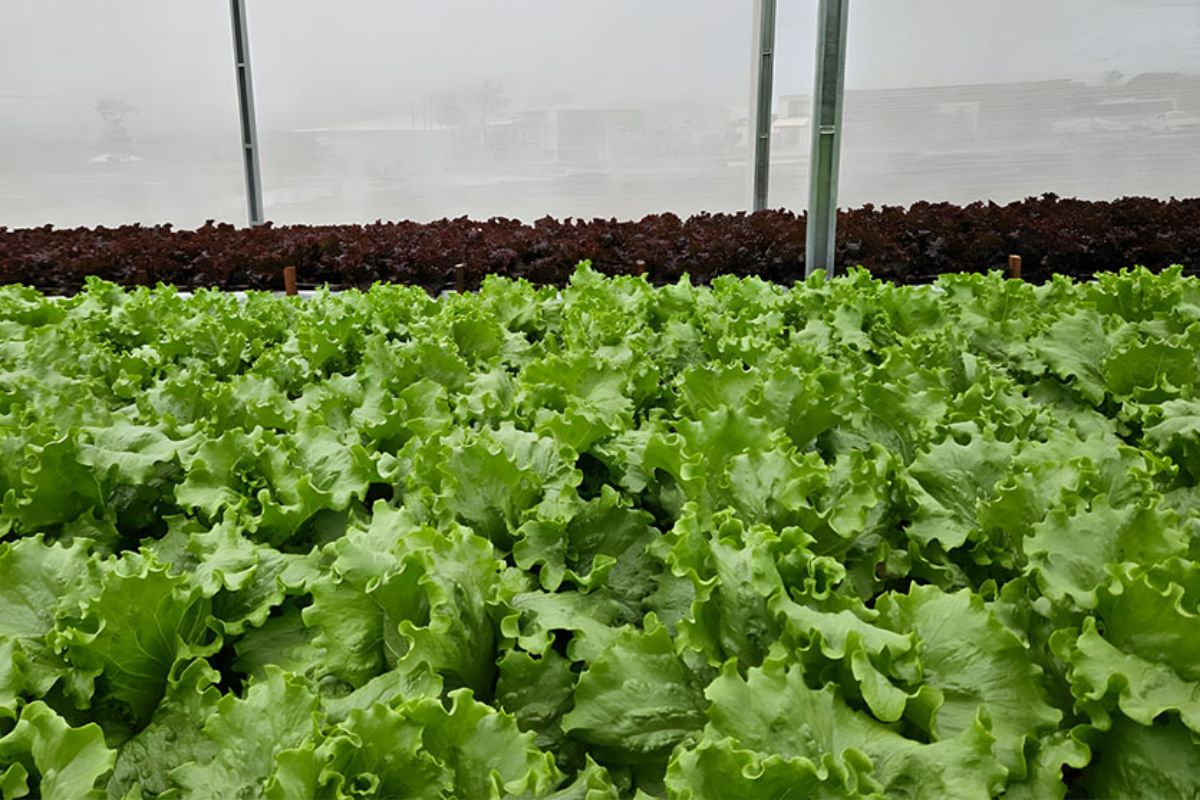
The Adoption of the Reuse System in Irrigation Shows How Crop Production Can Save Water and Fertilizers, Improve Nutritional Management, and Enhance Sustainability in Protected Vegetable Cultivation
Vegetable production has been undergoing significant changes with the arrival of technologies that reduce waste and increase resource utilization, especially in the irrigation of vegetables grown in protected environments, according to a report published.
The use of systems capable of collecting, treating, and reusing the nutrient solution drained from pots has gained prominence for providing a 61% increase in water use efficiency in commercial cultivation.
Results have been observed in the Serra da Ibiapaba (CE), a region where water consumption from underground aquifers has always represented high costs and pressure on natural resources.
-
Brazilian agriculture has million-dollar machines, record harvests, and digital farms, but 83% of producers report difficulty in hiring qualified professionals to operate and maintain the new generation of the field.

-
European Union formalizes veto that could block almost US$ 2 billion in Brazilian meat starting in September and raises maximum alert in Brazilian agriculture

-
Brazil is excluded from the European Union’s list for exporting beef, chicken, fish, honey, and other products starting in September due to sanitary requirements.
-
Indonesia buys chicken, meat, and grains from Brazil to supply 280 million inhabitants, but the president of the fourth most populous country in the world declared self-sufficiency in rice, eliminated imports that reached 4.52 million tons, and now targets sugar, soy, and wheat in a food shift that could change what Brazilian agribusiness sells to the Asian giant.


Research from Embrapa Agroindústria Tropical (CE) shows that the controlled reuse of drained liquid, associated with low-cost sand filters and ultraviolet light (UV) sterilization, reduces losses, decreases disposal, and improves the relationship between productivity and sustainability.
This model is already implemented in commercial greenhouses and has a direct impact on the routine of tomato and leafy vegetable producers.
Reuse System with Salinity Management in Irrigation
The introduction of processes that control the salinity of the nutrient solution has a direct relationship with plant performance in substrate cultivation.
In the study conducted with grape-type tomatoes, the reuse system allowed reducing water and nutrient losses that, under traditional conditions, can reach 30% due to leaching.
The mechanism works by collecting the solution that drips from the pots through polypropylene gutters, leading the liquid to reservoirs where it is pumped to sand filters with a capacity of up to 125 liters per hour each.
The slow filtration stage removes impurities, while treatment with UV sterilizers eliminates microorganisms.
Vegetable production becomes more efficient because the producer reuses the treated liquid in the formulation of a new nutrient solution, adjusted according to the crop’s needs.
In the validated crop, water use efficiency reached 18.6 kilograms of tomatoes per cubic meter, a rate 61% higher than that observed in non-reuse plantings, which recorded 11.5 kilograms per cubic meter.
These figures show how salinity management reduces restrictions on nutrient absorption and favors plant development.

Sustainable Technology with Sand Filter and UV Sterilization in Protected Cultivation
The filtration system developed by the research combines 200-liter barrels, PVC, a layer of gravel, and sand as the filtering element.
This arrangement forms the so-called biological filter, where a natural layer of microorganisms acts to eliminate pathogens.
Tests conducted at the Embrapa Phytopathology Laboratory with a solution containing Fusarium spores showed that, after passing through the filter and the UV equipment, no pathogenic microorganisms were present.
Vegetable production is directly benefited because the risk of contamination of the entire crop decreases, allowing for the safe reuse of the drained solution.
Additionally, fertilizer consumption was reduced by 29%, equivalent to 900 kilograms in a 180-day production cycle.
Savings in the use of this input represented a 24% decrease in costs related to the nutrient.
Although the initial investment is higher, calculations revealed that the operational costs of the reuse system are lower due to reduced fertilizer application and energy used for irrigation.
Regional Adoption with Rainwater Harvesting in Agricultural Greenhouses
The Serra da Ibiapaba region has a large production of vegetables and intense use of groundwater.
To enhance the utilization of the reuse system, studies integrated the collection of rainwater gathered from the greenhouse roofs through gutters and pipes.
Stored in a reservoir coated with geomembrane, this volume proved sufficient to meet the water demand of a 2,500-square-meter greenhouse in two complete growing cycles per year, when combined with the reused nutrient solution.
The use of rainwater, which has low salinity, enhances the performance of the system.
Since March 2025, the technology has also been applied in hydroponic leafy crops by Forteagro, in Guaraciaba do Norte (CE), which maintains a technological showcase for demonstrations and commercial production.
The initiative aims to disseminate sustainable practices and expand the protected cultivation of lettuce, arugula, green onions, and cilantro focusing on the rational use of water resources.
For vegetable production, this model allows for reduced inappropriate disposal of effluents, prevents the contamination of aquifers, and decreases dependence on underground sources, strengthening a more balanced and environmentally safe production chain.







Be the first to react!