Portuguese
  Spanish


The new European rule on antimicrobials has put Brazil in a race against time to avoid losing one of the most demanding markets in the world for meat and animal products, with a direct impact on exporters, slaughterhouses, and agribusiness.
The European Union has raised a red flag in the heart of the Brazilian agribusiness by formalizing a measure that could directly affect the exports of beef, chicken, and other animal products from Brazil starting September 3, 2026.
The European bloc removed Brazil from the list of countries authorized to sell certain categories of animals and animal products for human consumption, if the country cannot prove compliance with the new rules on antimicrobial use in animal production.
The potential impact is enormous: the sector estimates that the measure could threaten a market close to US$ 2 billion per year, precisely in one of the most demanding and valued destinations on the planet for Brazilian animal protein.
-
In Rural Brazil, José Sirval Operates a Water-Powered Mill Grinding 125 Kilograms of Corn Daily Using His Great-Grandfather’s Century-Old Monjolo

-
From Market Stall to Agribusiness: Patagonian Fruit Grower Owns 550 Hectares and Processes 18 Million Kilos of Pears and Apples Annually, Exporting Directly to Brazil
-
Brazilian Civil Servant Earns $2,800 Monthly but Seeks Legal Help as Bank Loans Consume Nearly 80% of Income

-
At 93, Brazilian Farmer Restores 56 Hectares of Forest and Revives Spring in the Amazon, Installs First Climate Tower in the Region


European Union veto targets Brazilian meat and animal products
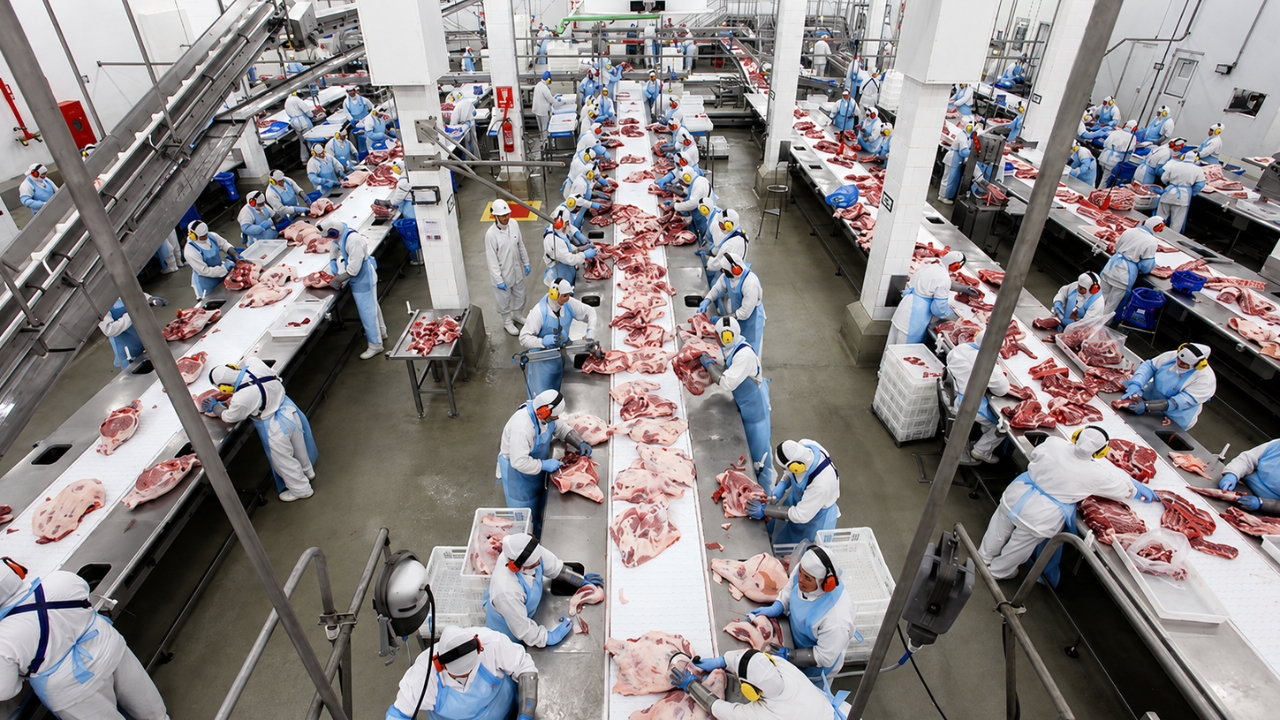
The decision was formalized through the Implementing Regulation (EU) 2026/1189, published in the Official Journal of the European Union. In practice, the document changes the list of countries authorized to export certain products to the bloc.
Brazil was previously authorized in categories related to cattle, equines, poultry, aquaculture, honey, and casings, but these markers were removed by the European Commission. This means that if nothing changes by September, shipments of these categories may be blocked.
Despite the explosive tone of the measure, it is important to highlight: this is not a direct accusation of contaminated meat. The decision is linked to the requirement for formal guarantees on the use of veterinary drugs and antibiotics during animal rearing.
Rule on antimicrobials becomes the center of the crisis
The most sensitive point lies in the new European rules against the use of antimicrobials as growth promoters or for yield increase in animal production. The EU also wants to prevent the entry of products linked to substances reserved for the treatment of human infections.
To continue selling to the bloc, exporting countries need to prove that their control systems can ensure compliance throughout the entire production cycle. This involves traceability, certification, documentation, and sanitary inspection.
According to the European justification, Brazil did not provide sufficient information within the required timeframe. Therefore, the country was removed from the list of authorized suppliers for the affected categories.
Block does not start now, but the deadline is short
The restriction did not come into effect immediately. Exports are still happening for now, but the final deadline on the calendar is September 3, 2026.
This detail completely changes the reading of the news. Brazil still has a window to negotiate, provide new guarantees, and try to reverse the block before it affects slaughterhouses, exporters, and entire production chains.
Even so, the warning is serious. The European market is not just a common buyer: it pays more for specific cuts and products, demands strict standards, and has symbolic weight for the international reputation of Brazilian meat.
Loss could approach US$ 2 billion per year
The size of the threat becomes clear when looking at recent numbers. In 2025, the European Union purchased about US$ 1.8 billion in Brazilian animal protein, totaling approximately 368 thousand tons.
Beef was one of the main products in this package, with revenue exceeding US$ 1 billion in sales to the European bloc. Meanwhile, chicken meat also had significant weight, with hundreds of millions of dollars in exports.
Therefore, the possible veto concerns not only large slaughterhouses. It could affect the entire chain linked to cattle, chicken, aquaculture, honey, logistics, certification, transportation, and foreign trade.
European market is worth more than the exported volume
The European Union is not necessarily the largest destination in volume for Brazilian meat, but it is one of the markets of higher added value. In other words, Brazil may sell fewer tons to Europe, but earn a lot due to the price paid.
This is one of the reasons that makes the case so sensitive. Losing space in the EU means not only reducing sales but also weakening the Brazilian presence in a premium market, used as a global reference for sanitary and environmental requirements.
For agribusiness, the blockade could represent a strategic defeat. For the government, it would be a diplomatic and commercial crisis at a time when the country is trying to expand its image as a reliable agro-exporting power.
Brazilian government tries to reverse decision before September
The Brazilian government reacted by saying it received the decision with surprise and promised to act to reverse the veto. The strategy involves sending new technical information to the European Union and demonstrating that the country can meet the bloc’s requirements.
The negotiation should be conducted by type of protein, as each production chain has its own characteristics. The use of antibiotics, control systems, and traceability mechanisms vary between cattle, poultry, fish, and other animal products.
Behind the scenes, the government seeks to prevent the measure from becoming a bigger problem. If the EU maintains the blockade, Brazil may discuss commercial responses, including based on the principle of reciprocity.
Crisis could turn into a trade dispute between Brazil and Europe
The case has all the ingredients of a high-impact dispute: Brazilian agribusiness, sanitary barriers, European market, billion-dollar exports, and political pressure.
For producers and exporters, the European demand can be seen as a technical barrier that threatens a competitive sector. For the European Union, the measure is part of a strict policy on antimicrobial control and food safety.
The risk is that the discussion goes beyond the sanitary field and enters the commercial terrain. If this happens, the veto could become another chapter of the tension between food-producing countries and economic blocs that raise their import requirements.
What’s at stake for Brazil
Brazil enters this crisis as one of the largest exporters of animal protein in the world. The country is strong in beef, chicken, and other agricultural products, but increasingly depends on proving traceability and compliance with international rules.
The European Union’s decision shows that the global market is changing. It’s no longer enough to produce a lot and sell cheaply. Now, major buyers want detailed evidence about how the animal was raised, what substances were used, and whether the entire chain complies with international sanitary standards.
If Brazil manages to reverse the veto, the episode will still serve as a warning for agribusiness. If it does not succeed, the country could see nearly US$ 2 billion per year under threat and one of its most valuable markets closing its doors starting in September.
The clock has started ticking. And for Brazilian agribusiness, every day until September 3, 2026 could be worth millions of dollars.