Portuguese
  Spanish


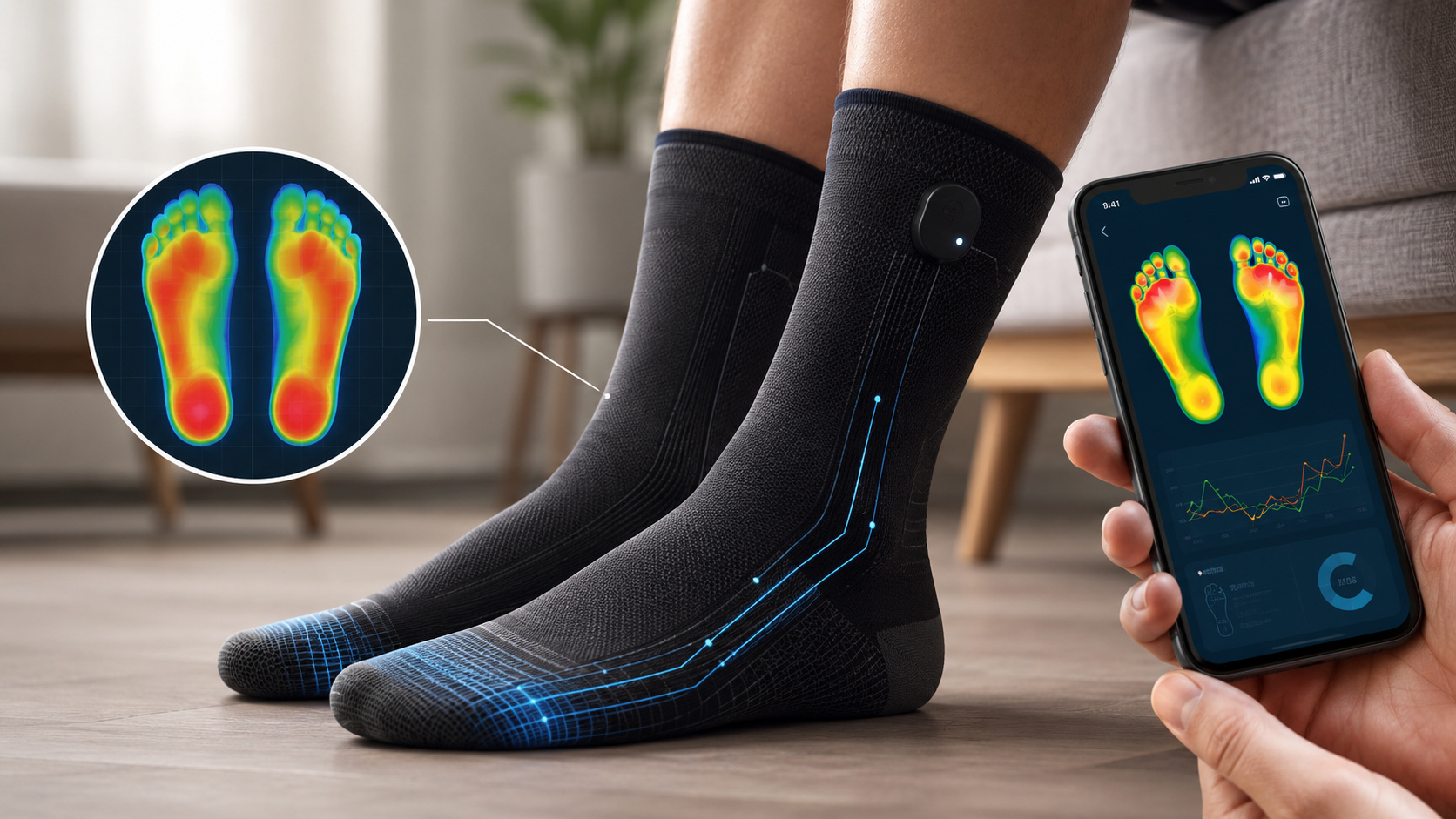


Smart socks for diabetics monitor foot temperature in real-time and can help detect early signs of injuries before ulcers appear.
A simple sock may not seem like revolutionary technology. But an innovation created in the United States is drawing attention from doctors, researchers, and diabetes patients for an impressive reason: it can continuously monitor foot temperature and identify early signs of inflammation even before a wound appears. Known as Siren Socks, the diabetic socks were developed for people with diabetes and peripheral neuropathy, a condition that reduces foot sensitivity and increases the risk of injuries that often go unnoticed.
The proposal is simple: transform a common piece of clothing into a monitoring system capable of alerting patients and healthcare professionals about potential problems before they develop into ulcers or amputations.
Diabetes can cause injuries that appear without pain and are only noticed when they have already become serious
One of the most dangerous complications of diabetes is peripheral neuropathy. As the disease progresses, many patients partially lose the ability to feel pain, pressure, or heat in their feet. This means that small injuries, blisters, or friction points can develop without the person noticing.
-
Former Merchant Marine Captain Invents Fuel-Free Barrier, Removes 20,000 Tons of Trash from Chennai Rivers

-
14-Year-Old Maxim Harris Turns School Project into Anti-Rage Gaming Accessory, Sells 1,000 Units Across 46 U.S. States, Donates 20% of Profits to Charity
-
Brazilian Health Agency Approves First Oral Medication for Cancer Patients
-
11-Year-Old Boy and His Mother Discover 1.8-Million-Year-Old Elephant Tooth on English Beach Eroded by the Sea







According to experts cited in studies on foot thermal monitoring, inflammatory processes usually cause a temperature increase days or even weeks before an ulcer appears.
The problem is that these signs usually go unnoticed in daily life. This is precisely where smart socks come in.
Sensors hidden in the fabric continuously monitor foot temperature
Unlike traditional medical devices, Siren Socks were designed to look like regular socks.
The sensors are integrated into the fabric and continuously measure the temperature in strategic areas of the feet. The information is transmitted to a digital system capable of identifying unusual thermal differences between one foot and the other.
When the system detects a temperature increase above the expected level, it may indicate developing inflammation. Since inflammation often arises before an ulcer forms, the alert allows the patient to seek medical evaluation before the situation worsens.
The technology was created to detect problems before they turn into wounds
The central concept of the technology is not to treat injuries. The goal is to identify risks early. Siren itself explains that an increase in temperature is one of the most reliable signs that something abnormal is happening in the tissues of the feet. In people with neuropathy, this information can function as an early warning system.

Instead of waiting for a wound to appear, doctors and patients receive indications that a specific area is experiencing excessive stress or inflammation.
This allows for simple interventions, such as footwear adjustments, reducing the load on the foot, or clinical evaluation before more serious complications develop.
Study followed high-risk patients and found a reduction in ulcers and amputations with the use of diabetic socks
A study published in JMIR Diabetes evaluated a continuous remote monitoring program using smart socks in diabetes patients considered at high risk for ulcers.
The researchers analyzed 115 patients monitored by podiatry clinics in different regions. According to the results, there was a significant reduction in the occurrence of new ulcers and non-traumatic amputations during the monitoring period.
Data released by Siren based on the same program indicated a reduction of 68% in the occurrence of ulcers and 83% in amputations among monitored patients. Although these numbers are associated with the studied program and do not guarantee individual results, they have helped increase medical interest in the technology.
How much it costs and how Brazilians can try to buy Siren’s smart socks
Siren does not provide a current direct sale price on its official website; today, the company presents the socks as a product linked to clinical monitoring, prescription, and certified providers, stating that the patient must go through a Certified Siren Provider, receive a prescription, and then receive the socks by mail.
Siren itself says that the product is covered by many insurances in the USA, including Medicare, but there is no official sale in Brazil nor a direct purchase page for Brazilians. In a diaTribe publication reviewed in 2021, the package was sold for US$ 19.95 per month or US$ 119.70 in total, with five pairs for six months.
For Brazilians, the safest way is to contact Siren directly through the official form, select the patient option, and inquire about international shipping.
The temperature of diabetic socks can change days before the appearance of a visible lesion
Research involving thermal monitoring shows that temperature changes often appear before traditional clinical signs.
A case-control study using real data from smart socks observed detectable thermal differences before the emergence of clinically confirmed lesions. This suggests that continuous monitoring can serve as an early indicator of future problems.
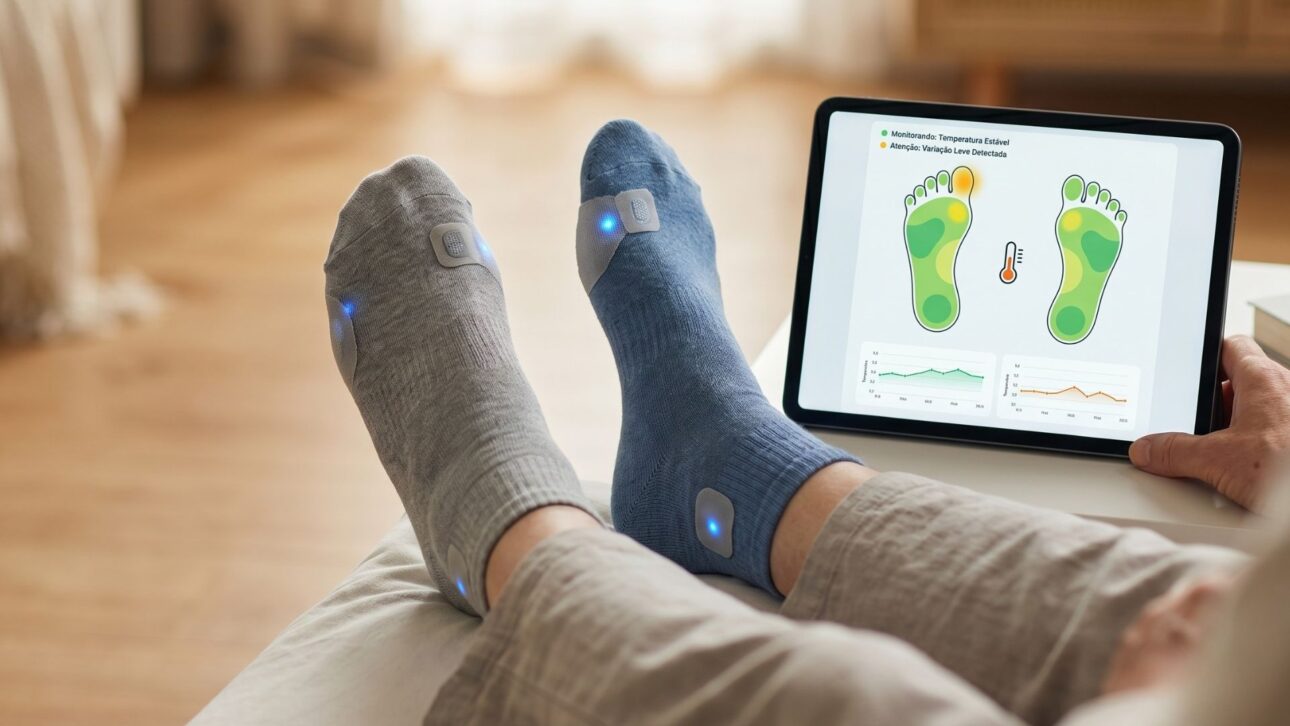
For patients with neuropathy, this information is especially valuable. Since many do not feel pain or discomfort in the early stages of a lesion, automated monitoring can act as a kind of “extra sense” for the feet.
The socks look ordinary, but they hide complex medical technology
One of the most curious aspects of the project is that the user experience was designed to be similar to that of a traditional sock.
Research published in the Journal of Medical Internet Research reported that participants found the socks almost indistinguishable from conventional models during daily use.
The sensors are embedded in the fabric and perform periodic readings without requiring the user to take manual measurements. This increases adherence to monitoring and reduces the need for additional equipment.
The problem the technology aims to combat drives billions in medical expenses
Diabetic foot ulcers represent one of the most expensive and disabling complications of diabetes. According to information released by Siren, diabetes-related foot injuries generate annual billion-dollar costs for healthcare systems and are among the leading causes of non-traumatic amputations.
Preventing these complications is considered one of the most important strategies to reduce hospitalizations, surgeries, and loss of quality of life among diabetic patients.
Therefore, there is growing interest in technologies capable of identifying problems before they require complex interventions.
The next generation of smart clothing may start with the feet
For decades, preventing diabetes complications has relied mainly on visual inspections, periodic consultations, and constant patient attention.
Smart socks represent a change in approach. Instead of waiting for an injury to appear, they try to identify physiological changes that arise before visible damage.
Although they do not replace medical follow-up or guarantee the prevention of all complications, these technologies show how sensors, smart fabrics, and remote monitoring can transform a common piece of clothing into a health tool capable of monitoring patients 24 hours a day.
For millions of people living with diabetes, the idea of a sock capable of detecting problems before they are even felt may seem futuristic. But it already exists, is being studied by researchers, and shows how technology is beginning to reach places few imagined: within the very fabric we wear every day.