Portuguese
  Spanish


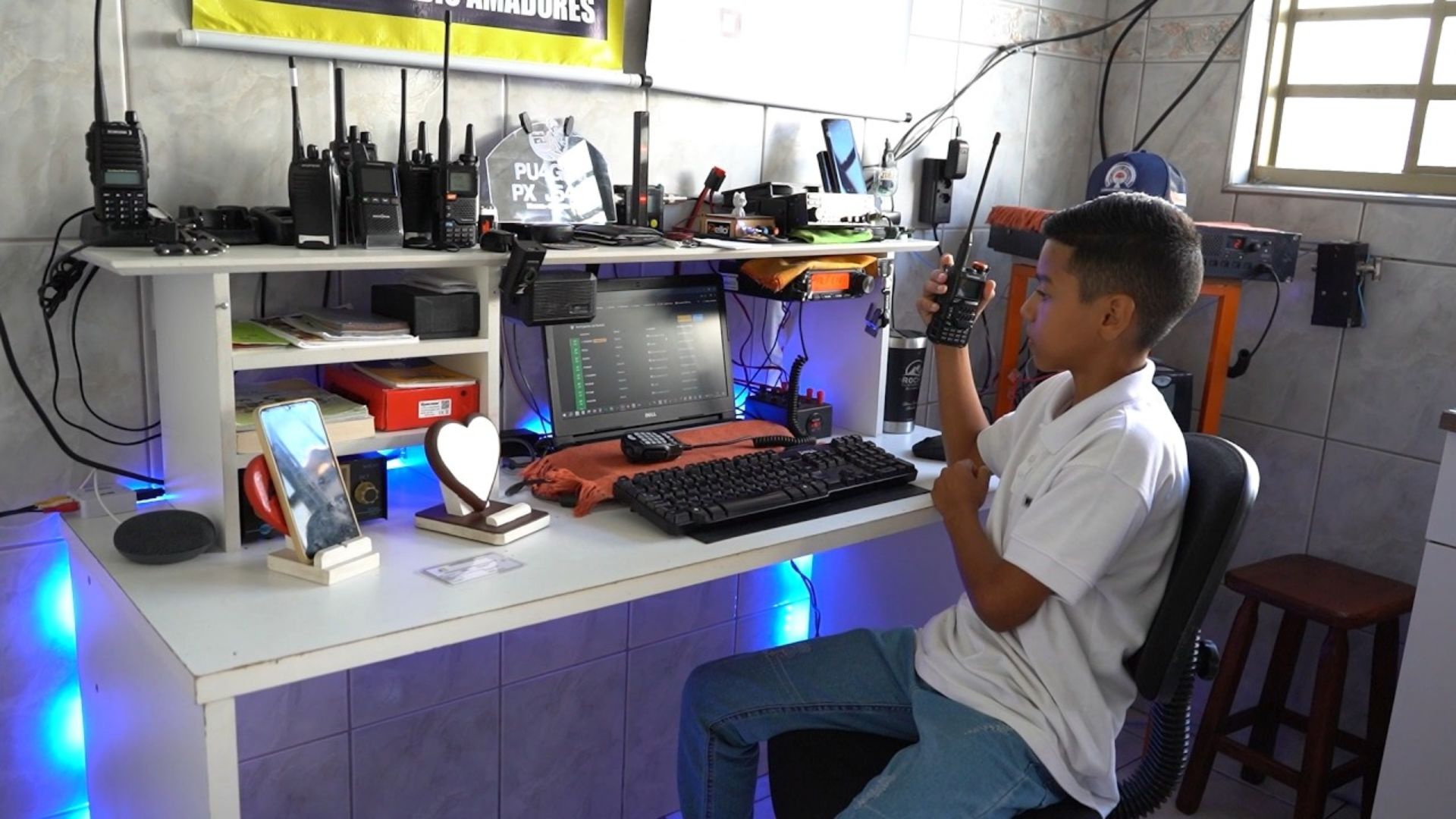

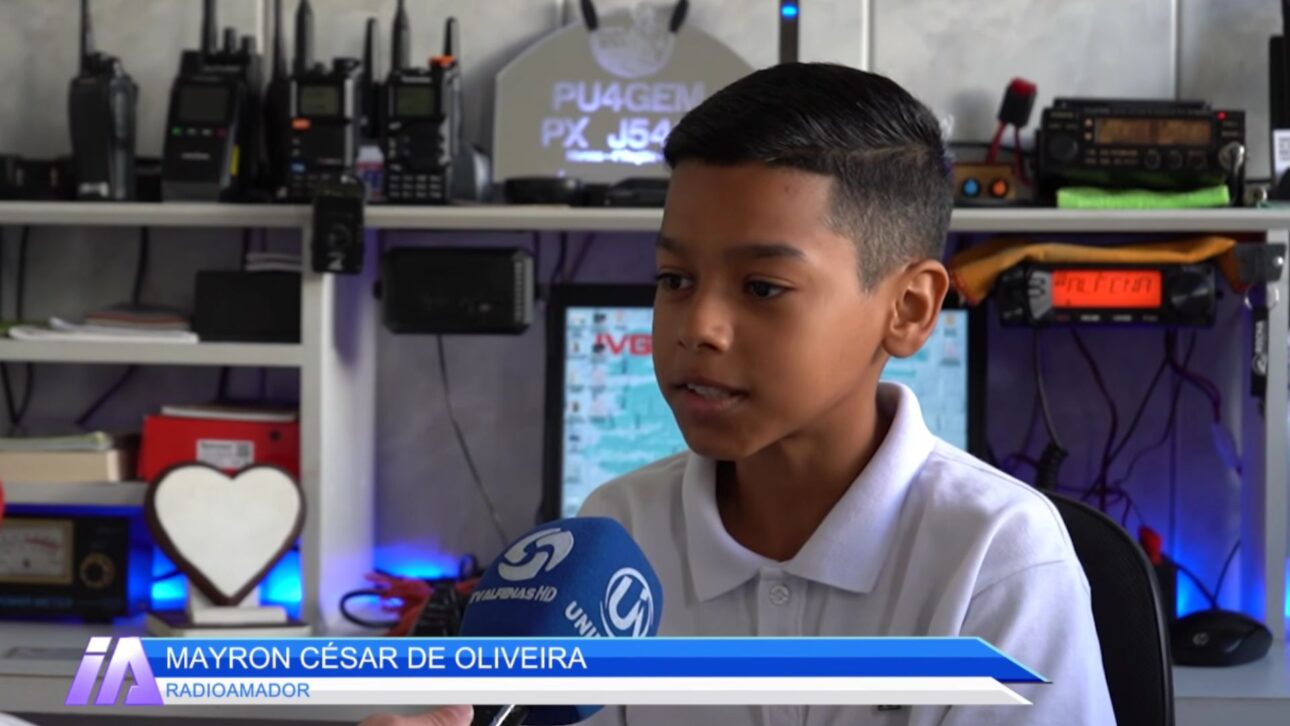
Myron is 12 years old, lives in Alfenas, in the south of Minas Gerais, and is one of the youngest amateur radio operators with an active license in Brazil. He studied alone for a month, took practice exams on a digital platform, and passed the Anatel exam. Through amateur radio, he has already made contacts even in Paraguay.
Most 12-year-olds are on social media. Myron chose amateur radio. The boy from Alfenas, in the south of Minas Gerais, spent a month studying legislation, electrical technique, and radio wave propagation before sitting for the Anatel exam, the National Telecommunications Agency. He passed, got the license, and joined a group that few imagine still exists: active amateur radio operators in Brazil. All this before turning 13, as reported by TV Alfenas on May 12, 2026.
Amateur radio is an activity practiced by radio communication enthusiasts that allows long-distance contact, equipment testing, and the study of wave propagation around the world. Myron has already used the license to establish contacts with operators in Paraguay, something that, for those who grew up thinking radio was a dead technology, may sound surprising. Myron’s stepfather, Marcos Geraldo, himself an amateur radio operator, was one of the project’s supporters, but attributes the merit of the result to the boy himself. According to Marcos, the study depended almost entirely on the boy’s determination.
One month of study, one approval, and an antenna in Alfenas
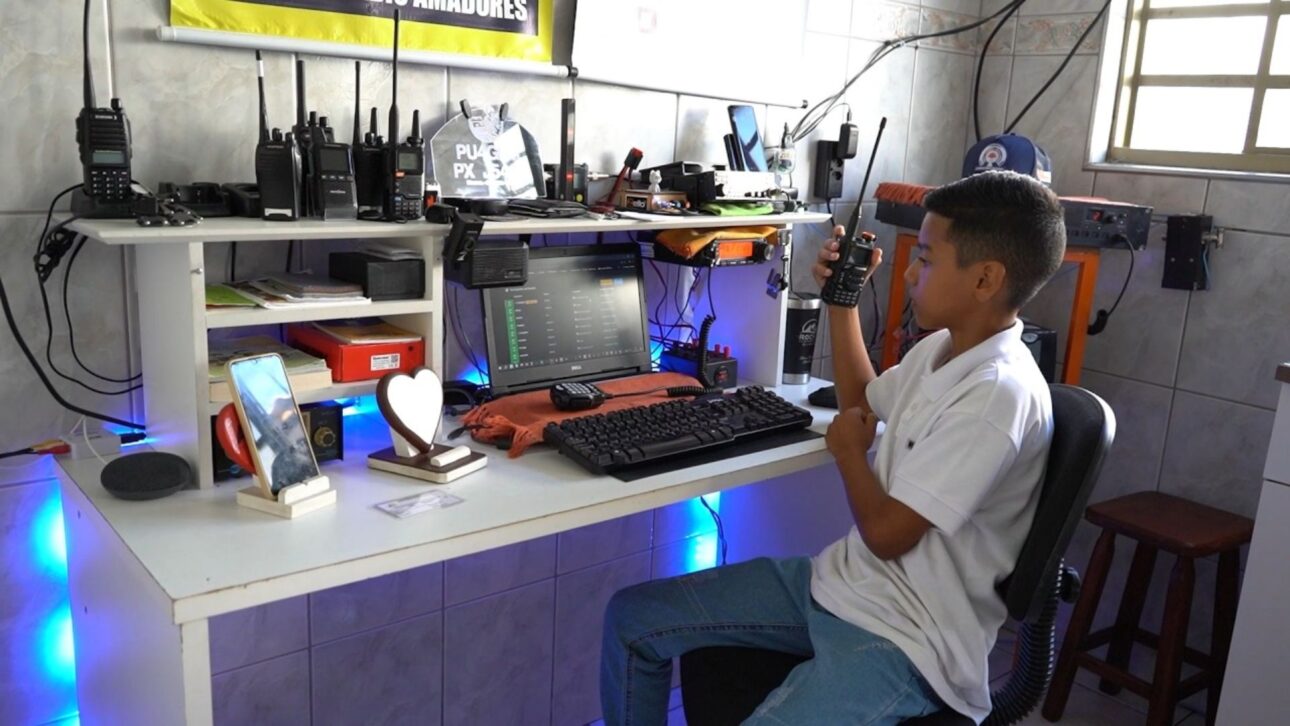
The process was conducted in a self-taught manner: he started by watching classes on television and then moved on to practice exams on a computer, using a platform developed in Alfenas. According to his stepfather Marcos Geraldo, most of the knowledge Myron accumulated came from the boy’s own search, as he watched videos on YouTube and delved into the topics on his own.
-
Engineers Develop Fridge-Sized Machine to Produce 95-Octane Synthetic Fuel from Air and Water, Aiming to Sustain Combustion Engines Without Oil

-
Two-Armed Robot Uses AI to Reassemble Destroyed Pompeii Frescoes, Solving an “Impossible” Puzzle
-
New Law in Brazil Requires Breaks for Type 1 Diabetes Management at Work, School, and Public Exams

-
Scientists Confirm “Greening” of Antarctica: Ice on the World’s Coldest Continent Turns Green as Mosses Multiply Over Tenfold in Four Decades


“He prepared to take these tests through mock exams, using a platform we developed here in Alfenas. He studied a lot, most of the study depended on him,” said Marcos Geraldo to TV Alfenas. The boy confirmed the process in his own words: “I studied for a month and at first, I started watching classes on TV, then I took mock exams on the computer.” In practical terms, Myron studied on his own a subject that combines regulation, electronics, and physics, and passed the federal regulatory exam before reaching adolescence.
What is amateur radio and why it still exists
For those unfamiliar, amateur radio is a globally regulated telecommunications service that allows licensed individuals to establish voice, data, or Morse code contacts over distances ranging from a few kilometers to the other side of the planet, depending on radio wave propagation conditions. It is not telephony, it is not the internet, and it is not CB. It is a unique system, with frequencies reserved by international agreements and operators identified by unique call signs issued by the regulatory bodies of each country.
In Brazil, Anatel is responsible for granting licenses and overseeing the service. To obtain the license, the candidate must pass an exam covering everything from legislation and operational ethics to electronics and transmission techniques. The requirement is not trivial: it involves content that is usually outside the school curriculum for any age group. That a 12-year-old boy passed this exam in a month of preparation is the most striking fact in Myron’s story, regardless of the hobby itself.
Paraguay on the other side of the antenna
For an adult and experienced operator, establishing radio contact with another country is part of the hobby’s routine. For Myron, who just obtained his license, reaching Paraguay via amateur radio represents a concrete achievement in a service he is just beginning to explore. It is not the internet routing the signal through submarine cables. It is the radio wave traveling through the air, reflected by the ionosphere, reaching a receiver in another country and being responded to back.
This type of contact, called DX by radio amateurs, is one of the main attractions of the hobby for practitioners of all ages. Each contact established with an operator in another country is recorded and can be confirmed by QSL cards, postcards exchanged between operators as proof of contact. The boy from Alfenas already has Paraguay on record. The trend is for the list to grow as he gains experience and learns to better explore wave propagation conditions.
Marcos Geraldo: who started in radio at 14 saw everything change
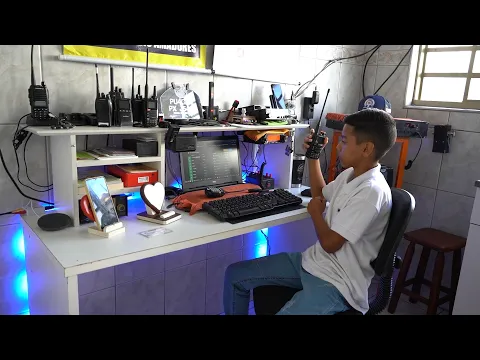

Myron’s stepfather has been a radio amateur for decades. He started the hobby at 14 and witnessed all the transformations the service has undergone over time. In the interview with TV Alfenas, he listed the changes: updated legislation, new equipment, operational and technical requirements that Anatel has incorporated, ethics that the community has built over time. Today’s radio is regulated much more comprehensively than it was thirty years ago.
Technological evolution has also transformed what is possible with a radio amateur license. Repeaters, digital link systems, data transmission modes, and satellite connections have expanded the possibilities far beyond the microphone and analog receiver of the service’s early decades. Marcos notes that manufacturers continue to launch amateur radio equipment in 2026, which, for him, is the most direct proof that there is an active and growing consumer market. Products are not manufactured for an audience that does not exist.
Outdated hobby? The numbers say otherwise
The popular perception is that amateur radio belongs to a generation before the internet, smartphones, and social networks. Marcos Geraldo rejects this characterization with a simple argument: if it were a dead hobby, there would be no audience buying equipment, no active repeaters, no new operators getting licenses. And the numbers he cites in the interview support this point. According to him, there are about 300,000 people worldwide actively using amateur radio today.
The number is difficult to verify independently from this source, but the data points to a scale that many people underestimate. Amateur radio has an internationally recognized role in emergency and disaster situations: when conventional telecommunications infrastructure fails, licensed operators are often the only communication channels functioning. This makes the hobby not just a pastime, but a service with demonstrated public utility in real situations. Hurricanes, floods, and earthquakes have had emergency response coordination partially conducted by radio amateurs around the world.
What Myron represents for Brazilian amateur radio
Stories like Myron’s have double value for an aging community. Amateur radio, like many technical hobbies, faces the challenge of attracting young practitioners at a time when the entry barrier for most forms of entertainment has dropped to almost zero. Obtaining a license requires study, passing an exam, and acquiring equipment. The reward is neither immediate nor visual. It is a radio signal that crosses borders and reaches a stranger on the other side.
That a 12-year-old boy from a small town in Minas Gerais has made this journey alone, in a month, and is already making international contacts, is the kind of story that amateur radio associations and Anatel itself would probably like to see replicated. The hobby doesn’t need to compete with the internet to exist: it needs people who find in it something the internet doesn’t offer. Apparently, Myron found it.
A 12-year-old boy studying federal legislation and electronics on his own to obtain a technical license is a sign that amateur radio still has much to offer, or is this too much of an exception to represent a real trend? Did you know about amateur radio before this story? Leave your opinion in the comments.