Portuguese
  Spanish


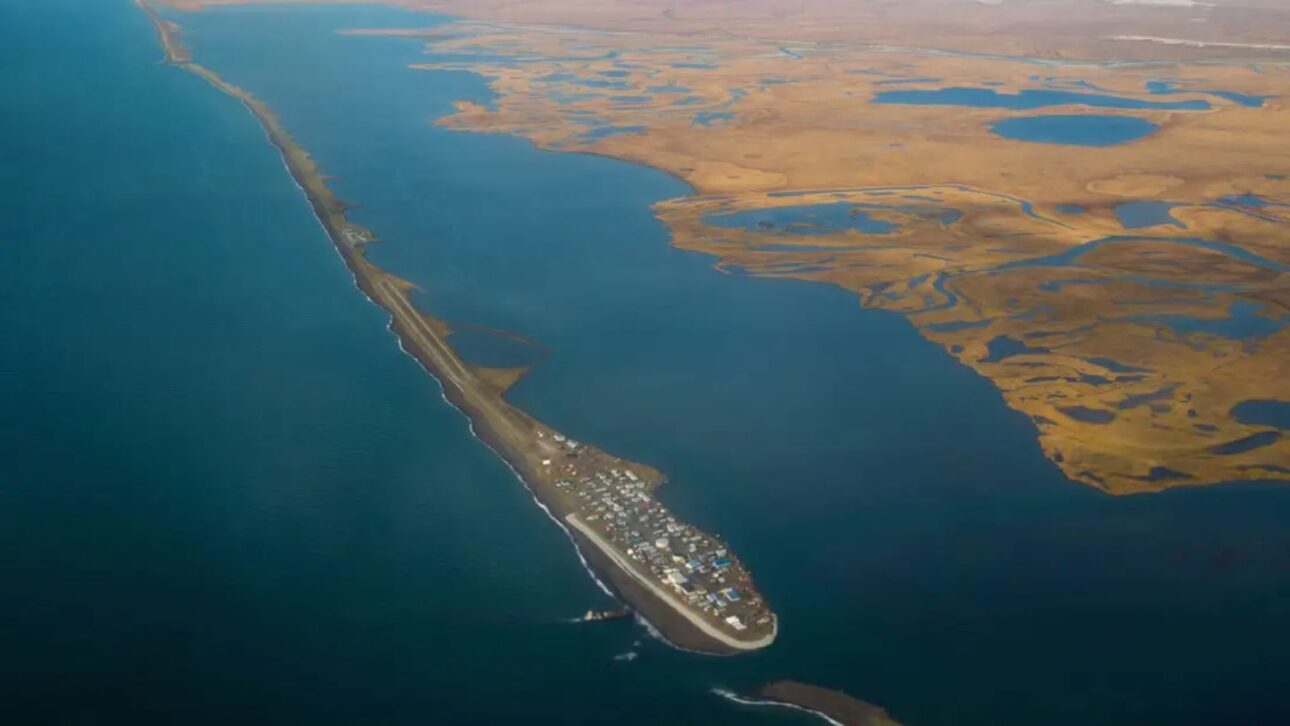
Kivalina is a strip of sand in the Bering Sea where 400 Inuit indigenous people live. The retreat of Arctic ice destroyed the natural coastal protection and engineers had already predicted that the village would be uninhabitable by 2025. The mega relocation project costs up to US$ 400 million and, until the publication of the BBC report in 2013, no public funds had been allocated to the project.
Almost no one in the United States knew Kivalina before the climate crisis made the village impossible to ignore. Located on a narrow strip of sand in the Bering Sea, Alaska, the Inuit community of 400 people had lived for generations from hunting and fishing in a balance maintained by the thick ice that protected the coast from storms. In the last two decades, this balance began to disappear. The dramatic retreat of Arctic ice exposed the strip of sand to the power of autumn and winter storms, which progressively reduced the village’s territory, necessitating a mega project, according to a report by Stephen Sackur published by the BBC in July 2013.
A mega relocation project was considered the only viable solution. The American government estimated that relocating the residents of Kivalina to another location would cost up to US$ 400 million, an amount that includes the construction of roads, houses, and a school in an extremely difficult-to-access region. At the time of the BBC report, there was no indication that this money would come from public funds. American Army engineers had already predicted that Kivalina would be uninhabitable by 2025. The date has passed. The discussion about who pays for the relocation continues.
A strip of sand held in place by ice
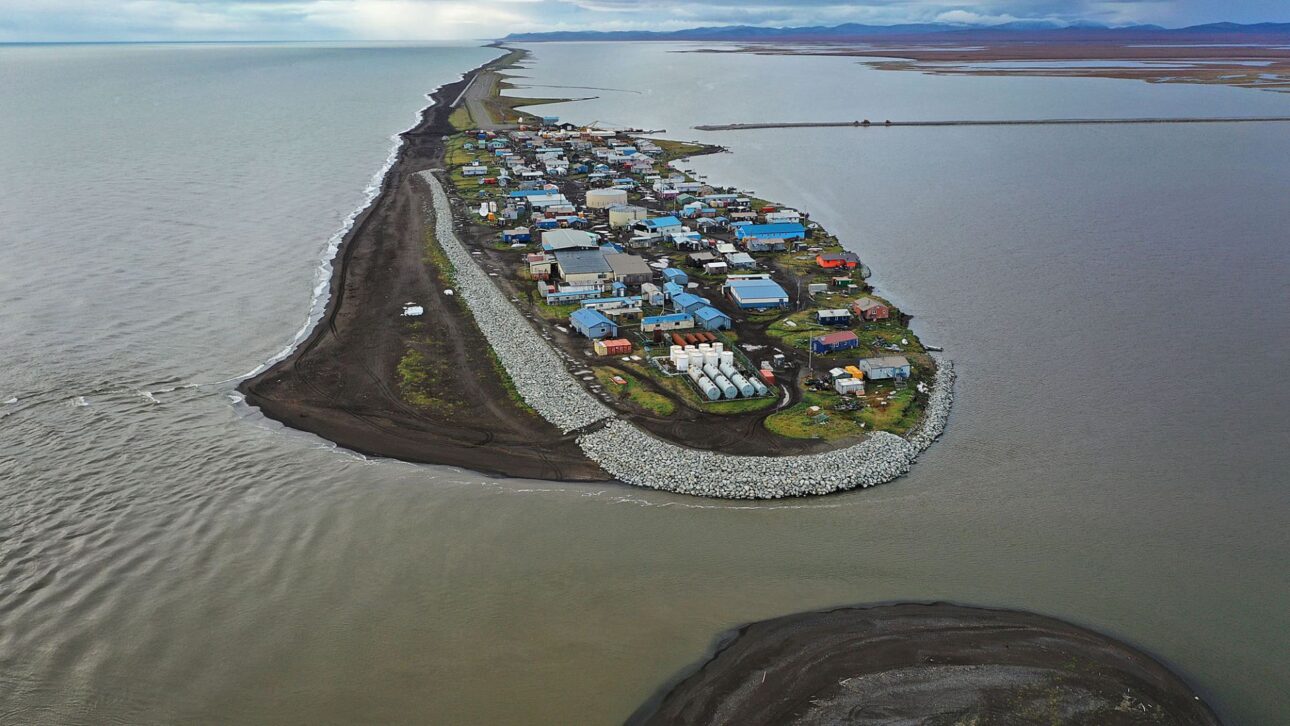
But the geography that made the village invisible on maps also explained its vulnerability: a narrow strip of sand in the Bering Sea, with no natural protection other than the layer of ice that formed in the fall and remained until the end of winter.
-
Japan Constructs World’s Deepest Sea Wall in the Pacific, Sinking Massive Concrete Structures for Three Decades

-
Pair Transforms Sunken Pontoon Bought for $4,000 on Facebook into 8,800-Pound Solar-Powered Tiny Home on Water

-
Father Lives with 3 Children on a 15-Meter Off-Grid Houseboat, Reduces Living Costs to £500 a Month, and Filters Canal Water with a £300 System He Built
-
In 1961, Hollywood held a unique audition with 152 black cats to cast the perfect feline for the horror film The Black Cat.

This ice functioned as a buffer between the coast and the storms, absorbing the force of the waves before they reached the land.
With the accelerated retreat of Arctic ice in recent decades, this buffer ceased to exist at critical moments.
The autumn and winter storms, which previously encountered the ice as the first barrier, began to hit the coast directly. Erosion accelerated.
The strip of sand shrank. In 2008, American Army engineers built a wall along the beach to try to stop the advance of the water, but according to the BBC report, the measure only worked as a palliative.
A particularly violent storm two years before the report forced an emergency evacuation of the entire community.
The American Arctic is warming twice as fast
Temperature records show that the Arctic region of Alaska is warming at a rate twice as fast as the rest of the United States, according to data cited by the BBC.
Besides Kivalina, three other Inuit settlements faced imminent destruction at the time of the report, and another eight were at serious risk.
The pattern is the same in all: ice retreat, rising sea levels, and coastal erosion combined into a pressure that the communities cannot withstand alone.
In Barrow, the northernmost city in American territory and closer to the North Pole than to Washington, the impact manifested differently.
The bowhead whale and seal hunters, belonging to the Inupiat tribe, reported that the ice had started to melt and break in March, then refroze, but it was so thin and unstable that the hunting boats could not be placed on it.
The hunting season was lost. Herman Ahsoak, one of the most experienced whaling captains in the city, told the BBC that the ice used to be 3 meters thick in winter and had reduced to just over one meter.
For the first time in decades, no bowhead whales were captured in Barrow that year.
The mega project that no one knows who will pay for
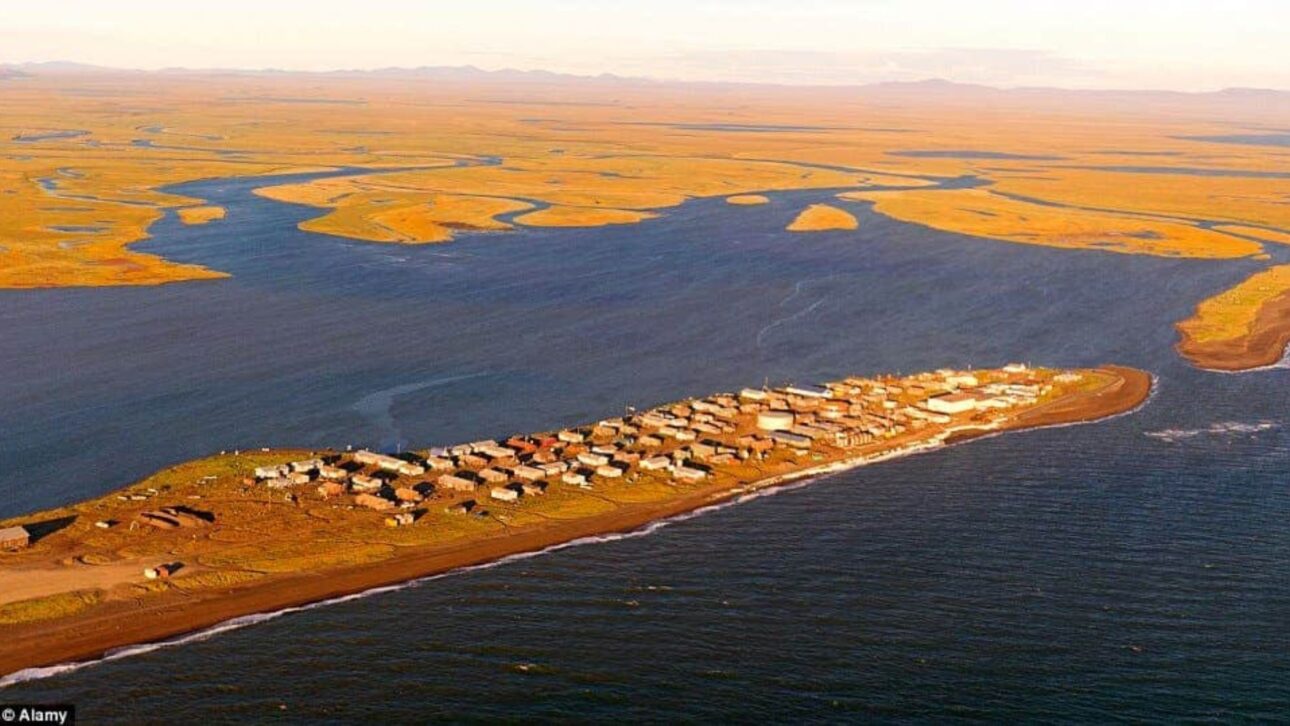
There are no roads to transport materials.
There is no preexisting infrastructure at the destination site. Every pole, every pipe, every foundation needs to be built from scratch in an environment of extreme temperatures, accessible mainly by air or river.
The American government estimated that this mega project would cost up to $400 million, a figure that includes the construction of roads, houses, and a school for a population of 400 people in one of the most remote regions of the country.
The leader of the Kivalina assembly, Colleen Swan, clearly described the situation to the BBC: “If we are still here in 10 years, we either wait for the flood and die or leave and go somewhere else.”
She also contextualized the historical responsibility for the problem: according to Swan, the American government imposed the Western lifestyle on the indigenous tribes of Alaska, created the conditions for dependence on fixed structures in a land that climate change now makes uninhabitable, and did not present a clear plan for relocation.
The Inuit of Kivalina are paying the price for a problem that, in the words of the community’s own leadership, they did not create.
The paradox of oil: fuel that warms the Arctic
While Inuit communities lose the ground beneath their feet, Alaska remains one of the largest fossil fuel producers in the United States.
Alaska’s North Slope houses the largest oil field in the country, and the Trans-Alaska pipeline is a central piece of the American energy security strategy.
The profits from the oil industry amounted, at the time of the report, to more than 90% of the state budget. Each Alaskan resident received a share of these profits annually, and the state did not charge income tax.
When the BBC asked the deputy director of the Alaska Department of Natural Resources, Ed Fogels, about the tension between climate change and the expansion of oil production, the response was straightforward: “We have been developing our natural resources for 50 years. Things are going very well, thank you.”
The company Shell had made a bid to explore oil in the Arctic Ocean, despite resistance from environmental groups. Kate Moriarty, executive director of the Alaska Oil and Gas Federation, estimated to the BBC that the state could have about 50 billion barrels still unexplored.
In the same territory coexist the community that lost whale hunting and the industry that expands the extraction of the product associated with the cause of the problem.
The human cost that numbers do not capture
The estimated $400 million for the mega relocation project describes the logistics of moving physical structures.
What they do not capture is the cultural cost of displacing a community that has occupied the same territory for generations and whose identity is built on a specific relationship with the sea, the ice, and the hunting cycles that environment provided.
The Inuit of Kivalina are not just inhabitants of a strip of sand. They are a community whose practices, knowledge, and collective memory depend on that specific place.
Moving the houses is technically possible, expensive, and logistically complex. Moving a four-century relationship with a territory is another matter, which no mega project budget covers.
Climate change, in this sense, not only destroys infrastructure: it destroys entire cultural contexts that cannot be reconstructed elsewhere simply because the physical structures were transferred.
Kivalina may be the first of many coastal communities in the United States to face this dilemma without a defined budgetary solution.
What happens when the sea arrives before the funding
The BBC report was published in 2013 with the projection that Kivalina would be uninhabitable by 2025. The deadline has passed.
The village still existed, but the erosion and climate vulnerability conditions identified by engineers did not disappear with the change of date on the calendar.
The structural problem remains: the ice protection has not returned, storms continue to hit the coast without cushioning, and the strip of sand has not recovered what it lost to erosion.
The debate over who finances the mega relocation project has also not been resolved. Remote indigenous communities have little capacity to mobilize political resources on the scale necessary for an investment of hundreds of millions of dollars.
The American federal government recognizes the problem but has not committed the funding.
The state government of Alaska has declared the expansion of oil production as a priority.
Between recognizing the problem and taking concrete action, it is the 400 residents of Kivalina who live in waiting.
A community of 400 people who did not create the climate problem is paying the highest cost for it. Does the American government have an obligation to fully fund the mega relocation project of Kivalina, or is the responsibility more diffuse than that? Should indigenous communities in climate risk zones around the world receive priority treatment in international adaptation policies? Leave your opinion in the comments.