Portuguese
  Spanish


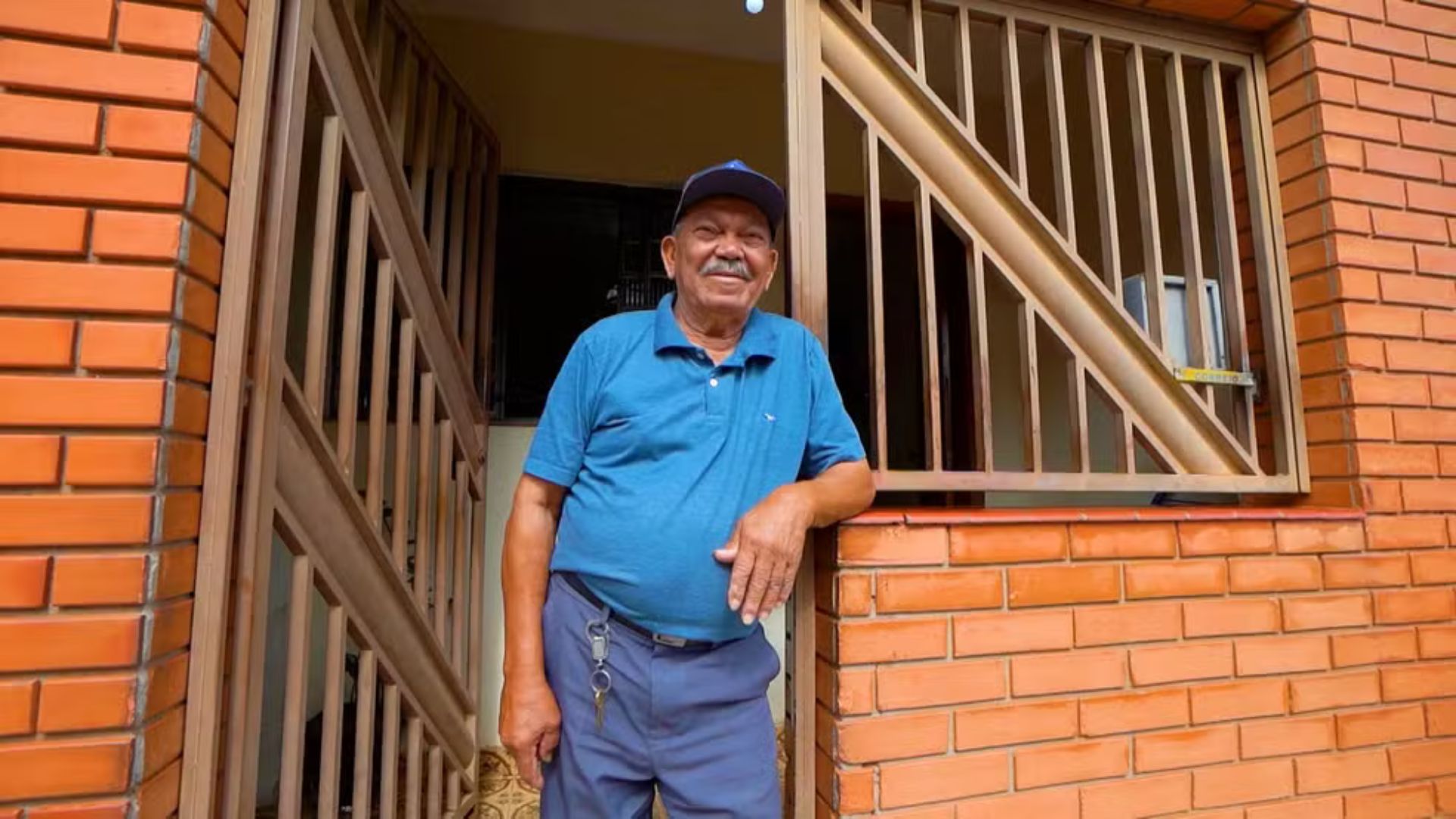

Active routine at 91 years old draws attention in a city in São Paulo’s interior, where a retired electrician maintains services, strengthens community ties, and preserves memory with work, conversations, and music, after a trajectory marked by migration, self-taught learning, and local recognition.
At 91 years old, Aquelino, known in Rio das Pedras as Japão, continues working even after retirement and maintains a routine of small electrical repairs to help city residents.
The story gained prominence on the Mais Caminhos program, from EPTV, by showing how he remains active, lucid, and present in the community’s daily life.
Instead of slowing down with age, he preserved a practice that spans decades: remaining useful, circulating through the neighborhood, and keeping his mind occupied with tasks that require attention.
-
Award-Winning Korean Electric Scooter Concept Folds to Briefcase Size, Eases Transport Challenges

-
YouTuber Discovers Surreal Collection in 400-Year-Old Italian Fortress Near Florence: 419 Anvils, Giant Walruses, Ancient Church, and WWII Tunnels

-
Creative Uses for Toilet Paper Rolls That Will Change Your Perspective
-
Crab Trapped in Plastic Bottle for 62 Days Near Okinawa Highlights Little-Known Impact of Marine Pollution on Small Animals


Even today, he makes repairs, talks with acquaintances, and cultivates habits that help sustain a routine marked by autonomy and disposition.
Aquelino’s, or Japão’s, Trajectory in Rio das Pedras
The nickname that made him known was born when he was already living in the interior of São Paulo.
According to the report shown by EPTV, colleagues started saying he looked Japanese, and the name Japão ended up imposing itself in daily life, until it became how the city identified him.
A native of Itaberaba, Bahia, Aquelino arrived in the state of São Paulo during the sugar harvest season, after working as a seasonal laborer.
The move, initially linked to the search for work, ended up defining the course of his life.
Upon adapting to the city and deciding to stay, he returned to the Northeast to bring his wife and start a family at the new address.
Over time, he ceased to be just another worker from outside and became a well-known figure in Rio das Pedras.
His constant presence, built over the years, led to his recognition as a Rio das Pedras citizen, strengthening the bond he formed with the municipality since he decided to stay.

How he became a self-taught electrician
His entry into the electrical field did not happen through family tradition or formal technical training.
The opportunity arose unexpectedly when a technician missed work, and Aquelino was given the chance to observe the service and learn the trade directly through practice.
In the beginning, the challenge was greater than just understanding the technical aspects.
The fear of a specialized activity and his limited schooling weighed heavily on that beginning, but it did not interrupt the process.
Instead of backing down, he transformed his own limitation into a method and began carefully recording what he observed.
The notebook became a training tool, where he jotted down procedures, lessons learned, and solutions seen in daily life.
It was thus, through observation and repetition, that he built a self-taught specialization capable of opening professional doors for him.
This effort produced concrete results. He excelled in the role, received a promotion, and remained in the field for many years until retirement.
Work after retirement and active routine
Stopping, however, never fully entered Aquelino’s horizon.
Even outside the formal market, he continued to accept small jobs and attend to simple daily needs of those living nearby.
The gesture has practical value for the neighborhood, but it also helps explain how he preserved an active routine.
Continuing to work does not appear as an obligation. Work remains associated with pleasure, social presence, and the permanent exercise of attention.
Therefore, retirement did not represent a rupture, but rather a change of pace.
In addition to repairing homes in the city, Japão also helps neighbors and local institutions, reinforcing a constant type of community participation.
Active mind, memory, and habits that endure
His lucidity and memory are striking and help explain how daily activity functions as continuous mental stimulation.
His routine is not limited to work. The retired electrician also cultivates personal tastes, such as playing the accordion and having long conversations with acquaintances.
These are elements that reveal an old age marked by social bonds and active interests.
In this scenario, the story presents a portrait of aging with autonomy, social presence, and continuity of purpose.
Over the years, Aquelino built a trajectory marked by migration, practical learning, and the consolidation of ties in another region.
Between notes in his notebook, repairs, and community interaction, his current routine keeps alive the identity he developed throughout his life.
Today, known by the nickname he earned upon arriving in the city, Japão maintains his willingness to learn, solve problems, and remain active in the daily life of Rio das Pedras.