





 Portuguese
  English
  Spanish
  4 min of reading
  0 comments


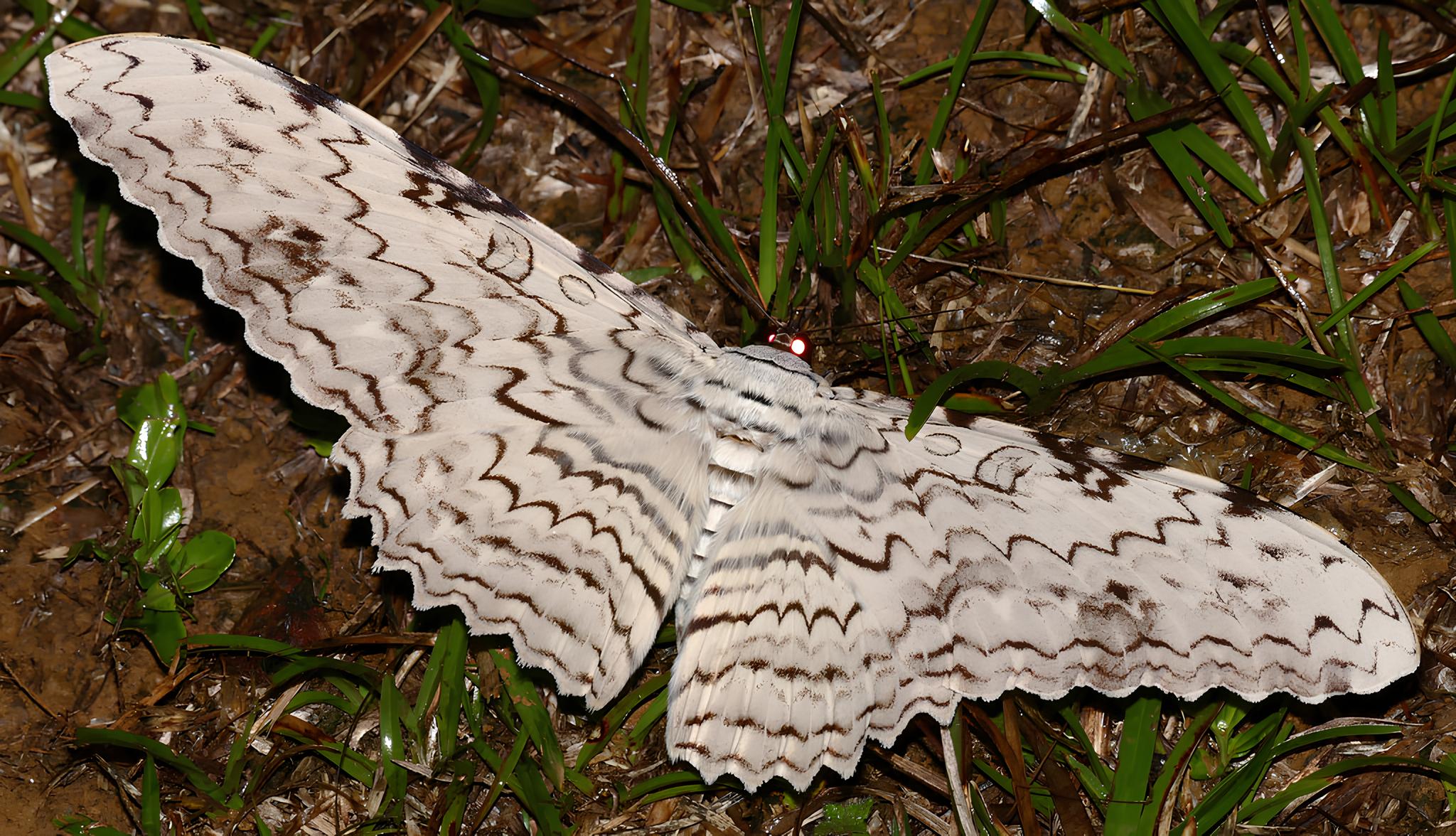
With Wingspan Over 30 Cm, The White Witch (Thysania agrippina) Is The Largest Wingspan Moth On The Planet And Defies The Physical Limits Of Flight In Insects.
At first glance, it may seem excessive. But it isn’t. In the tropical forests of Central and South America, there is a moth capable of spreading wings that exceed 30 centimeters from tip to tip, a dimension larger than an open A4 sheet. Its scientific name is Thysania agrippina, commonly known as the white witch — a real insect, documented, studied, and officially recognized as the largest wingspan moth ever recorded in the world.
The extreme size, combined with its nocturnal behavior and grayish wing pattern, has turned the species into one of the most impressive and misunderstood animals in the insect realm.
The Record That Put The White Witch In History
The title of largest wingspan is not the result of estimation or popular exaggeration. Reliable records document individuals with up to 30.8 cm of wingspan, a value recognized by scientific institutions and zoological record books.
-
Six 400,000-year-old teeth found in China contained a protein that was believed to exist only in the mysterious Denisovans: the discovery reveals that Homo erectus interbred with this extinct relative and left a genetic trace that still lives in human populations today.

-
American donated US$ 5,000 to a Chinese farmer to plant trees in the desert, and decades later the money turned into a forest with more than 50,000 trees.

-
Almost no ship sails directly between South America and Australia, and the reason is a combination of the vast distance, winds that circle the planet nonstop, and the absence of ports along the way, leaving the South Pacific as a water desert.

-
More than 85 million homes in China heat water for free with vacuum glass tubes invented at a Chinese university, a cheap technology with no moving parts that faces certification rules and codes in the United States, making installation too expensive.




This places the white witch above any other known moth when the criterion is distance between the tips of the open wings.
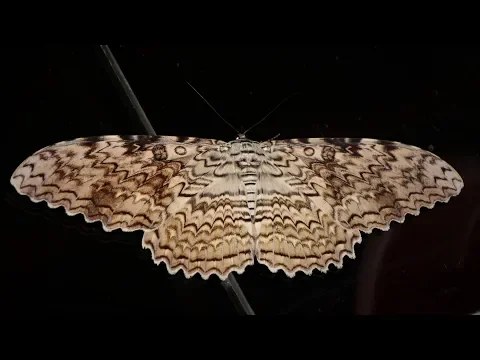

It is important to clarify that “largest” can have various meanings in the animal world. Some moths have broader wings in total area or bulkier bodies, but none surpass the white witch in linear wingspan, which is the criterion adopted for this record.
An Insect That Seems Too Large To Fly
With such extensive wings, the inevitable question arises: how does an insect of this size manage to fly? The answer lies in the wings’ architecture. They are long, relatively thin, and arranged in a way that evenly distributes the body weight during flight.
The flight of the white witch is neither fast nor erratic like that of daytime butterflies. It is slow, silent, and stable, ideal for moving between clearings and treetops during the night, when visual predators are less efficient.
Perfect Camouflage For A Giant
Despite its size, the white witch does not rely on strength, venom, or aggression to survive. Its main defense is extreme camouflage. The wings exhibit a marbled pattern in shades of gray, white, and black, which perfectly mimics:
- tree bark
- aged trunks
- surfaces covered in lichens
When resting with wings open and still, the moth practically disappears into the environment. This trick is essential for such a large insect, which would be an easy target if visually conspicuous.
Behavior Shaped By The Night
The white witch is strictly nocturnal. During the day, it remains hidden in trunks, branches, or vertical surfaces, making the most of its camouflage. At night, it becomes active to move around and reproduce.

As is the case with many giant moths, the adult has an almost exclusive function: reproduction. The adult phase lasts a short time, and much of the animal’s energy was accumulated during the caterpillar stage.
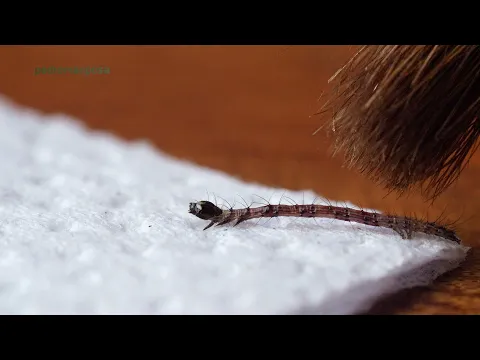
Before becoming a colossal moth, the Thysania agrippina undergoes an equally impressive larval phase. The caterpillar is large, robust, and feeds intensively on specific leaves of tropical host plants.
This intense consumption is what allows the insect to store enough energy to sustain a body with such large wings, even without significant feeding in the adult phase.
Wide Geographical Distribution, But Rarely Observed
The white witch occurs in an extensive range that stretches from southern Mexico to the Amazon region, passing through countries in Central America and northern South America. Still, sightings are relatively rare. This happens for three main reasons:
- strictly nocturnal habits
- excellent camouflage during the day
- naturally low populations, typical of large insects
Thus, when an individual appears in urban areas or near homes, the visual impact often generates surprise, fear, or even exaggerated rumors.
An Harmless And Misunderstood Giant
Despite its imposing appearance, the white witch is completely harmless to humans. It does not sting, bite, has no venom, and causes no structural damage. Yet its unusual size leads many people to confuse it with something dangerous or “abnormal.”
In practice, it is an extreme example of how evolution can push insects to non-intuitive physical limits without any threat involved.
Why The White Witch Is So Important To Science
Species like Thysania agrippina help researchers understand:
- biomechanical limits of flight in insects
- camouflage strategies in complex environments
- relations between body size and survival
Moreover, giant moths are sensitive indicators of tropical forest health, as they depend on well-preserved environments to complete their life cycle.
A Living Reminder That Nature Still Surprises
In a world where most people associate insects with small and discreet creatures, the white witch emerges as a shock to reality.
An animal with wings larger than everyday objects, flying silently in the dark, proves that nature can still challenge basic expectations.
This is not a fossil, nor an extinct animal. It exists today, now, in tropical forests. And it continues to be one of the most impressive examples of how life explores extreme possibilities — even within groups we tend to underestimate.





-

1 person reacted to this.