






 Portuguese
  Spanish
  5 min of reading
  0 comments


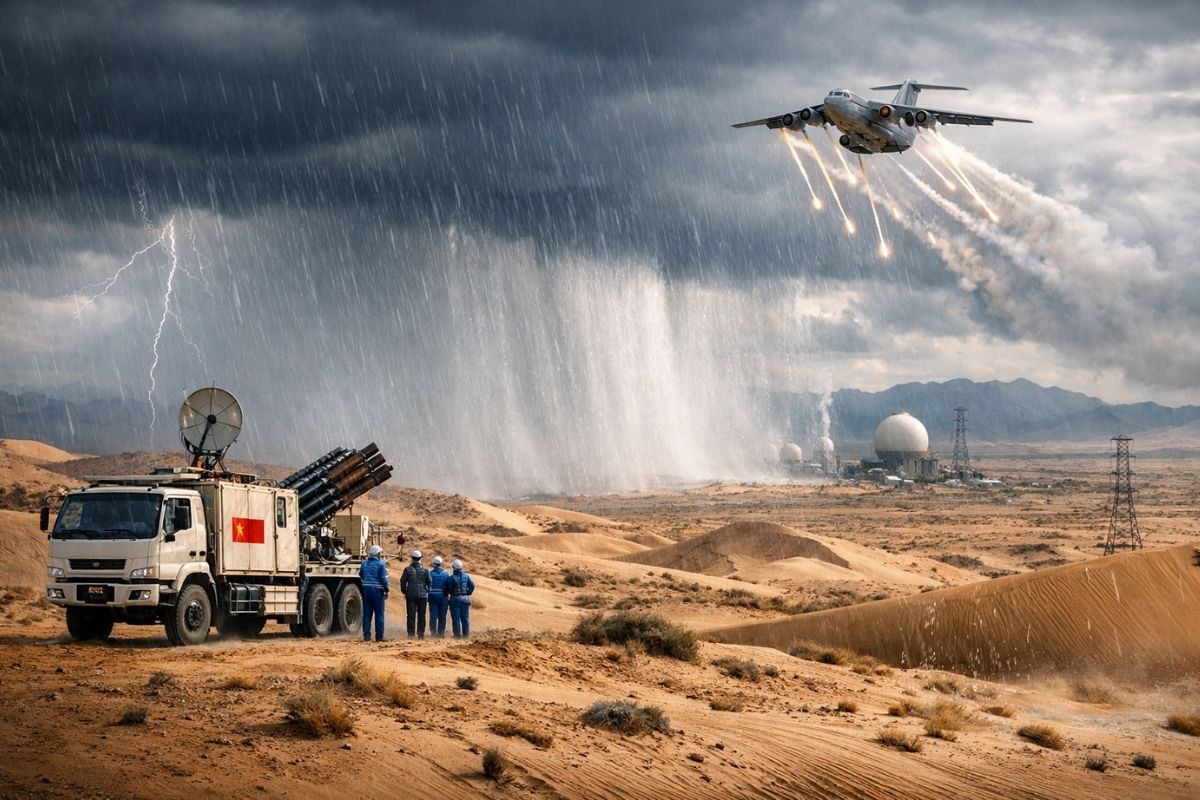
After Severe Droughts And Sand Choking Cities, China Began Regular Artificial Rains In The Desert, Contained Dunes, Reduced Atmospheric Pollution, And Opened A Global Debate On Climate Control.
Since The Beginning Of The 2000s, In The Yavarai Region Of Inner Mongolia, China Has Been Using Artificial Rain Regularly To Face Severe Droughts, Sandstorms, And The Accelerated Expansion Of The Desert That Threatened Cities Like Beijing And Tianjin.
Over More Than Two Decades, China Has Turned This Strategy Into A Real Climate Experiment, Expanded Year After Year, Which Today Divides Scientists, Governments And Environmentalists On The Ethical And Environmental Limits Of Climate Manipulation.
The Origin Of The Crisis In The Chinese Desert
On The Irregular Edge Of The Yavarai Desert, Located In Inner Mongolia, China Faced A Critical Scenario.
-
Helicopter Drops 180 Tons of Sand and Gravel on Swedish River to Revive Ecosystem Damaged by Decades of Exploitation

-
Brazilian Company Launches Retro Smartphone with 48 MP Camera, T9 Keyboard, and Privacy Features for Social Media-Free Use

-
Self-Taught Chinese Farmer Builds 5-Ton Submarine from Scrap, Launches It in Anhui River
-
Invisible Induction Technology Enables Wireless Power for Blenders, Coffee Makers, and Air Fryers, Reducing Countertop Cables




Dunes Were Constantly Advancing, Pastures Were Disappearing, Crops Were Being Buried, And Entire Villages Were Being Forced To Abandon The Region. The Sandstorms That Originated There Were Not Restricted To The Desert.
They Traveled Hundreds Of Kilometers, Carrying Dust That Choked Large Urban Centers, Aggravating Respiratory Problems And Raising Levels Of Atmospheric Pollution.
The Situation Became Unsustainable When It Became Clear That, Without Direct Intervention, The Desert Would Continue To Advance Over Inhabited And Agricultural Areas, Widening The Social, Economic, And Environmental Impacts.
The Decision To Press The Atmosphere
Facing The Continuous Advance Of Desertification, Local Authorities, Engineers, And Meteorologists In China Decided To Test An Unprecedented Solution On A Continuous Scale.
Instead Of Relying Solely On Tree Planting, The Plan Began To Include The Modification Of The Climate Itself.
The Strategy Consisted Of Forcing More Rain To Fall In A Controlled Manner Over A Specific Strip Of The Desert, Creating A Moist Corridor Capable Of Supporting Resilient Vegetation.
This Strip, About 200 Kilometers Long And Varying Between Three And Ten Kilometers Wide, Was Strategically Chosen To Function As A Living Barrier Against The Advance Of The Dunes.
How Artificial Rain Works In China
The Artificial Rain Used By China Is Based On The Cloud Seeding Technique. During Summer, When Convective Clouds Pass Through The Inner Mongolia Region, Meteorological Teams Monitor Radar In Real Time.
When Conditions Are Favorable, Rockets And Flares Loaded With Particles Such As Silver Iodide Or Special Salts Are Launched Directly Into The Clouds.
These Particles Act As Condensation Nuclei, Allowing Water Vapor To Group Into Larger Droplets.
When These Droplets Reach Sufficient Weight, The Rain Falls Exactly On The Desired Area, Intensifying Precipitation That Would Otherwise Be Weak Or Scattered.
Planting, Straw, And Drones In The Fight Against The Dunes
While China Presses The Sky, Another Front In The Fight Operates On The Ground. Workers And Machines Plant Grasses And Resilient Shrubs Directly In The Sand.
In More Vulnerable Areas, Bales Of Straw Are Fixed To The Ground To Reduce Wind Speed And Protect Young Seedlings.
Drones And Trucks Have Started To Spread Seeds In Inaccessible Areas, Ensuring That Vegetation Establishes Quickly After The Artificial Rains.
The Timing Between Rain And Planting Has Become Crucial, As A Lack Of Water In The First Months Can Condemn The Entire Project.
The Emergence Of A Green Corridor
In The First Years, The Results Were Discreet. Isolated Shrubs And Sparse Strips Of Grass Barely Altered The Landscape.
However, As The Seasons Passed, Aerial Images Began To Reveal Consistent Changes. Small Green Dots Transformed Into Continuous Spots, And Gradually, A Visible Vegetative Corridor Emerged Along The Edge Of The Desert.
This Corridor Does Not Aim To Create A Dense Forest, But Rather Environmental Resilience.
The Roots Of The Plants Secure The Sand, Reduce Dune Mobility, And Weaken The Force Of The Dust Storms That Once Advanced Freely.
Direct Impacts On Cities And Populations
For Populations Located Downwind, The Effects Are Clear.
Fewer Sandstorms, Less Dust Deposited On Crops And Cities, Reduced Atmospheric Pollution, And Less Wear And Tear On Urban Infrastructure.
Small Accumulated Changes Have Come To Represent A Real Improvement In Quality Of Life.
Pastors And Farmers Noticed The Stabilization Of Areas Once Lost, While Urban Centers Reported Drops In The Most Severe Episodes Of Dust During Spring.
The Climate Machine Of China
The Experiment In Yavarai Is Just A Part Of Something Much Bigger. Since The Mid-20th Century, China Has Been Expanding The Largest Climate Modification Program On The Planet.
Planes, Rockets, Radars, And Automated Systems Operate In A Network Covering Millions Of Square Kilometers.
By The 2020s, Official Plans Began To Foresee Artificial Rain And Snow Operations In Areas Exceeding Five Million Square Kilometers, In Addition To Hail Suppression Systems And Atmospheric Pollution Control.
Artificial Intelligence Has Begun To Decide Where And When To Intervene, Transforming The Climate Into A Partially Managed Variable.
New Technologies And Extreme Experiments
In Regions Like Xinjiang, China Has Started To Use Drones For Cloud Seeding.
In Tests Conducted In 2023, Small Amounts Of Silver Iodide Generated Tens Of Thousands Of Cubic Meters Of Additional Rain In A Single Day.
Another Even More Controversial Experiment Involves Ground Towers That Use Electric Fields To Ionize The Air And Stimulate Droplet Formation.
In Controlled Environments, These Structures Have Already Produced Artificial Rain And Snow Without The Use Of Rockets.
Benefits, Limits, And Global Risks
Despite The Visible Results, Artificial Rain Does Not Create Water Out Of Nothing. It Redistributes Existing Moisture In The Atmosphere.
This Raises Concerns About Impacts On Neighboring Regions, Especially When Cloud Systems Cross Borders.
Chinese Provinces Are Already Accusing Each Other Of “Stealing Rain,” While Projects Near The Tibetan Plateau Are Attracting International Attention.
There Are Also Questions About The Prolonged Use Of Chemical Compounds, Cumulative Impacts On The Soil, And The Long-term Sustainability Of Reforested Areas.
A Future Under Discussion
On The Edge Of The Yavarai Desert, China Has Managed To Halt The Advance Of Sand And Create A Functional Green Strip.
The Result Is Real, Measurable, And Visible From Space. At The Same Time, The Country Has Demonstrated Something Even Deeper: The Ability To Edit The Climate On A Regional Scale.
The Question That Remains Is Clear.
Do You Believe This Climate Experiment Is A Smart Solution Or A Warning About How Far Humanity Can Go In Trying To Control Nature?





-

-

-

-

-

-

31 people reacted to this.