Portuguese
  Spanish


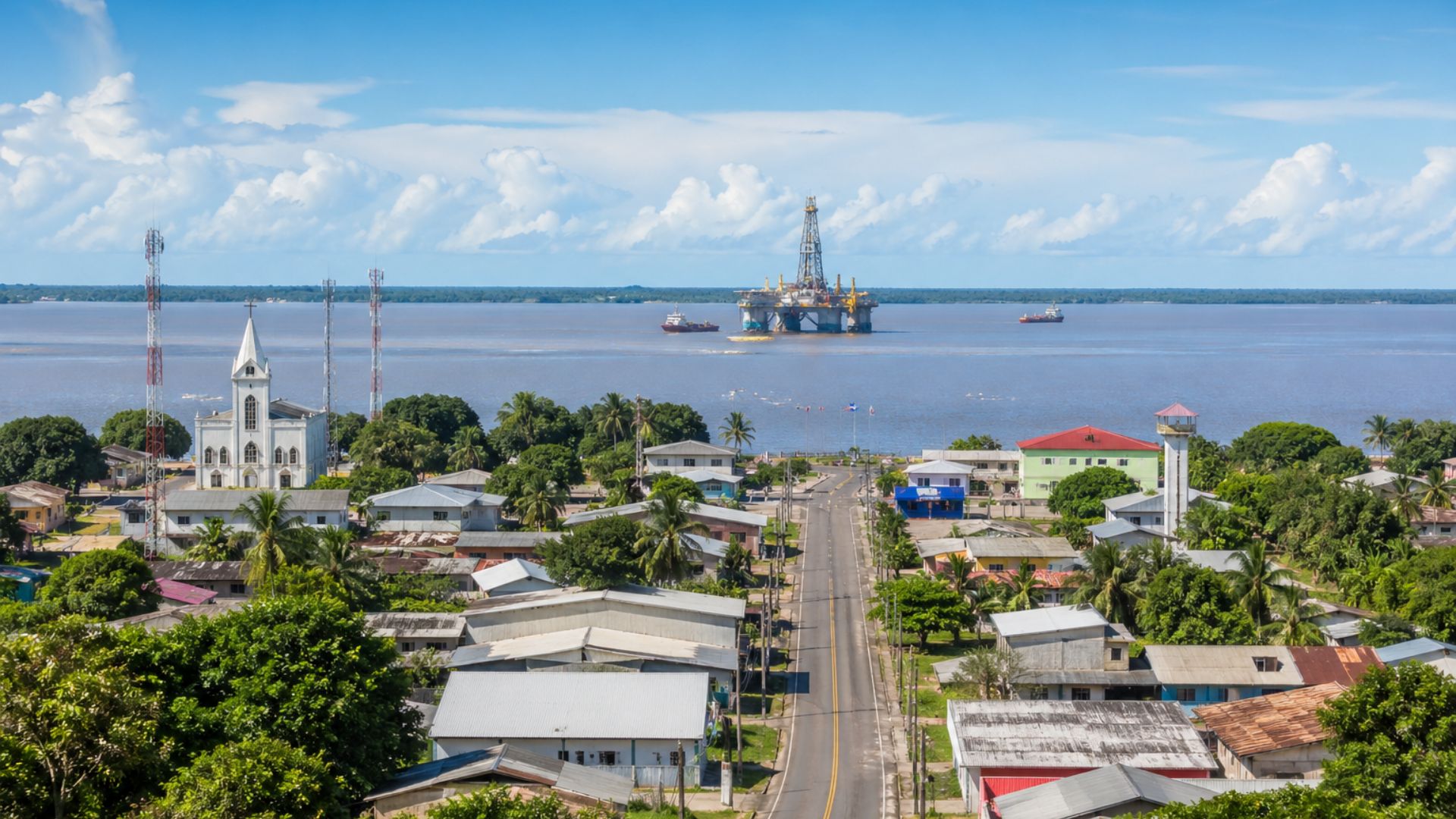

Advancement of oil exploration in the Equatorial Margin puts Oiapoque on the economic radar with billion-dollar projections, impact on Amapá’s GDP, and job creation, while the current stage is still exploratory and depends on environmental licensing and confirmation of viable reserves.
Oiapoque, a municipality in the far north of Amapá, on the border with French Guiana, has taken on a strategic position in the debate about oil exploration in the Equatorial Margin.
The movement occurs after the advancement of exploratory research authorized by Ibama in block FZA-M-59, in the Foz do Amazonas basin.
The city, which had 30,786 inhabitants according to IBGE’s estimate for July 1, 2025, is cited among the Amapá municipalities that could experience significant economic effects if the new oil frontier advances from the research phase to future commercial production.
-
Brazil’s Most Expensive Toll Rises to R$ 40.60 on Route from São Paulo to the Coast, Nearly Matching Bus Fare to Santos

-
As Brazil Expands Social Welfare, Survey Reveals 40% Blame Poverty on Laziness, While 58% Cite Lack of Opportunities

-
China Tightens Control on Antimony, Driving Prices from $22,000 to Nearly $40,000 per Ton as U.S. Rushes to Bolster Strategic Reserves

-
BlackRock Freezes $1 Billion in Brazilian Renewable Energy, Impacting 1.5 GW of Planned Projects and Highlighting Investor Concerns Over Infrastructure Bottlenecks Cutting Up to 25% of Solar and Wind Generation


Economic impact and royalty projections in Amapá
The available projections still deal with regional scenarios, not revenue already secured for Oiapoque.
According to the National Confederation of Industry, the Equatorial Margin could generate between R$ 3.6 billion and R$ 5.4 billion per year in royalties, in addition to resources for research, development, and innovation.
In the case of Amapá, estimates cited by the Ministry of Integration and Regional Development point to a potential increase of up to 61.2% in the state’s GDP.
The same scenario considers the creation of approximately 54,000 direct and indirect jobs, provided that exploration advances according to economic studies.

For a municipality with just over 30,000 residents, entering a royalty route could expand the capacity for public investment in infrastructure, health, education, and urban services.
Even so, there is no confirmation of specific amounts destined for the city.
Drilling in the Amazon Mouth is still in its initial phase
Petrobras received on October 20, 2025, Operating License nº 1.684/2025, issued by Ibama, to drill the Morpho well in block FZA-M-59.
The area is in deep waters off Amapá, about 175 kilometers from the coast and 500 kilometers from the mouth of the Amazon River.
This stage is exploratory in nature. In practice, drilling seeks to gather geological data and confirm whether there is oil and gas in a volume and under conditions capable of sustaining a commercial operation in the future.
Therefore, there is still no oil production at the site nor payment of royalties linked to the Morpho well.
Any direct impact on municipal revenue depends on new technical, environmental, regulatory, and economic stages.
Leak and environmental pressure on the project
The drilling campaign was halted in January 2026, after the identification of drilling fluid loss in auxiliary lines of the riser of the rig operating in block FZA-M-59.
The incident led to a fine of R$ 2.5 million applied by Ibama to Petrobras.
The activity resumed in March 2026, after regulatory assessments and requirements related to operational safety.
Even with the resumption, the case reinforced questions from environmentalists and the Federal Public Prosecutor’s Office about the risks of the operation in the region.
In discussions about the Equatorial Margin, Petrobras defends the importance of understanding the area’s oil potential.
On the other hand, environmental agencies and civil society entities demand guarantees regarding accident response, fauna protection, and the safety of coastal communities.
New drilling depends on Ibama authorization
This April, Petrobras informed that it had sent data to Ibama to try to obtain authorization to drill three more wells in the same block FZA-M-59.
The state-owned company maintains that these drillings are part of the exploratory campaign planned for the area.
Ibama is still analyzing conditions and requests for review associated with the licensing.
Among the sensitive points are emergency plans, care for fauna affected by oil, and prevention measures in an environmentally complex region.
While the evaluation is ongoing, Oiapoque remains at the center of an economic expectation that still depends on technical results and regulatory decisions.
The potential for royalties is significant, but it remains conditioned on the proof of viable reserves and the authorization of the next phases of exploration.