






 Portuguese
  Spanish
  2 min of reading
  1 comment


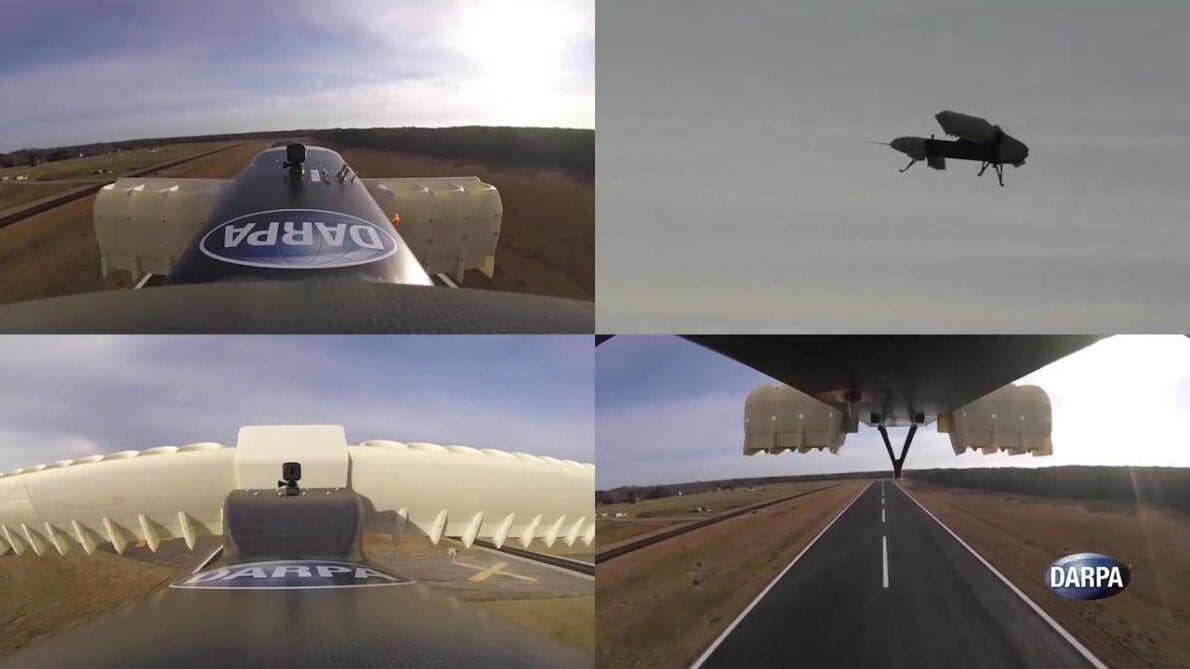

DARPA, The Agency for Advanced Defense Research Projects, is working on a revolutionary project: an autonomous military flying car. This vehicle, known as “X-Plane”, has unique features that set it apart from traditional aircraft.
This flying military car has the capability to take off and land vertically (VTOL), eliminating the need for long runways. This allows them to operate in restricted areas and increases access options for the Armed Forces.
In addition, they are equipped with advanced artificial intelligence, meaning they do not require a pilot. This feature enhances safety and reduces training costs.
The Flying Car Is Designed to Operate in Adverse Weather Conditions, Such as Rain, Snow, and Strong Winds


DARPA is focused on improving the payload capacity and range of these flying cars, enabling the transport of heavier equipment and increasing flight autonomy. This significantly extends the range of military missions.
-
Used Civic and Corolla have been stuck in stock for months. “People are preferring Chinese cars,” says the car dealership owner.

-
Toyota Sienna becomes a “VIP lounge on wheels” in Brazil after receiving a Chinese luxury kit, seats with massage, Starlink, refrigerator, and a 245 hp hybrid engine, targeting high-income families, artists, and executive transport in an almost million-dollar van.

-
Two new 300cc models from QJ Motor are expected to arrive in Brazil as SBM to target the CB 300F and shake up the low-displacement market, with more power and liquid cooling than Honda.

-
Camaro may reappear in 2027, but not as you remember: Chevrolet prepares the return of the icon with four doors, manual transmission, and an extreme performance version to face the new era of sports cars.


Currently, DARPA is in the project evaluation phase with different manufacturers, emphasizing safety and vertical flight capability. The most promising projects will be selected in mid-2025 for prototype development and testing. The first real flights are expected to take place in early 2026.
This DARPA innovation promises to transform the way military operations are conducted, offering new possibilities and increasing the efficiency of the United States Armed Forces.


Engraçado ele não parece em nada com o peso de papel com asa dos irmãos Wright, mas lembra bastante o 14 bis