






 Portuguese
  Spanish
  6 min of reading
  0 comments


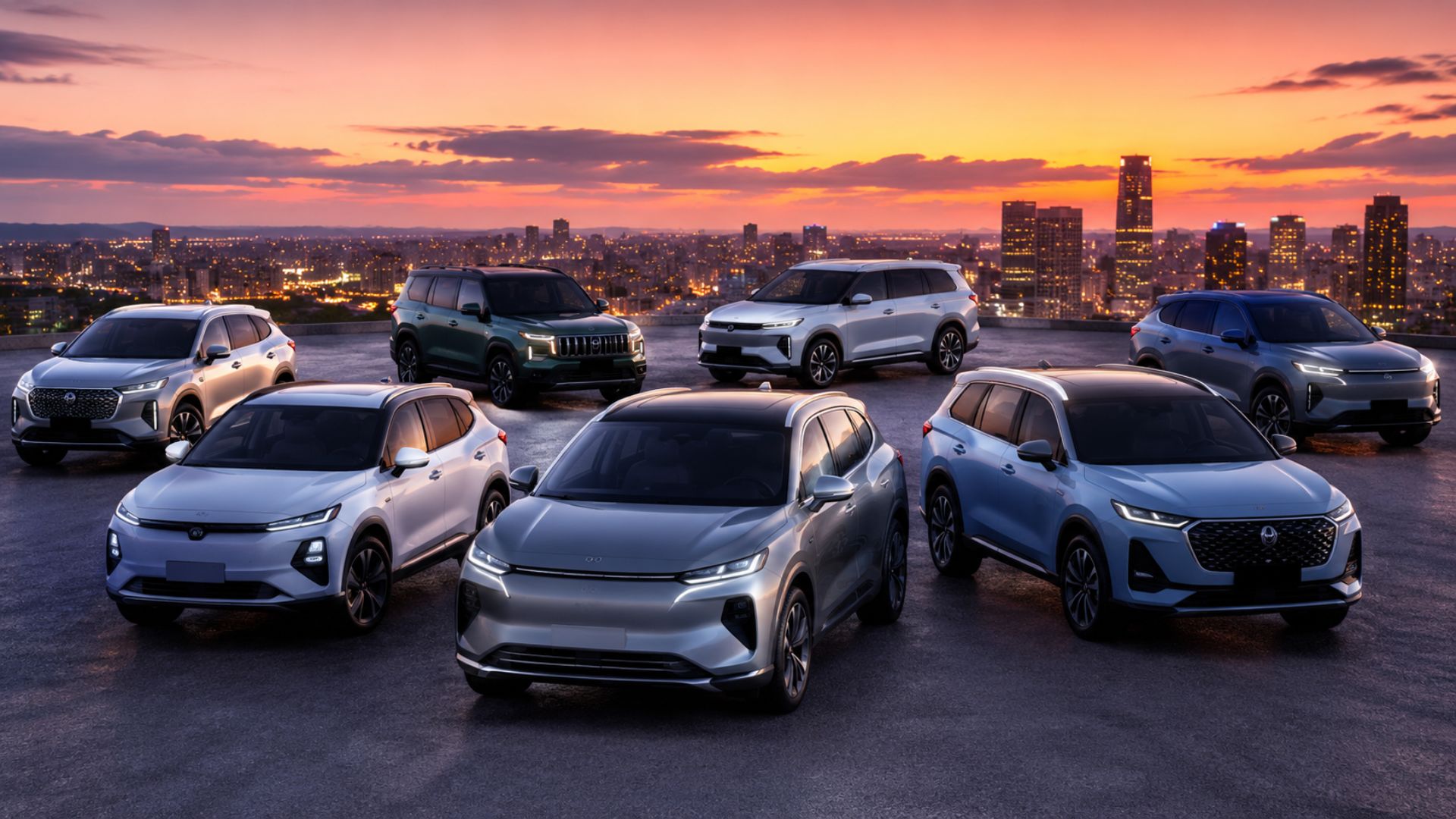
The flood is so great that it’s worth holding off on your purchase before deciding. From entry-level cars expected below R$ 150,000 to a luxury SUV with 421 hp, the list mixes models already confirmed by brands and others still in the realm of speculation, in a movement that should deeply affect market prices.
Never has Brazil seen so many Chinese SUVs arriving at once, and 2026 promises to be the year of the definitive invasion. Brands like BYD, GWM, Omoda, Jaecoo, GAC, and the newcomer Lynk&Co are preparing a flood of launches ranging from the cheapest compacts to luxury hybrids with over 400 horsepower, in a movement that is set to transform the street landscape and the Brazilian consumer’s wallet.
The panorama was mapped in May 2026 by the specialized publication Auto+, which gathered the main expected launches. First of all, an important clarification: some of these models are already officially confirmed by the automakers, while another part is still speculation or market betting, based on tests and trends. Therefore, this guide separates what is certain from what still depends on confirmation, so the reader does not create expectations that may not materialize this year.
BYD further expands its portfolio


Leading sales among Chinese brands in the country, BYD does not stop launching.
-
New Honda HooRide 125 scooter debuts in China with ADV styling, 17-inch wheels, TFT panel, Smart Key, and fuel consumption of up to 47.17 km/l, aiming to resemble an urban X-ADV with a 125 engine, CVT transmission, and an economical proposal for cities.

-
Volkswagen focuses on ethanol and tests a Saveiro 100% alcohol-powered with a recalibrated engine; the project may ensure tax reduction, targets corporate fleets, and revives technology that lost ground since the arrival of flex-fuel vehicles in 2003.

-
Keeping your foot lightly on the brake pedal while driving may seem harmless, but mechanics warn: this habit generates constant heat, wears out the pads too quickly, and can warp the discs, making braking expensive and dangerous.

-
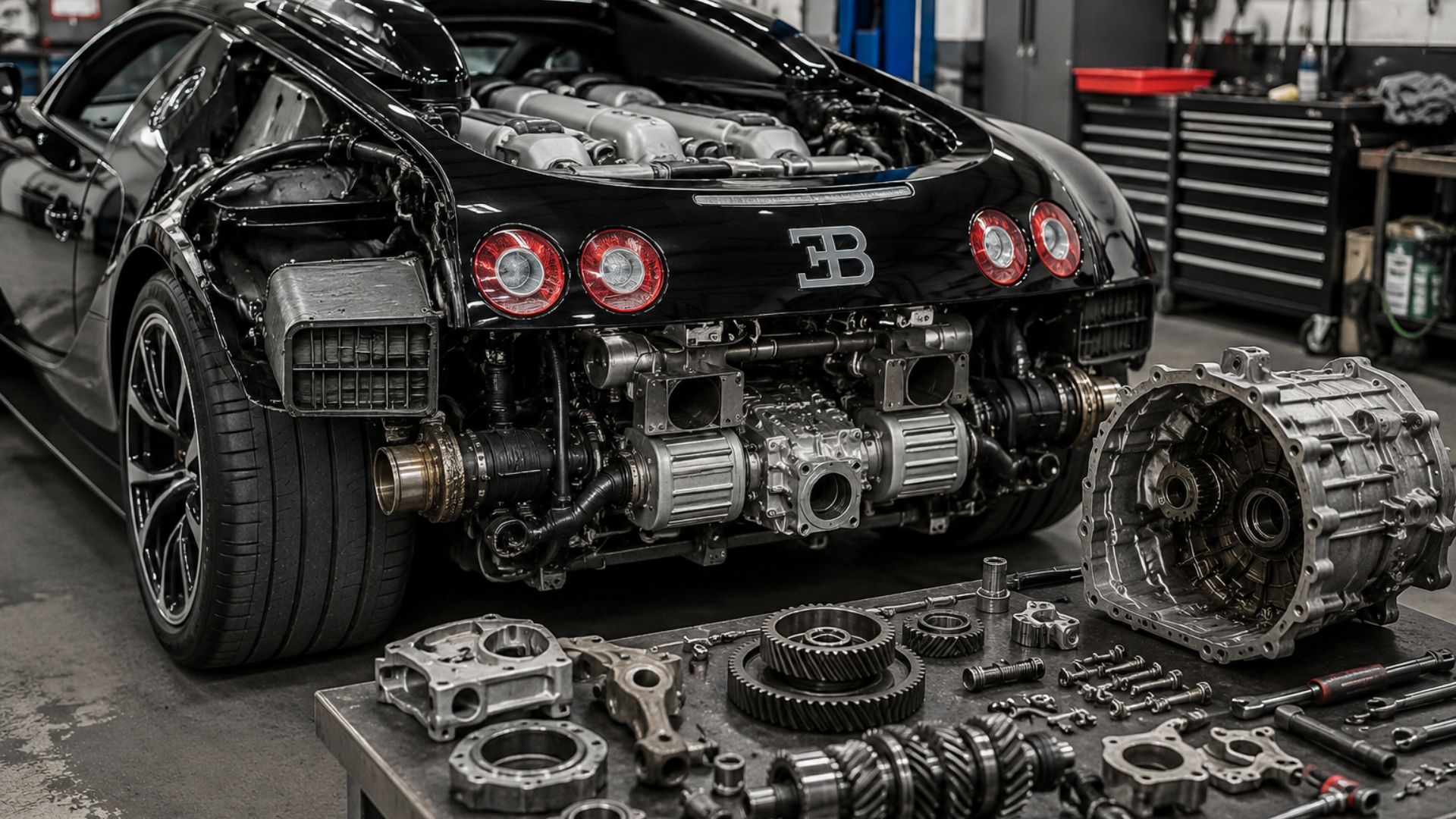
The YouTuber Mark McCann bought a Bugatti Veyron for almost $1.2 million, but discovered that the supercar’s gearbox is so damaged that even Bugatti itself won’t accept to repair it, and the repair could cost a fortune.


The manufacturer is preparing the restyled Song Pro, which should arrive already with a flex engine and a higher nationalization index, and the Yuan Pro plug-in hybrid, already confirmed for the first half of 2026, combining a gasoline and electric engine with a total range that can exceed 1,000 km, according to the information released.
There is also the possibility of the brand betting on other versions and even surprising with unannounced models, something common in its strategy, but this already enters the realm of speculation.
It is worth remembering that BYD produces vehicles in Brazil, at the Camaçari plant in Bahia, which helps explain the effort of nationalization and adaptation of engines to ethanol, an important differential in the Brazilian market.
GWM bets on luxury and flex hybrids

GWM has accelerated its plans and promises significant new developments.
The brand is expected to bring the H7, an SUV that would sit between the H6 and the H9, with a plug-in flex hybrid engine, as well as the Tank 400, a larger and more sophisticated model than the Tank 300, aimed at the luxury market.
The H6 line itself, one of the brand’s best-sellers, is also expected to gain a flex version.
The bet on flex hybrid engines, which combine electrification with the ability to use ethanol, is a strong trend among Chinese companies in Brazil, as it aligns with the reality of the national fuel.
Like BYD, GWM has a factory in the country, in Iracemápolis, in the interior of São Paulo, which reinforces the strategy of local production to gain competitiveness and avoid potential import costs.
The luxury wave: Denza and powerful hybrids

The premium segment will also be targeted by the Chinese offensive.
Denza, BYD’s luxury brand, is expected to bring the B3 SUV, with plug-in hybrid versions that reach 421 horsepower in the four-wheel-drive configuration, a robust model designed to compete with medium-sized adventurers in the national market.
This type of launch shows how Chinese brands are not only looking to compete on price but also to occupy the more expensive and technological segments of the market.
High-power plug-in hybrids combine sporty performance with the ability to drive stretches in electric-only mode, offering a package that, until recently, was almost exclusively dominated by traditional European brands.
Omoda and Jaecoo aim for volume

The duo of brands from the Chery group will have one of the most eventful years.
Omoda & Jaecoo confirmed the launch of three models in 2026, highlighting the Omoda 4, the brand’s entry-level car, expected to be priced below R$ 150,000, and the Jaecoo 5, a compact hybrid SUV confirmed for the second half.
There is also the Jaecoo 8, more sophisticated, with an option for six seats.
According to the executive vice president of Omoda & Jaecoo in Brazil, Roger Corassa, in an interview with CNN Brazil, the brand’s goal is to reach 50,000 units sold in 2026, a significant leap compared to about 7,200 registrations in 2025.
To achieve this, the company has been expanding its distribution center in Cajamar, São Paulo, signaling that it is here to compete for real volume in the Brazilian market.
CAOA, GAC, and Jetour complete the list

The offensive goes far beyond the more well-known brands.
CAOA Chery is expected to bring the Tiggo 9, while CAOA Changan bets on the CS55 and CS75 SUVs, with hybrid versions; Jetour plans the 4×4 versions of the T1 and T2 models, as well as the S08, a seven-seater SUV, further expanding the range of options for the consumer.
In the case of GAC, the brand promised to launch three cars in 2026, with at least two being SUVs, but has not yet officially confirmed which models they will be, leaving names like i60, GS8, and S9 in the realm of possibilities.
This is precisely an example of how not everything is defined: while some launches have dates and prices, others still depend on official announcements from manufacturers throughout the year.
Lynk&Co, the newcomer with European roots
Among the novelties, there is also an entirely new brand arriving in the country.
Lynk&Co is preparing its debut in Brazil, betting on Chinese SUVs developed with technology linked to Swedish Volvo, starting with models 02 and 08, both fully electric, with the promise of also bringing hybrid versions in the future.
The Lynk&Co 02, for example, is a compact coupe SUV that shares the platform with the Volvo EX30, giving an idea of the technological level of the proposal.
The arrival of another brand reinforces a clear trend: Brazil has become one of the main destinations for Chinese automakers outside Asia, attracting investments and increasing competition in virtually all price ranges.
What consumers should consider
Given so much choice, it’s worth considering not to be swayed just by novelty.
Experts often recommend paying attention to after-sales service, the availability of spare parts, and the consolidation of the technical support network of newer brands, factors that weigh as much as price and technology when buying a car that should last for years.
Brands like BYD, GWM, and CAOA Chery already have more mature operations and local production, while newcomers are still building their structure in the country.
Add to this the debate about import tariffs on electric vehicles, which have been gradually increasing, and the reaction of traditional automakers themselves.
For those intending to buy, the explosion of launches is great news, as it tends to increase competition and possibly push prices down.
The arrival of so many Chinese SUVs in Brazil in 2026 confirms a profound transformation in the national automotive market, with more options, more technology, and an increasingly fierce competition for price and innovation.
Among models already confirmed and others still in the realm of speculation, Brazilian consumers have never had so many alternatives to choose from, from the affordable compact to the luxury hybrid.
More than rooting for a specific model, it’s worth following the launches closely, weighing not only the allure of novelty but also the long-term solidity of each brand.
And you, which of these Chinese SUVs are you most eager to see on the streets of Brazil? Do you trust Chinese cars or still prefer traditional brands? Leave your comment, tell us which model you would buy, and share the article with that friend who’s eager to change cars in 2026.






Be the first to react!