Portuguese
  Spanish


Brazilian Researchers Create Smart Packaging That Changes Color to Indicate the Quality of Fish. Technology Uses Natural Pigments and Helps Prevent the Consumption of Spoiled Food.
A new packaging that changes color has been developed by Brazilian scientists to indicate, in real time, when fish and other foods begin to deteriorate.
The project is the result of a collaboration between Embrapa Instrumentação (SP), Embrapa Agroindústria de Alimentos (RJ), and the University of Illinois in the United States.
The innovation uses natural pigments extracted from red cabbage and promises increased food safety and reduced waste.
-
Scientists Develop Method to Store Wind and Solar Energy by Liquefying Air for On-Demand Power Generation

-
Brazilian Engineer Who Grew Up Without Electricity Develops Software, Expands AltoQi to 67,000 Clients, Aiming for $21 Million by Digitizing Brazil’s Construction Industry

-
Spain Launches World’s Largest Floating Dry Dock: 56-Meter Giant Produces Massive Concrete Structures in A Coruña Using Technology Proven in Brazil

-
AI-powered toys that talk, recognize faces, and collect data face scrutiny from Brazilian government over children’s privacy concerns





The color change occurs visibly, without the need to open the package, facilitating quality control both in the industry and by the end consumer.
How Does the Color-Changing Packaging Work?
The key difference of this new smart packaging lies in the nanofiber mats produced with plant pigments and national technology.
These mats react to the compounds released during the fish deterioration process, such as ammonia, resulting in visible color changes.
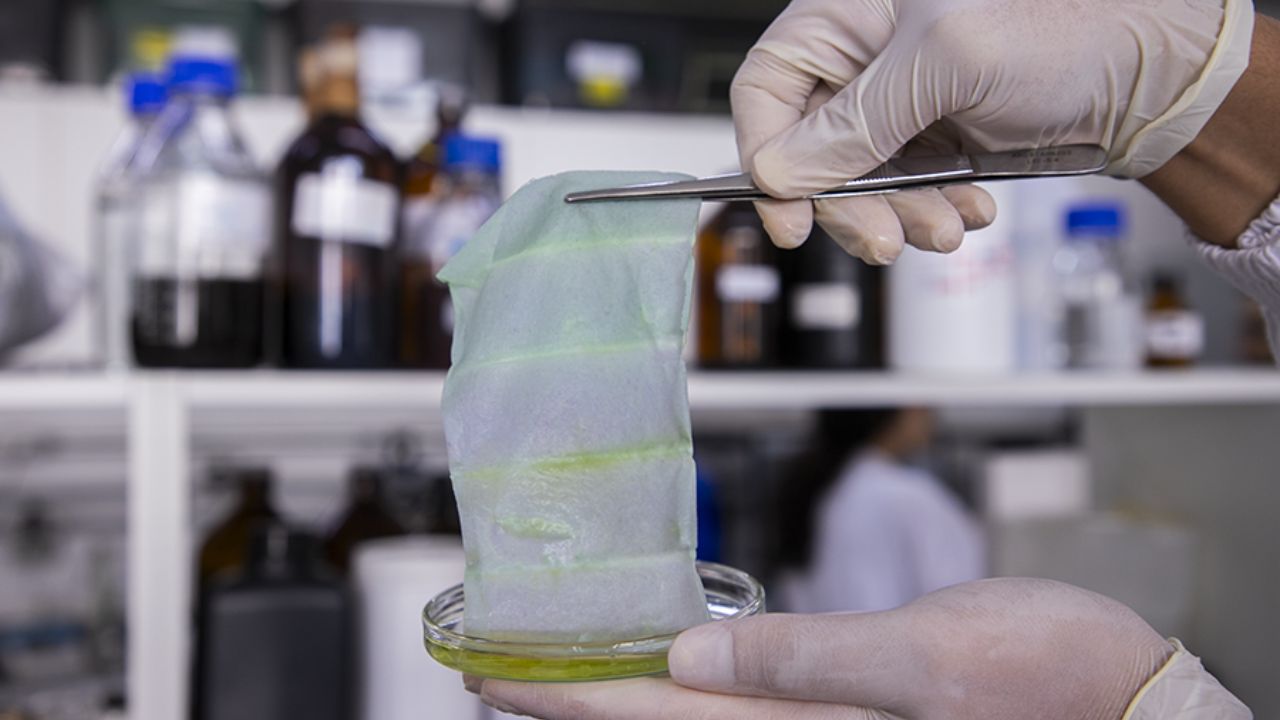
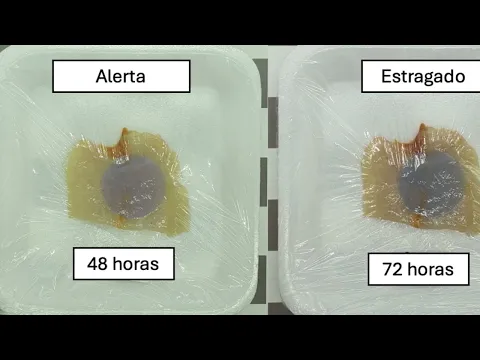
In tests with hake fillets, for instance, the packaging started out purple (indicating fresh food) and changed to bluish-gray in up to 72 hours, signaling the onset of deterioration.
Spoiled Fish? Packaging Warns with Color Change
According to the researchers, the behavior of the color-changing packaging is similar to that of a “visual sensor.”
After 24 hours of storing the fish, the purple color began to fade. In 48 hours, bluish tones appeared, and in 72 hours, the blue coloring signaled that the product was no longer suitable for consumption.
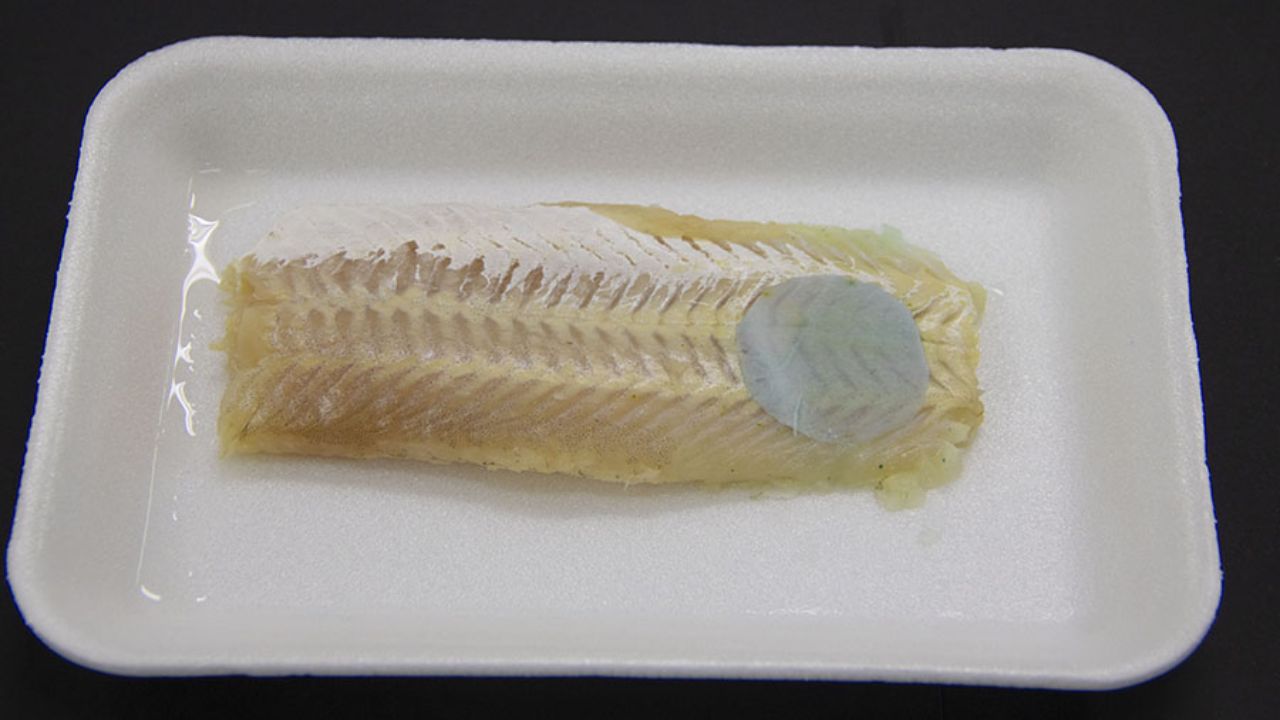
This solution allows for the identification of fish deterioration without opening the packaging, preventing contamination and providing more convenience.
Brazilian Technology with Low Cost and High Efficiency
The packaging is produced using a technique called solution blow spinning.
This technique, created by Brazilians in partnership with the U.S. Department of Agriculture (USDA), enables the development of nanofibers in just two hours, with low cost and reduced energy consumption.
Unlike traditional electrospinning—which is expensive, slow, and less scalable—the new method is more efficient and accessible for commercial use.
Why Red Cabbage? Understand the Use of Natural Pigments
The secret behind the color-changing packaging lies in anthocyanins, natural pigments found in fruits, flowers, and vegetables like red cabbage.
These pigments react to pH changes—such as those occurring during food deterioration—showing distinct colors that range from red to blue.
“Since red cabbage is rich in anthocyanins, it can be used as a pH indicator. The study tested over ten pigments, mostly from plants. The nanofibers demonstrated the ability to monitor the deterioration of fish fillets in real time, revealing potential as smart packaging materials for food,” explains Josemar Gonçalves de Oliveira Filho, a postdoctoral researcher at Embrapa responsible for developing the process.
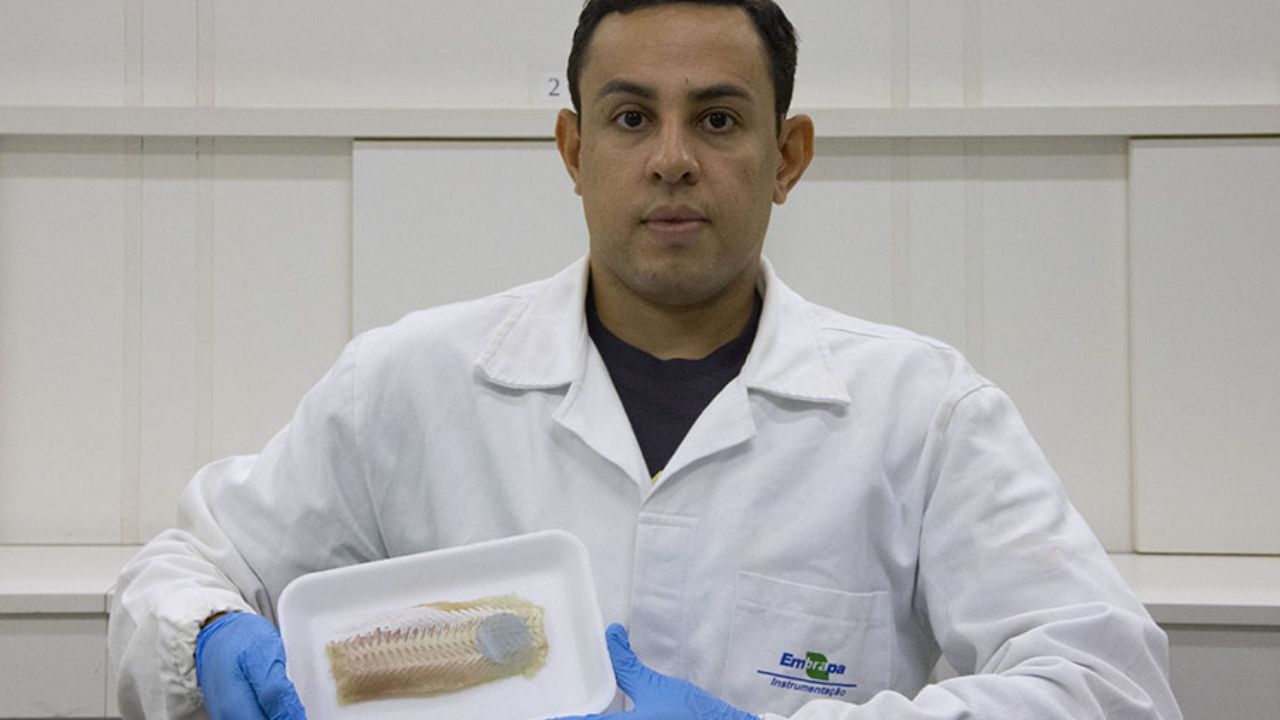
Although tests have been conducted with fish fillets, researchers believe that the innovation can also be applied to other perishable products, such as seafood and meats.
The nanofibers with anthocyanins detect pH changes, ammonia production, and even bacterial growth.
These indicators are essential for alerting about food freshness and helping to prevent foodborne illnesses.
Biodegradable, Efficient, and Sustainable
In addition to being useful, the new fish packaging is made with polycaprolactone, a biodegradable and biocompatible polymer, with excellent strength and flexibility.

This means that the material protects the food, adapts to different storage conditions, and does not harm the environment.
Combined with natural pigments, the solution provides a complete package: safety, sustainability, and innovation.
Scientific Recognition and Support for National Research
The complete study was published in the respected journal Food Chemistry, titled:
“Fast and Sustainable Production of Smart Nanofiber Mats by Solution Blow Spinning for Food Quality Monitoring” and supervised by Luiz Henrique Capparelli Mattoso, a researcher at Embrapa.
The project was funded by Brazilian institutions such as Fapesp, Capes, and CNPq, and is part of the INCT Circularity in Polymer Materials, led by Embrapa Instrumentação.
This initiative reinforces the role of national science in creating practical and sustainable solutions to the challenges of the food sector.