






 Portuguese
  Spanish


While Seeking to Reduce Its Dependence on China in the Battery Sector, Europe Bets on an Innovative Electric Motor Made with Recycled Rare Earth Elements. The Initiative Promises Greater Sustainability and Competitiveness for the European Electric Mobility Industry.
Europe is seeking to reduce its dependence on China and is betting on a electric motor made with recycled rare earth elements.
The initiative, led by manufacturer ZF and 19 European partners, aims to ensure greater autonomy in the automotive sector and reduce the environmental impact of motors production.
The Challenge of Chinese Dependence
Currently, China dominates battery production and the supply of rare earth elements, which are essential for electric vehicles.
-
ZF Unveils Strategy That Could Transform Global Truck Electrification

-
Toyota Corolla Hybrid Achieves 17.5 km/l in City with Self-Charging System and Regenerative Braking, Offering a Spacious and Quiet Ride Without Needing a Plug

-
Land Rover Issues Recall for Airbag Connector Fault Affecting 250,857 Vehicles in the US, Alerting Drivers in Brazil for Official Notice
-
Brazilian Electric Motorcycle Once Promised 180 km Range and Affordable Price, Now Faces Uncertain Future Amid Delays and Manufacturer’s Bankruptcy


Chinese companies like BYD and CATL account for over 70% of global battery production. Additionally, between 70% and 80% of rare earth elements also come from the Asian country.
These elements are crucial for manufacturing electric motors, as they enable the creation of highly efficient permanent magnets.
Excessive dependence poses an economic and strategic risk. Therefore, Europe is seeking alternatives to ensure the supply of these materials without compromising its electric vehicle production.
One of the solutions found was recycling rare earths from already produced magnets.
The European Recycling Project for New Electric Motor
ZF and its partners developed an innovative method to reuse rare earths without the need to remove magnets from the rotor.
This process addresses an important technical problem: when attempting to separate the magnets, they often break and generate magnetized dust, making recycling difficult and dangerous.
The new technique allows for the extraction of a non-magnetic and reusable powder. This way, rare earths can be converted into entirely new magnets, reducing the need for mineral extraction and the environmental impacts of the traditional process.
Energy Savings and Efficiency
Another positive aspect of the project is the drastic reduction in energy consumption in the production of new electric motors.
The recycling process developed requires only 12% of the energy needed to manufacture magnets from newly extracted rare earths.
This represents a significant advancement in terms of sustainability and industrial efficiency.
The HPMS Motor and Its Advantages
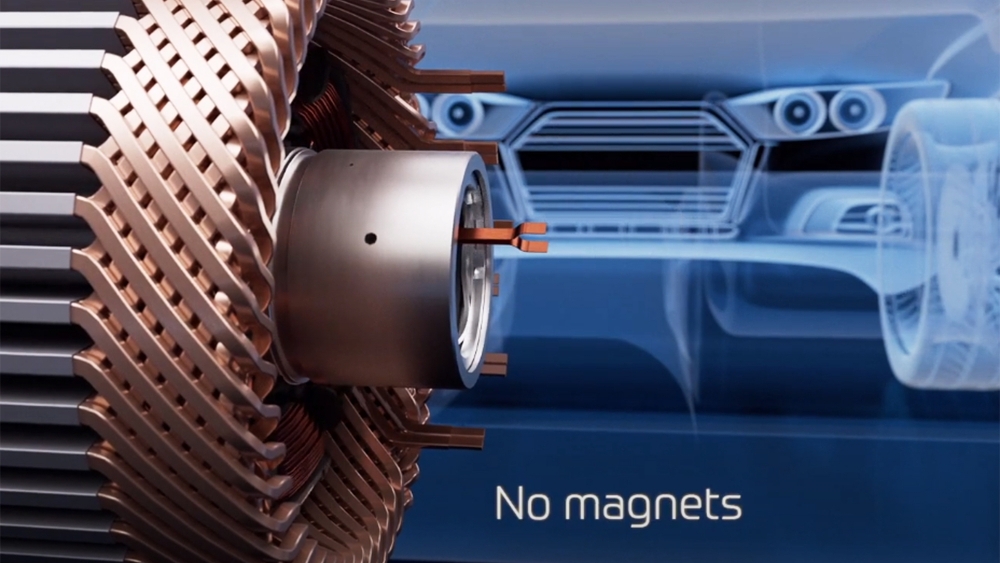
The motor developed by ZF, called HPMS, emerges as a viable alternative to PMSM, a model widely used in the automotive sector.
Both have similar performance and dimensions, allowing for replacement without compromising the efficiency of electric vehicles.
Additionally, HPMS motors do not use brushes, reducing maintenance needs.
While some electric motors dispense with rare earths by replacing magnets with electromagnetic coils, this alternative does not achieve the same level of efficiency as models with permanent magnets.
A More Sustainable Future
The European initiative represents an important step toward technological and energy independence for the continent.
By investing in recycling and innovation, Europe seeks to reduce its vulnerability to China and ensure a more sustainable future for the automotive industry.


