






 Portuguese
  Spanish
  4 min of reading
  0 comments


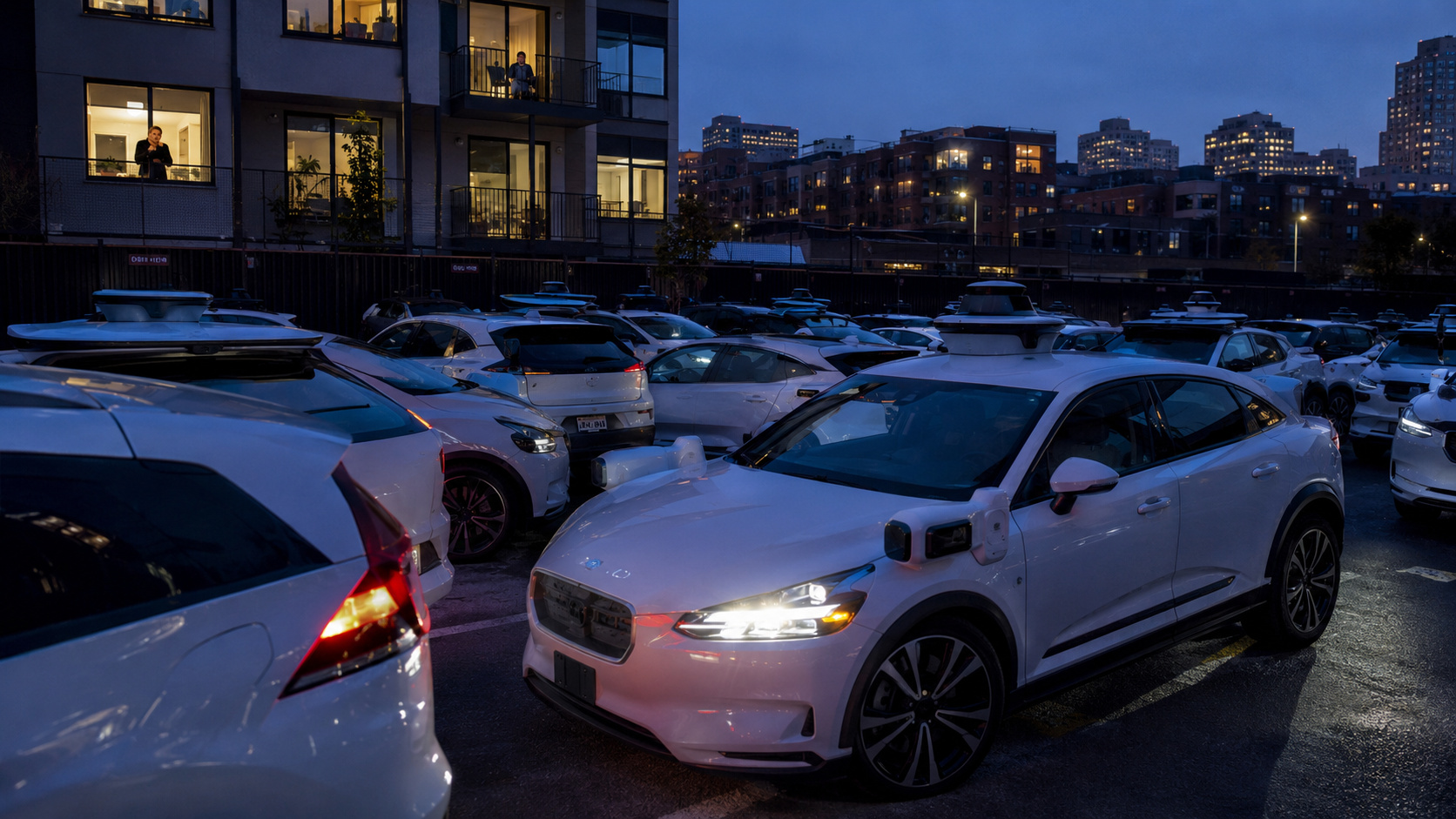
The case of Waymo’s autonomous cars in San Francisco showed an uncomfortable side of robotaxis: driverless vehicles gathered in a parking lot, honked at each other during the early hours, woke up residents, and forced the company to release software corrections to reduce the problem
Waymo’s autonomous cars started honking at each other at 4 AM in San Francisco, disturbing the sleep of residents living near a parking lot used by the vehicles. The scene drew attention because there were no drivers inside the cars.
The investigation was published by NBC Bay Area, a local news outlet. The robotaxis gathered at the location during the early hours and reacted to each other with honks, creating a noisy phantom traffic jam in an urban area.
The episode became another point of pressure on Waymo’s robotaxis. For those living nearby, the problem didn’t seem like a distant discussion about technology. It was real noise, during resting hours, coming from driverless cars.
-
Uber Faces Shareholder Scrutiny as Board Accused of Ignoring Safety, Compliance, and Harassment Warnings Amid Over 3,500 U.S. Lawsuits

-
Ferrari’s First Electric Car Divides Fans, Priced at $630,000, Amid Concerns Over Limited Editions; Brand Clarifies It’s Not Just for Future Perks
-
BYD Dolphin Mini: The Electric Car That Defies Depreciation, Losing Only 3.58% in a Year and Becoming the Best-Selling Retail Model Under $22,000

-
Electric Car JAC E-JS4 Loses $19,000 in Value in One Year, Leading Record Depreciation of Used Cars in Brazil Due to Expensive Battery and New Models


Waymo’s Robotaxis Became a Nuisance in San Francisco During Early Hours
Waymo’s autonomous vehicles began to congregate in a San Francisco parking lot during the early hours. In this movement, the cars honked at each other while trying to organize themselves in the spot.
The situation bothered nearby residents, who were repeatedly woken up by the sound of honking. The time made the problem even more sensitive, with reports linked to 4 AM, a time when the city should be silent.
The case drew attention because the noise didn’t come from irritated drivers. The commotion involved autonomous vehicles, with no one at the wheel, reacting to each other inside a parking lot.
A Parking Lot Became a Symbol of Autonomous Car Chaos
The San Francisco parking lot ended up becoming the center of a curious scene. Cars designed to circulate without drivers began to create a typical traffic problem, even without humans directly participating in the situation.

The result was a type of noisy phantom traffic jam. The robotaxis gathered in the same space, and their sonic response to each other ended up affecting those living nearby.
This detail made the case strong for public debate. The technology didn’t just fail in a distant simulation. It disrupted the common routine of residents, in an easy-to-understand situation: noise during sleep.
NBC Bay Area Reported the Case, Turning Up Pressure on Waymo
NBC Bay Area, a local news outlet, recorded residents’ complaints and Waymo’s need to respond. The company had to release software corrections to deal with the vehicles’ behavior.
In simple terms, a software correction is an adjustment to the system that guides how the car should act. Since robotaxis thus depend on automatic commands, an undesirable reaction needs to be corrected in the programming.
The episode showed, then, that the operation of autonomous cars in urban areas does not only depend on driving and traffic safety. It also involves coexistence with residents, noise control, and respect for neighborhood rest.
The City That Lost Sleep Over Driverless Cars
San Francisco became the stage for a scene that seems straight out of a futuristic story, but had a very practical impact. Residents were woken up by driverless vehicles honking at each other.
For those living near the parking lot, the presence of robotaxis ceased to be just a technological novelty. The operation began to represent a source of nuisance, especially during the early hours.
The case also reinforced an important question: to what extent is a city prepared to receive autonomous cars when small system errors directly affect people’s lives?

Software Corrections Became the Mandatory Response to the Honking
Waymo had to release software corrections after the problem gained repercussion. This indicates that the company had to adjust the vehicles’ behavior to avoid similar new situations.
This point is important because it shows how robotaxis still depend on constant monitoring. Even when they can circulate without a driver, they need to react appropriately in places shared with other people.
The impact on the company’s image was immediate. The case generated public wear and tear, increased pressure on the urban operation of robotaxis, and put noise at the center of the discussion about autonomous mobility.
The future of robotaxis also depends on urban coexistence
The episode in San Francisco shows that the advancement of autonomous cars will not only be evaluated by their ability to drive alone. Public acceptance also depends on how these vehicles behave near homes, buildings, and busy neighborhoods.
A driverless car may seem like a modern solution, but it still needs to respect simple rules of community life. Not waking up residents at 4 AM is one of them.
In the end, Waymo’s autonomous cars transformed a parking lot into a symbol of a greater challenge. Technology can advance quickly, but the city feels the effects first when something goes out of control.
Do you think robotaxis should have stricter limits for operating near residential areas during the early hours, or is this type of failure part of the process of cities adapting to new technology? Share your opinion.





-

1 person reacted to this.