






 Portuguese
  Spanish
  6 min of reading
  0 comments


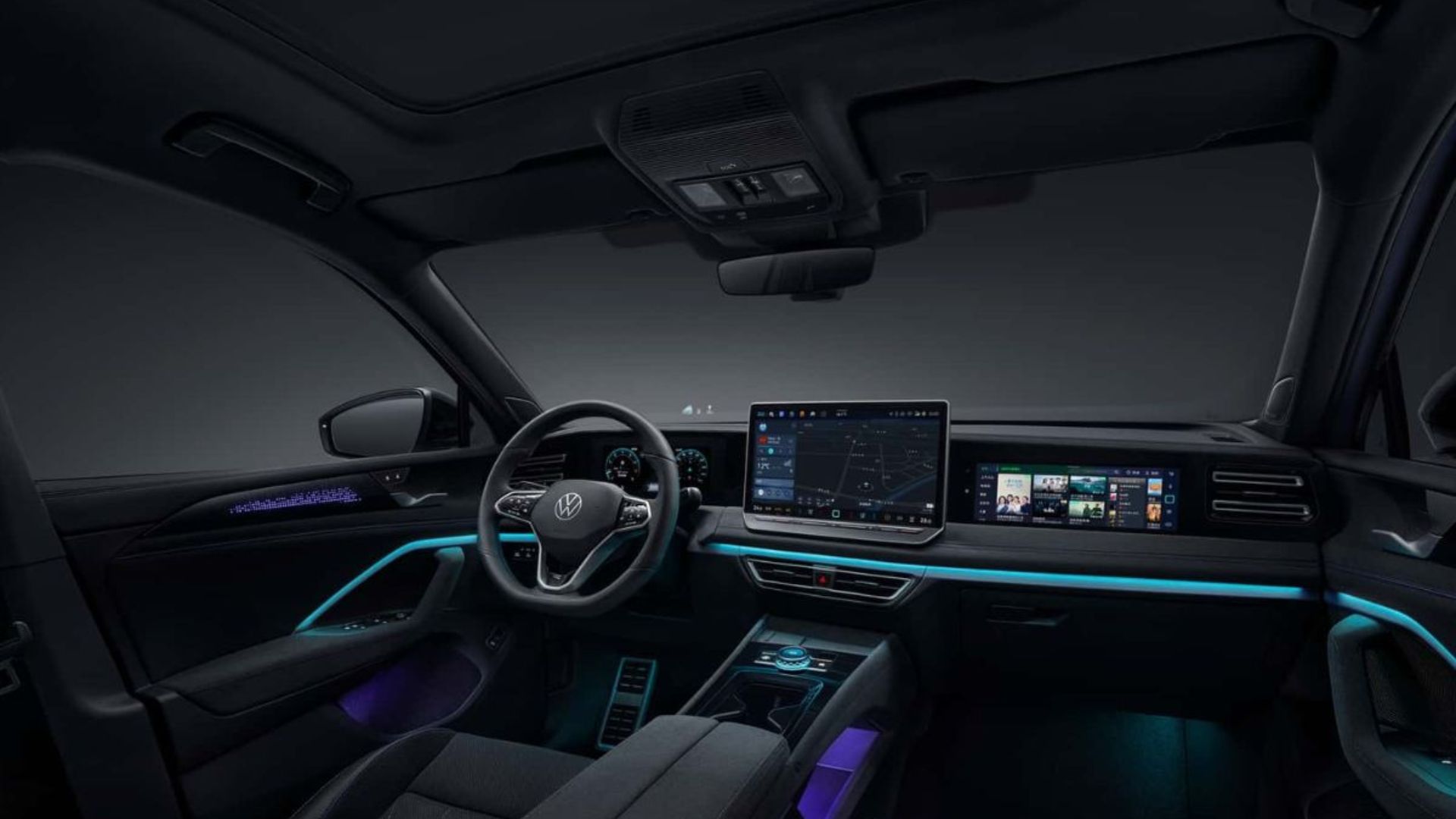
Volkswagen hybrid SUV emerges in China with up to 272 hp, combined range of 1,400 km, and a proposal aimed at advancing Chinese electrified models, in a dispute involving BYD Song, Haval H6, and other sport utility vehicles that have gained market share in Brazil in recent years.
Unveiled in China, the Volkswagen Tiguan L ePro emerges as one of the German brand’s main bets in the plug-in hybrid SUV segment, featuring a 1.5 turbo engine, versions with up to 272 hp, and a combined range announced at up to 1,400 km.
While Chinese manufacturers expand their participation in strategic markets, Volkswagen tries to regain ground among electrified vehicles with a sport utility vehicle aimed at consumers who prioritize performance, energy efficiency, and onboard technology.
Even without official confirmation for Brazil, the new configuration reinforces the manufacturer’s global movement towards plug-in hybrids, a category that has gained strength due to the search for lower consumption and greater range in urban and highway journeys.
-
Uber Faces Shareholder Scrutiny as Board Accused of Ignoring Safety, Compliance, and Harassment Warnings Amid Over 3,500 U.S. Lawsuits

-
Ferrari’s First Electric Car Divides Fans, Priced at $630,000, Amid Concerns Over Limited Editions; Brand Clarifies It’s Not Just for Future Perks
-
BYD Dolphin Mini: The Electric Car That Defies Depreciation, Losing Only 3.58% in a Year and Becoming the Best-Selling Retail Model Under $22,000

-
Electric Car JAC E-JS4 Loses $19,000 in Value in One Year, Leading Record Depreciation of Used Cars in Brazil Due to Expensive Battery and New Models


In recent years, plug-in hybrid SUVs have gained traction among consumers interested in reducing fuel consumption without relying exclusively on public charging infrastructure.
This advancement has transformed the segment into one of the most competitive in the global automotive industry, especially among medium and medium-large sport utility vehicles.
The configuration is not yet confirmed for sale in Brazil, but it draws attention because the Tiguan has already returned to the national market in a combustion version, equipped with a 2.0 TSI engine with 272 hp, 4Motion all-wheel drive, and a price in the range of high-end medium SUVs.
Hybrid Tiguan bets on extended range

Among the main attractions of the Tiguan L ePro is its plug-in hybrid powertrain, developed to combine the performance of the combustion engine with the efficiency of electric propulsion for urban commutes and longer trips.
According to data released in the Chinese market, the range can reach 1,400 km with a fully charged tank and battery, although this calculation uses a measurement standard considered more optimistic than cycles adopted in other countries.
Should the SUV be officially launched in Brazil, the figures would need to undergo homologation by Inmetro, responsible for consumption and energy efficiency measurements used in the national market.
According to Auto Mais TV, the SUV will have configurations of 204 hp and 272 hp, a level that places the more powerful version at the same power level as the Tiguan R-Line currently sold in Brazil by Volkswagen.
Volkswagen targets the advancement of Chinese SUVs
The arrival of the Tiguan L ePro comes at a time when Chinese brands are expanding their presence among plug-in hybrids.
Models such as BYD Song Plus, BYD Song Premium, and GWM Haval H6 PHEV35 have become benchmarks in technology, performance, and electric range.
In this scenario, Volkswagen is trying to reposition the Tiguan as an electrified medium-large alternative, targeting consumers interested in performance, energy efficiency, and sophisticated equipment without giving up a traditional brand.
In addition to the hybrid powertrain, the model presented in China received a significant visual update, with more modern lines, a new front grille, and elements aligned with the design language recently adopted by the manufacturer in other global SUVs.
The interior also follows the digitalization trend seen in Volkswagen’s most recent models, with emphasis on a large multimedia center, digital panel, and greater integration between connectivity and driver assistance systems.
While complete equipment details may vary by version and market, the positioning of the Tiguan L ePro indicates a focus on onboard technology and a more sophisticated experience to face already established Chinese rivals.
Many of these competitors grew precisely by offering more standard equipment, refined finishes, and technological features in price ranges considered competitive.
The challenge, however, is greater than just matching power.
BYD and GWM gained visibility with competitive packages, strong technological appeal, and the offer of electric driving for daily commutes, points that have started to weigh on purchasing decisions.
Global version already indicates an electrified path

In European markets, the Tiguan eHybrid appears with a 19.7 kWh battery and an electric range of up to 126 km, depending on the version and measurement cycle.
The power also reaches 272 hp in the stronger configurations.
These data show that Volkswagen already has the technical basis to offer a competitive plug-in Tiguan.
In Europe, Volkswagen has been gradually expanding its electrified lineup, prioritizing plug-in hybrids and pure electric vehicles to meet emissions targets and new environmental requirements established in different markets.
Within this strategy, the Tiguan appears as one of the brand’s most relevant models, mainly due to the international recognition built over the years and its consolidated presence in the medium SUV segment.
The adoption of plug-in hybrid powertrains also allows manufacturers to maintain high performance while reducing consumption and emissions on urban routes, a characteristic that has gained relevance among Brazilian consumers.
In large urban centers, the possibility of driving solely in electric mode for short commutes has become one of the main commercial arguments for this type of vehicle.
Even so, the Chinese L ePro configuration has its own specifications and should not be automatically treated as the same product that could arrive in Brazil.
For now, the brand sells the Tiguan R-Line 350 TSI in the country, with a 2.0 turbo gasoline engine, 272 hp, and 35.7 kgfm of torque.
The national version is not hybrid, but it occupies a segment where Chinese electrified vehicles are rapidly advancing.
Price and technology should define the dispute
Should the plug-in Tiguan be launched in the Brazilian market, the natural competition would involve BYD Song Plus, BYD Song Premium, GWM Haval H6 PHEV35, Jaecoo 7 PHEV, and other similarly sized electrified SUVs.
Price would be decisive. A Tiguan PHEV would need to arrive with a competitive package to avoid appearing as just a belated response to the growth of Chinese brands, which already offer embedded technology, good electric range, and strong commercial presence.
Furthermore, the strategy would have to consider after-sales, warranty, dealership network, and unit availability.
These factors can weigh as much as power and range in a segment where consumers compare total cost, trust, and innovation.
Another important factor involves the perception of Volkswagen’s value among consumers who still associate the brand primarily with traditional combustion-powered vehicles.
In contrast, Chinese manufacturers quickly gained ground by linking their operations in Brazil to innovation, electrification, and more aggressive technological packages from the beginning of their activities in the country.
The advance of these companies altered the segment’s balance and pressured traditional automakers to accelerate hybrid and electric projects to avoid losing market share in strategic categories.
Even without official confirmation for the Brazilian market, the Tiguan L ePro already appears as one of Volkswagen’s most relevant moves in the global dispute for space among electrified SUVs.
Volkswagen has not yet officially confirmed the Tiguan L ePro for Brazil.
Until then, the model presented in China serves as a sign that the brand is preparing a more direct reaction in the plug-in hybrid SUV market, precisely where BYD and GWM have gained ground.





-

-

-

-

-

-

17 people reacted to this.