Portuguese
  Spanish


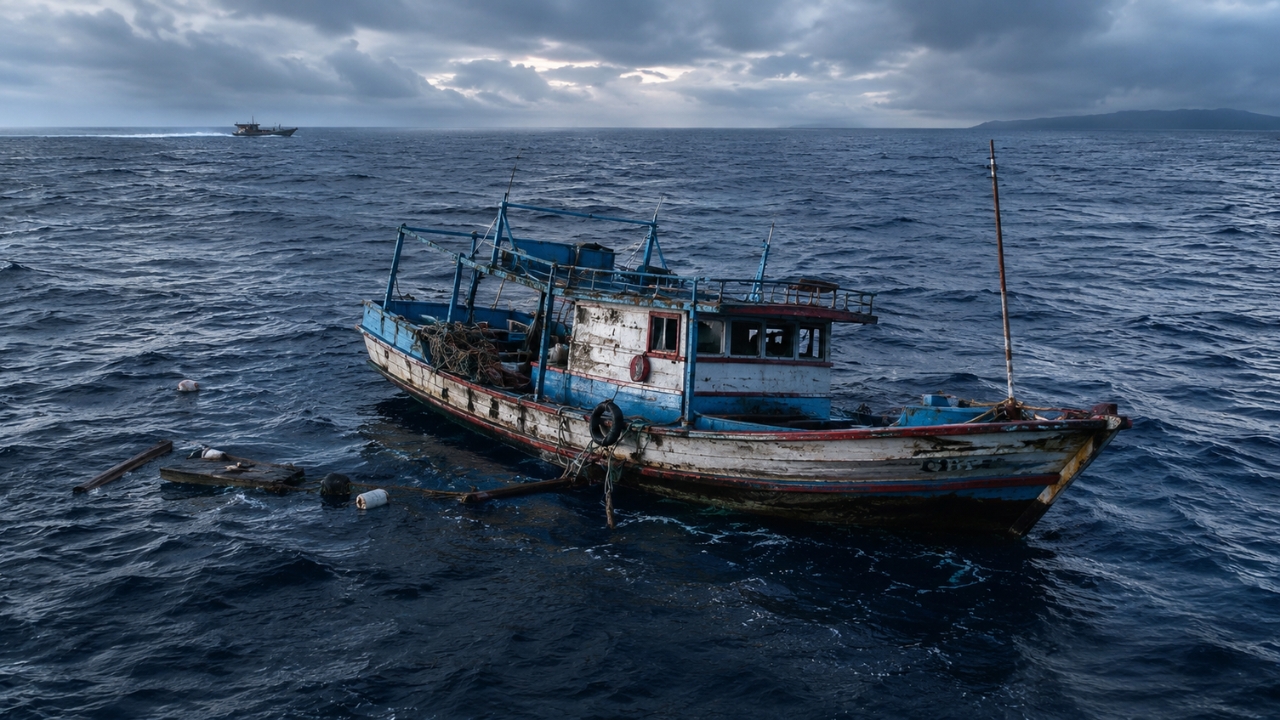

According to a report by the portal O Eco, fishermen manage to bypass the system by turning off the device or blocking the signal. The same portal reported that Ibama authorities admit not having enough personnel to monitor all boats along the entire coast 24 hours a day.
On the northern coast of Brazil, a frightening reality repeats itself without the authorities being able to control it: artisanal fishing vessels leave Amapá, travel hundreds of kilometers into the open sea, and simply disappear. No tracking. No surveillance. No response.
The case is not isolated. It is the portrait of a maritime monitoring void that puts lives at risk every day, in an area that the Brazilian Navy itself recognizes as strategic, vulnerable, and practically invisible to the State.
Official tracking does not reach artisanal boats
Brazil has a federal program called PREPS, the National Program for Satellite Tracking of Fishing Vessels. The problem is that participation is mandatory only for vessels with a length of 15 meters or more or with a Gross Tonnage of at least 50. Smaller boats, which make up the majority of the artisanal fleet of Amapá, are completely outside the system.
-
Few Know This: Canada’s Flag Design, with its 11-Point Maple Leaf, Was Wind Tunnel-Tested for Clarity

-
Fish Rain from the Sky in Brazilian Cities During Storms, Puzzling Residents; Learn How Waterspouts Can Transport Animals Over Long Distances

-
U.S. City Spent Millions Building Subway Tunnels and Stations, But No Trains Have Run There

-
Sweden Introduces New Rules Requiring Frequent Supervision and Daily Interaction for Cat Owners



And even the vessels required to use tracking find loopholes. Fishermen manage to bypass the system by turning off the device or blocking the signal, and the authorities themselves admit that there is not enough personnel to monitor all the boats along the entire coast 24 hours a day.
The Navy seized a boat more than 400 km from the coast, without any tracking

If an illegal vessel can operate at this distance without being detected, what happens to a boat in distress that needs urgent rescue in the same area?
The surveillance structure in the North is insufficient, according to defense documents
According to an institutional study analyzed by the Poder Naval portal, the current naval structure in the North and Northeast is limited given the strategic importance of the region. Investment in Over The Horizon (OTH) radars on the North Coast is identified as an essential component to enhance surveillance. This structure does not yet exist.
The project that could change this scenario has a name: SisGAAz, the Blue Amazon Management System. It was announced in 2010. More than a decade and a half later, the system is still stalled by bureaucratic hurdles, leaving Brazil with blind spots in maritime surveillance. The first unit of SisGAAz is being installed in Ilha Grande, Rio de Janeiro, not in the North of the country.
Amapá at the center of an international criminal route


The absence of monitoring has another worrying dimension. According to a survey by Portal Plural based on the study Cartographies of Violence in the Amazon, by the Brazilian Public Security Forum, Amapá is disputed by the PCC and the Comando Vermelho precisely because of its geographical position: the state is part of the Amazonian drug trafficking route, with cocaine and skunk destined for Europe leaving through the ports and maritime routes of the region.
Public security sector analyses indicate that Brazil has become a central hub for cocaine distribution, with the Amazon serving as a corridor for flow to the Atlantic ports. The Equatorial Atlantic precisely concentrates these routes of transnational crimes, in an area where Brazilian presence is still considered insufficient by experts.
Fishermen disappear and boats appear empty
While the strategic debate drags on, the concrete consequences already reach families. In June 2023, a group of fishermen from Pará disappeared while working off the coast of Amapá, between Cassiporé and Calçoene. The case was reported by the portal SelesNafes in July of the same year, when the boat was found deteriorated in Pará, without any of the occupants on board.
The report highlighted that there were crew members who were not even formally identified, given that informality is structural in the artisanal fishing sector. The crew members were never found.
The silence that costs lives
What unites all these facts is the same systemic failure: hundreds of kilometers of ocean with insufficient surveillance coverage, without mandatory tracking for artisanal vessels, in an area crossed by international drug trafficking routes and frequented by boats that do not appear in any system.
While SisGAAz remains on paper and investments in the North remain in planning, fishermen continue to leave Amapá heading to the open sea. And when they do not return, the Brazilian State often doesn’t even know they went.
What needs to happen for these waters to cease being a dead zone for Brazilian public security?