Portuguese
  Spanish


The Brazilian Fras-le, founded in 1954, became one of the largest manufacturers of brake friction material on the planet, with parts that stop everything from motorcycles and cars to trucks, trains, subways, and even airplanes
Few parts of a vehicle are as important and as overlooked as the one that makes the car stop. And here’s a surprise: when you press the brake, the part that holds the vehicle may have come from a factory in the interior of Rio Grande do Sul. A Brazilian company is one of the largest manufacturers of brake friction material in the world.
Its name is Fras-le, located in Caxias do Sul, and it is the absolute leader in Latin America. According to Fras-le itself, the company is present in more than 125 countries and ranks among the global leaders in the sector. An essential safety item, which decides if a car stops in time, is dominated by a genuinely Brazilian industry.
How a Brazilian company became a world leader in brakes
The trajectory of Fras-le dismantles the idea that Brazil only exports raw materials. The company invested in technology, quality, and exportation, conquering demanding markets in Europe, the United States, and Asia, which do not buy just anything when it comes to safety.
-
Kia K4 Launches in Portugal with 7-Year Warranty, Targets Volkswagen Golf with 1.0 Turbo Engine, Unavailable in Brazil

-
Uber Women Expands Across Brazil: Female Riders Can Now Choose Women Drivers, Schedule Rides, and Set Automatic Preferences

-
Brazil Plans to Launch Ethanol-Fueled Hybrid Cars in 2026 as an Alternative to Fully Electric Vehicles

-
Hyundai HB20S 2026 Surpasses Onix with Turbo Engine, Fuel Efficiency of 15.2 km/l, and Over 750 km Range, Leading Compact Sedan Sales in Brazil with 5,205 Units Sold.


Manufacturing high-level brake friction material requires mastery of chemistry, physics, and materials engineering, and it’s not for everyone. Few companies in the world can produce reliable brake pads and linings on a global scale, and the Brazilian company has established itself in this select group. It is a rare case of a Brazilian multinational leading a sophisticated industrial niche away from the spotlight.
The part that makes everything stop
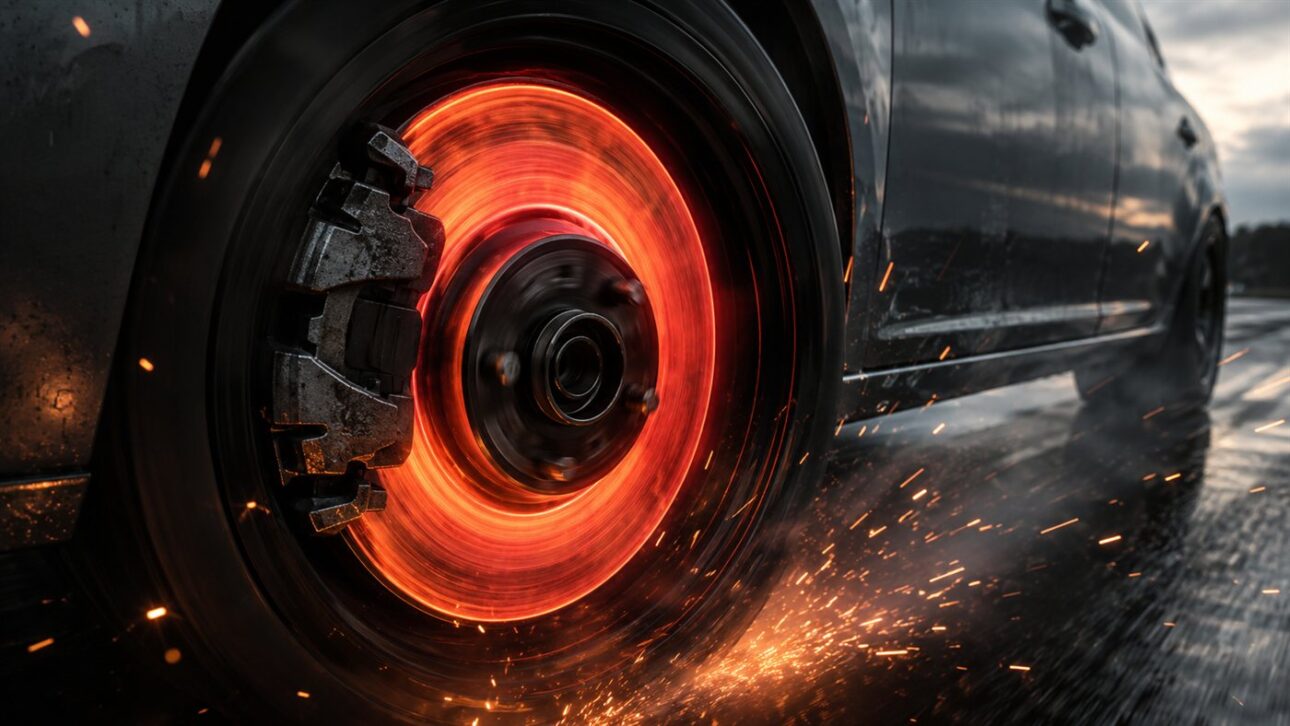
The friction material is the heart of the brake. It is the one that, when pressed against the disc or drum, transforms the vehicle’s motion into heat and makes it stop. It seems simple, but it involves withstanding extremely high temperatures, extreme friction, and repeated use without failing.
An error in this part can cost lives, which makes reliability non-negotiable. The brake pad needs to work the same on the first and the thousandth braking, in heat and rain, loaded or empty, and this consistency is the greatest technical challenge. That’s why automakers and fleets carefully choose who supplies this item, and the Brazilian brand has become a favorite for many of them.
From motorcycle to airplane: where the parts are
The reach of the company’s products is surprising. It manufactures friction material for passenger cars, motorcycles, heavy trucks and buses, as well as trains, subways, and even aircraft. Few imagine that the same Brazilian brake technology is in such different vehicles.
This diversity shows the depth of accumulated knowledge. Braking an airplane upon landing or a loaded train requires materials as demanding as those of a car, and the company masters all these worlds, which expands the market and reduces dependence on a single segment. It is the same expertise applied at very different scales and speeds.
Present in more than 125 countries
The size of the operation is impressive. The company maintains industrial units, distribution centers, and technology centers in various countries, and sells to more than 125 nations. Internationalization began decades ago and transformed a regional manufacturer into a true multinational.
Being in so many markets requires adapting products to different standards, climates, and vehicles of each region. Selling brakes worldwide means meeting technical and legal requirements that change from country to country, a test that many industries do not pass. The ability to do this is proof of the maturity of the Brazilian auto parts industry on the global stage.
From 1954 to global powerhouse
The story began modestly. Founded in 1954, in Caxias do Sul, a city with a strong industrial and metallurgical tradition, the company grew alongside the Brazilian automotive industry. Internationalization began in 1969, with the first exports, and never stopped.
According to AutoData, since 1996 the company has been part of a large Brazilian automotive group, which gave it the strength to invest in research and expansion. Surviving and growing for seven decades in such a competitive sector, becoming a world leader, is a rare achievement for a company from an emerging country. It is proof that cutting-edge technology can be built from the interior of Brazil.
Why friction material is high technology
Many people underestimate the complexity of a brake pad. It is made from a mixture of dozens of different materials, combined in closed formulas, which need to balance braking power, durability, heat resistance, low noise, and controlled disc wear.
Getting this recipe right is as serious a laboratory task as that of any chemical industry. Each compound changes the behavior of the brake, and a small error can mean noise, vibration, or loss of efficiency, problems that the driver feels immediately. Therefore, brake friction material is a constant field of research, and leading in it requires heavy and continuous investment.
A case of Brazilian industry exporting knowledge
The most valuable aspect of this story is the type of export involved. The company doesn’t just sell parts; it sells engineering, research, and technology developed in Brazil to the world. It is Brazilian knowledge embedded in a safety product used on other continents.
This changes the country’s image in global trade. When a Brazilian auto parts company sets quality standards abroad, it shows that Brazil can compete in technology sectors, not just in commodities. It’s the same pride of seeing national airplanes and machines abroad, applied to a small but critical part that no one sees.
Why the invisible brake part matters so much
In the end, the story of Fras-le shows how a component that no one notices can be a source of industrial pride. The brake is the difference between a scare and a tragedy, and mastering the technology that makes it work is serious business, done competently right here.
It’s another case of a discreet giant, this time with a Gaúcho accent, supporting the safety of millions of vehicles around the planet. Next time you brake and the car responds immediately, it’s worth remembering that part might be Brazilian. Did you imagine that Brazil was a world power in brakes?