Portuguese
  Spanish


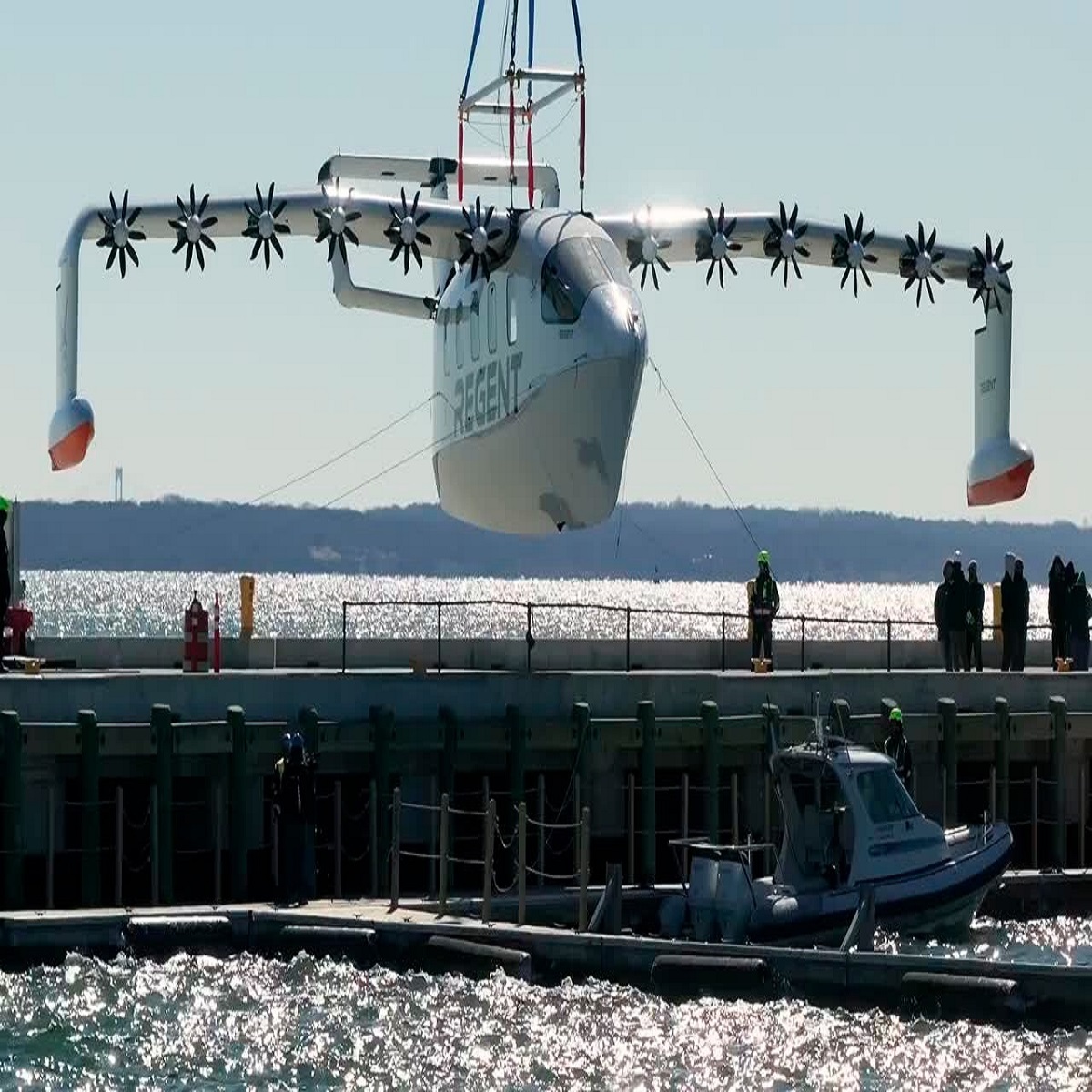

The company projects speeds in the range of up to 180 km/h, which places the vehicle at an intermediate level between fast ferries and regional aircraft.
This combination of speed and energy efficiency is one of the project’s main arguments, especially for short and medium-distance coastal routes. Furthermore, by operating close to the water, the vehicle avoids many of the restrictions associated with traditional air traffic.
Electric propulsion and absence of runway expand operational possibilities
Another central point of the project is the use of fully electric propulsion. The Viceroy Seaglider uses batteries to power its motors, which reduces direct emissions and operational noise.
-
Brazil Welcomes Spanish Wamos Air and Nigerian Air Peace, Potentially Transforming International Routes and Increasing Competition

-
Offshore air transport soars in Brazil, surpasses 2.5 million passengers, and reveals how oil has transformed Rio’s airports into key pieces of national logistics.

-
Latin America becomes the “global champion” of aviation taxes, tickets may become more expensive in Brazil, and IATA’s warning exposes risk for flights, tourism, and passengers.
-
Brazil has lost 85 air routes since 2019 and is still flying less than before the pandemic, leaving passengers with fewer destinations, fewer frequencies, and a more limited air network.




This allows the vehicle to operate in sensitive coastal areas, ports, and urban regions with less environmental impact.
Furthermore, the system does not require runways or airports, and can operate directly from:
- Ports
- Marinas
- Coastal areas
This characteristic significantly expands the number of possible routes, especially in regions with fragmented geography, such as archipelagos.
Billion-dollar order book indicates commercial interest even before full operation
Even in the testing phase, the project has already garnered significant market interest. REGENT reported having accumulated an order book exceeding US$ 9 billion, involving maritime transport, tourism, and logistics operators.

This volume of interest indicates that the technology is not seen merely as experimental, but as a possible commercial solution for coastal transport.
Companies are evaluating the model as an alternative to reduce travel time and increase efficiency on routes that currently rely on slower vessels.
Ground effect technology returns with a new proposal after decades of limited use
Ground effect vehicles are not an absolute novelty. Similar projects have been explored in the past, especially during the Cold War, notably the Soviet ekranoplans.
However, technological and operational limitations prevented widespread adoption. What differentiates the new generation is the combination of modern materials, advanced electronic control, and electric propulsion, which make the concept more commercially viable.
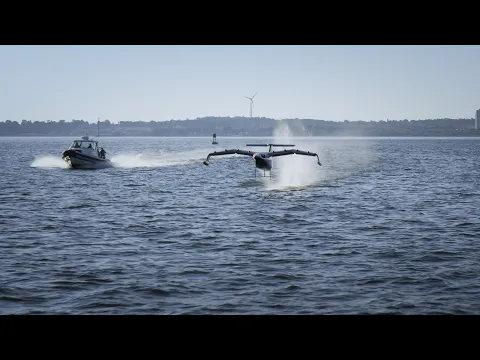

Although the initial focus is passenger transport, the concept can be expanded to other applications.
Among the possibilities are:
- Light cargo transport
- Rescue operations
- Logistics in isolated regions
- Tourism services
Operational flexibility is one of the factors increasing interest in the technology, especially in coastal markets.
Regulatory and operational challenges still need to be overcome
Despite its potential, the Viceroy Seaglider still faces significant challenges.
Among them are:
- Regulatory certification
- Integration with maritime and air traffic systems
- Support infrastructure
- Climatic limitations
Defining rules for hybrid vehicles like this is one of the critical points, as they do not fit perfectly into traditional categories.
What’s at stake with the advancement of vehicles that blend boat and airplane
The development of the Viceroy Seaglider represents more than a specific innovation. It signals the emergence of a new category of transport, which can occupy the space between vessels and aircraft.
This category can offer:
- Higher speed than boats
- Lower cost than airplanes
- High operational flexibility
Do you believe that hybrid vehicles like this can redefine coastal transport in the coming years?
The advancement of the seaglider raises a central question about the future of mobility. If vehicles capable of operating without runways and with high energy efficiency become viable, coastal transport could undergo a significant transformation.
The combination of technology, scale, and market interest indicates that this type of solution is moving beyond the experimental stage.
The question that remains is direct: will this type of vehicle be just a niche alternative or the beginning of a new era in water-to-air transport.
Although it does not operate at high altitudes, the Viceroy Seaglider achieves speeds significantly higher than conventional vessels.
The company projects speeds in the range of up to 180 km/h, which places the vehicle at an intermediate level between fast ferries and regional aircraft.
This combination of speed and energy efficiency is one of the project’s main arguments, especially for short and medium-distance coastal routes. Furthermore, by operating close to the water, the vehicle avoids many of the restrictions associated with traditional air traffic.
Electric propulsion and absence of runway expand operational possibilities
Another central point of the project is the use of fully electric propulsion. The Viceroy Seaglider uses batteries to power its motors, which reduces direct emissions and operational noise.
This allows the vehicle to operate in sensitive coastal areas, ports, and urban regions with less environmental impact.
Furthermore, the system does not require runways or airports, and can operate directly from:
- Ports
- Marinas
- Coastal areas
This characteristic significantly expands the number of possible routes, especially in regions with fragmented geography, such as archipelagos.
Billion-dollar order book indicates commercial interest even before full operation
Even in the testing phase, the project has already garnered significant market interest. REGENT reported having accumulated an order book exceeding US$ 9 billion, involving maritime transport, tourism, and logistics operators.
This volume of interest indicates that the technology is not seen merely as experimental, but as a possible commercial solution for coastal transport.
Companies are evaluating the model as an alternative to reduce travel time and increase efficiency on routes that currently rely on slower vessels.
Ground effect technology returns with a new proposal after decades of limited use
Ground effect vehicles are not an absolute novelty. Similar projects have been explored in the past, especially during the Cold War, notably the Soviet ekranoplans.
However, technological and operational limitations prevented widespread adoption. What differentiates the new generation is the combination of modern materials, advanced electronic control, and electric propulsion, which make the concept more commercially viable.
Although the initial focus is passenger transport, the concept can be expanded to other applications.
Among the possibilities are:
- Light cargo transport
- Rescue operations
- Logistics in isolated regions
- Tourism services
Operational flexibility is one of the factors increasing interest in the technology, especially in coastal markets.
Regulatory and operational challenges still need to be overcome
Despite its potential, the Viceroy Seaglider still faces significant challenges.
Among them are:
- Regulatory certification
- Integration with maritime and air traffic systems
- Support infrastructure
- Climatic limitations
Defining rules for hybrid vehicles like this is one of the critical points, as they do not fit perfectly into traditional categories.
What’s at stake with the advancement of vehicles that blend boat and airplane
The development of the Viceroy Seaglider represents more than a specific innovation. It signals the emergence of a new category of transport, which can occupy the space between vessels and aircraft.
This category can offer:
- Higher speed than boats
- Lower cost than airplanes
- High operational flexibility
Do you believe that hybrid vehicles like this can redefine coastal transport in the coming years?
The advancement of the seaglider raises a central question about the future of mobility. If vehicles capable of operating without runways and with high energy efficiency become viable, coastal transport could undergo a significant transformation.
The combination of technology, scale, and market interest indicates that this type of solution is moving beyond the experimental stage.
The question that remains is direct: will this type of vehicle be just a niche alternative or the beginning of a new era in water-to-air transport.
Viceroy Seaglider combines boat, hydrofoil, and sea-skimming flight to revolutionize coastal transport with up to 12 passengers.
In March 2025, the American company REGENT Craft began sea trials of the Viceroy Seaglider, an electric ground-effect vehicle designed to operate on coastal routes with superior speed and efficiency compared to traditional vessels. The model stands out not only for its concept but also for its scale: it is 55 feet long (about 16.7 meters) and 65 feet in wingspan (approximately 19.8 meters), dimensions comparable to light aircraft. The project was developed to transport up to 12 passengers, positioning itself as an alternative between ferries, fast boats, and small regional planes.
The central differentiator lies in its hybrid operating mode, which allows the vehicle to function as a boat, hydrofoil, and ground-effect aircraft, all in a single integrated system.
How the seaglider works, alternating between water and sea-skimming flight
The Viceroy Seaglider does not take off like a conventional airplane nor navigate like a common boat. It uses three distinct modes of operation:
Initially, it operates as a traditional vessel, floating on the water. Then, it accelerates and activates its hydrofoils, lifting the hull above the surface to reduce drag. In the final stage, it gains enough speed to enter ground effect, flying a few meters above the water.
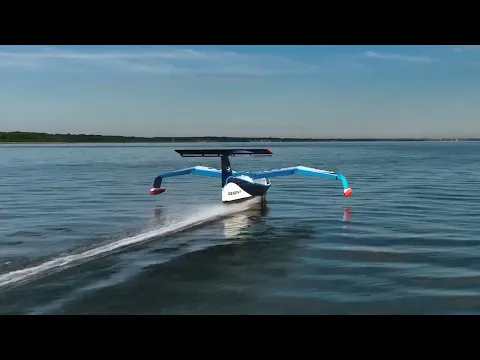
This third stage is what completely differentiates the technology, as it allows for much higher speeds with reduced energy consumption compared to conventional aircraft.
Ground effect occurs when the aircraft flies very close to the surface, creating a kind of aerodynamic cushion that increases lift and reduces drag.
High speed and energy efficiency position the model between boat and airplane
Although it does not operate at high altitudes, the Viceroy Seaglider achieves speeds significantly higher than conventional vessels.
The company projects speeds in the range of up to 180 km/h, which places the vehicle at an intermediate level between fast ferries and regional aircraft.
This combination of speed and energy efficiency is one of the project’s main arguments, especially for short and medium-distance coastal routes. Furthermore, by operating close to the water, the vehicle avoids many of the restrictions associated with traditional air traffic.
Electric propulsion and absence of runway expand operational possibilities
Another central point of the project is the use of fully electric propulsion. The Viceroy Seaglider uses batteries to power its motors, which reduces direct emissions and operational noise.
This allows the vehicle to operate in sensitive coastal areas, ports, and urban regions with less environmental impact.
Furthermore, the system does not require runways or airports, and can operate directly from:
- Ports
- Marinas
- Coastal areas
This characteristic significantly expands the number of possible routes, especially in regions with fragmented geography, such as archipelagos.
Billion-dollar order book indicates commercial interest even before full operation
Even in the testing phase, the project has already garnered significant market interest. REGENT reported having accumulated an order book exceeding US$ 9 billion, involving maritime transport, tourism, and logistics operators.
This volume of interest indicates that the technology is not seen merely as experimental, but as a possible commercial solution for coastal transport.
Companies are evaluating the model as an alternative to reduce travel time and increase efficiency on routes that currently rely on slower vessels.
Ground effect technology returns with a new proposal after decades of limited use
Ground effect vehicles are not an absolute novelty. Similar projects have been explored in the past, especially during the Cold War, notably the Soviet ekranoplans.
However, technological and operational limitations prevented widespread adoption. What differentiates the new generation is the combination of modern materials, advanced electronic control, and electric propulsion, which make the concept more commercially viable.
Although the initial focus is passenger transport, the concept can be expanded to other applications.
Among the possibilities are:
- Light cargo transport
- Rescue operations
- Logistics in isolated regions
- Tourism services
Operational flexibility is one of the factors increasing interest in the technology, especially in coastal markets.
Regulatory and operational challenges still need to be overcome
Despite its potential, the Viceroy Seaglider still faces significant challenges.
Among them are:
- Regulatory certification
- Integration with maritime and air traffic systems
- Support infrastructure
- Climatic limitations
Defining rules for hybrid vehicles like this is one of the critical points, as they do not fit perfectly into traditional categories.
What’s at stake with the advancement of vehicles that blend boat and airplane
The development of the Viceroy Seaglider represents more than a specific innovation. It signals the emergence of a new category of transport, which can occupy the space between vessels and aircraft.
This category can offer:
- Higher speed than boats
- Lower cost than airplanes
- High operational flexibility
Do you believe that hybrid vehicles like this can redefine coastal transport in the coming years?
The advancement of the seaglider raises a central question about the future of mobility. If vehicles capable of operating without runways and with high energy efficiency become viable, coastal transport could undergo a significant transformation.
The combination of technology, scale, and market interest indicates that this type of solution is moving beyond the experimental stage.
The question that remains is direct: will this type of vehicle be just a niche alternative or the beginning of a new era in water-to-air transport.