






 Portuguese
  Spanish


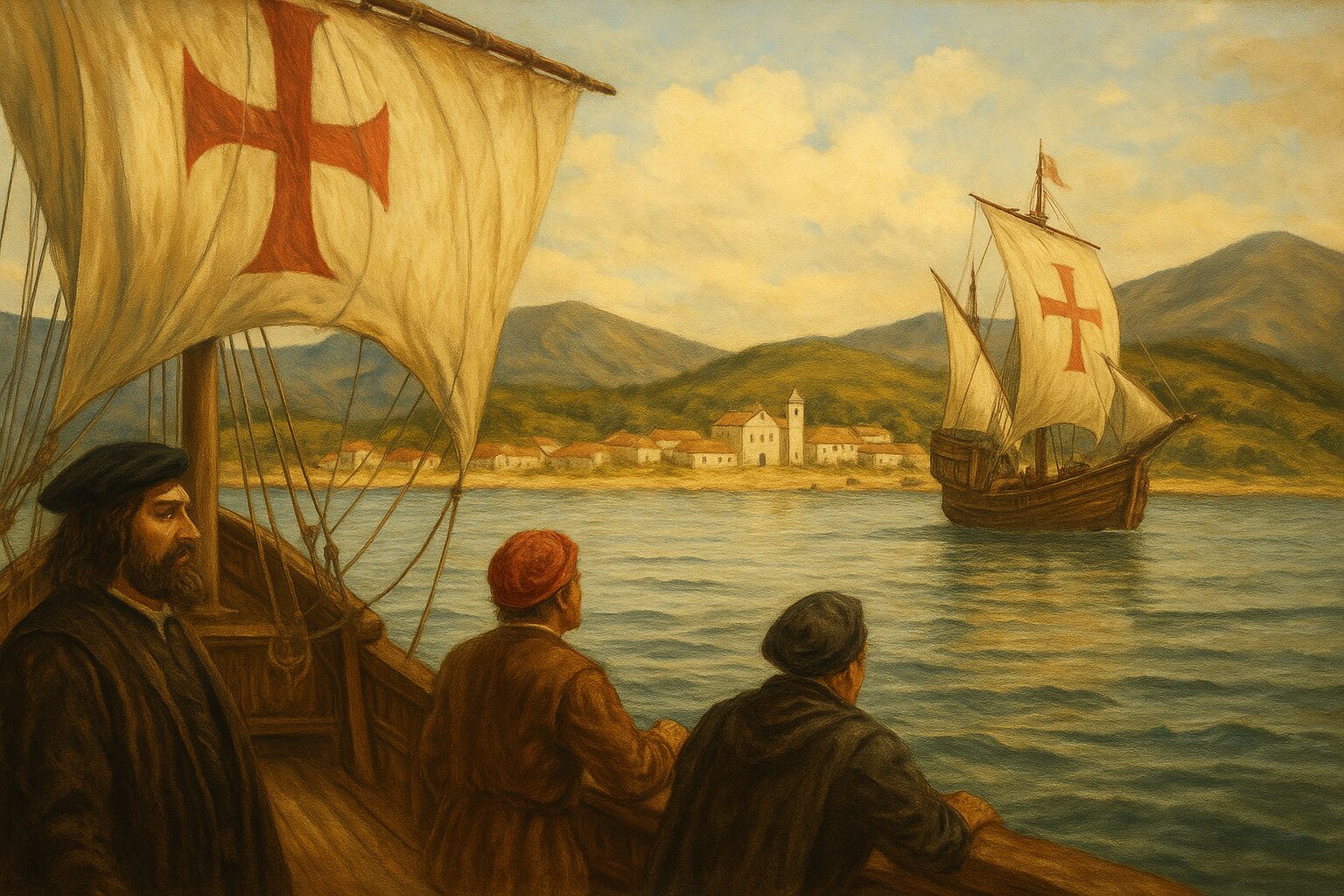


Sao Vicente Was the Stage for the First Election in the Americas and Became a Symbol of the Political and Administrative Foundation of Colonial Brazil
The Brazil began to be shaped as a nation long before the word “city” existed in the colony’s vocabulary. In 1532, the village of Sao Vicente emerged on the coast of São Paulo. More than just a point on the map, the village represented the establishment of the Portuguese administrative structure in the Americas. It was there, according to historians, that the first election on the continent took place.
The founder of the village was Martim Afonso de Sousa, an administrator sent by the Portuguese Crown. The mission was to structure the Lusitanian presence in the new land, with its own government and political organization. Sao Vicente then became the first officially recognized village in the territory that would one day be Brazil.
-
Ferrari, BMW, Tesla, and Chinese Automakers Shift from Copper to Aluminum Wiring to Reduce Weight and Costs in Electric Vehicles

-
Understanding Plastic Codes: Numbers 1 to 7 on Packaging Aid Efficient Recycling and Boost Circular Economy

-
400 km² of Greenhouses in Almería, Spain, Astonish American Visitor by Producing Millions of Tons of Produce for Cold-Weather Markets
-
Antarctic Volcano Emits Microscopic Gold Particles That Travel Up to 1,000 Kilometers Across the Continent




Sao Vicente Hosted the First Election in the Americas
Paulo Eduardo Costa, president of the Historical and Geographical Institute of Sao Vicente, explains that at that time, the term “cities” was not used.
The term used was “village”, and it was within these structures that political and legal life was organized. “Sao Vicente was the first village also because, at that time, there was no term city. All were villages,” he states.
In 1532, the first election in the Americas was held. “In 1532, the first election in the Americas occurred, when democracy was definitively installed in the territory, not only in South America,” highlights Costa. This structure would influence even democratic models from other continents, according to the Institute.
During the colonial period, the villages concentrated local decisions. Led by appointed or elected authorities, they functioned as administrative centers.
The lives of the inhabitants were organized based on the rules of the Portuguese Crown. The model applied in Sao Vicente would serve as a reference for other nuclei that would emerge in the following years.
Strategic Geography
The choice of location was not random. The region of Sao Vicente had ideal characteristics for navigation and supply. The territory had rivers, springs, and calm waters, essential for Portuguese vessels.
“In the early 1500s, water was a very precious resource,” recalls Costa. “With it, you could not only supply the ships [a type of Portuguese vessel] used in the explorations of South America but also enable the production of food.”
The area also housed the Porto das Naus, the first customs warehouse in Brazil. Today, this historical point is located near the Pênsil Bridge, one of the most well-known structures in the city.
Indigenous Peoples
Before the arrival of the Portuguese, the territory was inhabited by various indigenous peoples, such as Tupis, Tupinambás, and Guaianás. These ethnic groups lived from fishing, hunting, and maintaining a balanced relationship with the environment.
According to Costa, the indigenous population at the time of the European arrival was estimated to be around 6 million people. “Almost all were decimated. Today, over 500 years later, about 1.6 million remain. If it weren’t for this violence, they would number between 60 and 80 million,” he laments.
He also highlights the cultural destruction and land appropriation as marks of this colonization process. Despite this, an indigenous community still remains in Sao Vicente.
It is the Paranapuã Village, inhabited by Guarani Mbya indigenous people, located on the beach of Paranapuã, within the ecological reserve of the Xixová-Japuí State Park.
“They maintain traditions, live in taperas [a type of traditionally indigenous structure], sleep in hammocks, and have no strict contact with modernity,” reports Costa.
Sao Vicente Was Capital for Three Days
In January 2000, Sao Vicente assumed the role of capital of the State of São Paulo for three days. Between the 21st and 23rd of that month, the three branches of government — Executive, Legislative, and Judicial — were installed in the city as part of the celebrations for the 500 years of the Discovery of Brazil.
During this period, the Legislative Assembly of the State of São Paulo (Alesp) held an Ordinary Session at the City Council of Sao Vicente. The Alesp Cultural Space was named “V Centenário” and still hosts cultural exhibitions today.
Historical and Geographical Institute
The Historical and Geographical Institute of Sao Vicente was founded in 1838 by Dom Pedro II. In 1959, it achieved autonomy thanks to the efforts of historians Francisco Martins dos Santos and Odete Veiga Martins dos Santos.
Today, it is a non-profit fellowship dedicated to preserving historical memory and promoting culture in the region.
Costa, who has led the Institute for eight years, emphasizes the institution’s importance. “We have the largest library on the coast of São Paulo, with 57 thousand volumes, and a historical museum of the city and Captaincy of Sao Vicente, with 26 thousand items.”
The space also promotes cultural events, such as book launches and musical recitals, bringing together different audiences around the history of the city.
A Monument to Reflection
In Praça 22 de Janeiro, in Sao Vicente, stands the Monument of the IV Centenary. Built in 1900, it celebrates the 400th anniversary of the colonization of Brazil. The sculpture bears an inscription in Latin referring to the union of arms and peoples under the cross, a symbol of the Portuguese mission in America.
Designed by Benedito Calixto and Florimond Colpaert, and built by Augusto Kauschus, the work invites reflection on the history of Brazil’s formation.
History with Critical Insight
For Costa, Sao Vicente’s history should be valued, but with a careful and critical eye. He emphasizes the importance of recognizing the city’s role as the birthplace of administration in the country but also of respecting the indigenous peoples who lived here long before the arrival of the colonizers.
With information from Alesp.Gov.





E importante cultuar é demarcar historicamente para as novas gerações o significado devtodo esse contexto político é cultural e a relevância disso para toda uma nacao
A loja de São Bernardo vive as moscas. Os produtos são caros demais para a população da região. Esses milhões devem vir de outras lojas e outras fontes. Da loja de São Bernardo não é mesmo. E não precisa ser nenhum analista econômico para perceber isso . Basta visitar a loja de vez em quando. As lojinhas da av. Piraporinha onde a Havan se encontra vendem muito mais do que ela. Aliás , não é preciso entrar na loja ,o pátio de estacionamento está sempre VAZIO.
É mais curto e grosso. O Mosqueira destruiu São Vicente e Cananéia por conta própria com um navio roubado de uns piratas franceses. Ia tomar pra Espanha e revindicar uma sesmaria. A coroa portuguesa pra reagir com tropa oficial tinha que ter registro cartório e aí nasce a vila. Só não precisou enviar tropas porque Raposo conhecia João Ramalho que era compadre do Tibiriçá e aí com dois mil homens começamos a fabricar esse Brasil atual. Vicentino bandeirante.