






 Portuguese
  Spanish


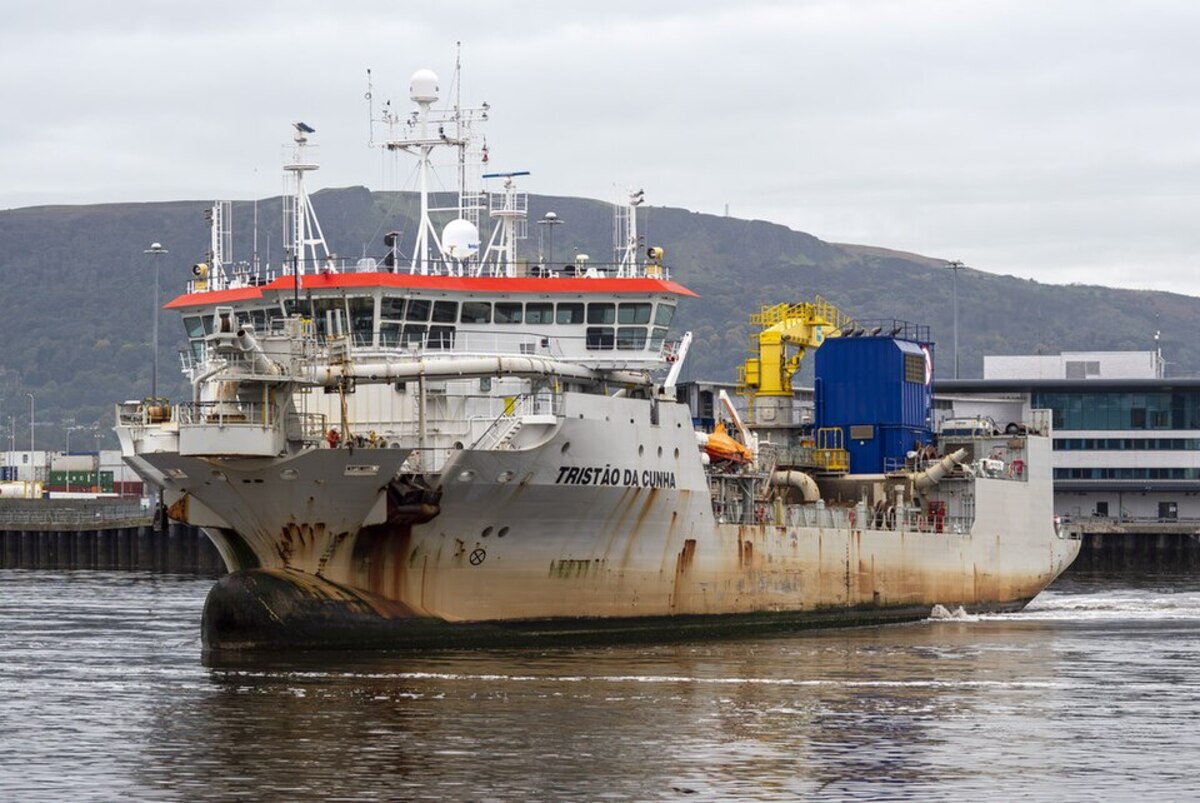

Tristan da Cunha, with only 238 inhabitants, is the most remote inhabited island in the world, accessible only by ship and with unique living rules
In the middle of the Atlantic Ocean, thousands of kilometers away from any continent, there is a small British territory that defies the logic of geographical location. With only 238 residents, Tristan da Cunha is the most remote inhabited island on the planet, an official title recognized by the Guinness World Records.
Distance From Everything
Tristan da Cunha is 2,787 km from Cape Town, South Africa, and 3,949 km from Mar del Plata, Argentina. Its closest neighbor is the island of Saint Helena, located 2,435 km away.
Even so, it is the only inhabited island of the archipelago named after it. The others, such as Gough, Inaccessible, Middle Island, Stoltenhoff, and Nightingale, are uninhabited.
-
Award-Winning Japanese Restaurant Reveals It Has Preserved Part of the Same Frying Oil for 66 Years

-
American Youth Transforms from Severe Obesity to U.S. Air Force Enlistment, Losing 90 Kilograms in Two Years
-
11-Year-Old Entrepreneur Sells 60 Homemade Sweets Daily, Mastering Cost Calculation, Social Media Promotion, and Client Negotiation Since Age 7

-
Peruvian Mountain’s 5,200 Aligned Holes May Unveil Ancient Indigenous Market for Corn and Cotton


With an area of only 98 km², Tristan da Cunha is also one of the smallest destinations in the world. Despite being discovered in 1506 by the Portuguese navigator Tristan da Cunha, the island was only truly settled in the 19th century.
Arrival of the First Residents
The possession of the island was disputed by different powers over time. The Portuguese discovered it, but French and Dutch also passed through. However, it was the British who decided to occupy it officially, still in the 18th century.
In 1810, American sailor Jonathan Lambert moved to the island, accompanied by two companions. He named the archipelago “Islands of Refreshment.”
Later, a fourth man joined the group. During the War of 1812, Tristan da Cunha would have served as a raiding base for British ships. By 1813, only one of the original residents was still alive. Lambert and the other two died in a “fishing accident.”
Permanent British Occupation
The case caught the attention of the British government, which sent troops in 1816. According to documents published in 1837 by diplomat Edmund Roberts, the British feared that Napoleon might escape from Saint Helena using the island as a route. From then on, the Cape Colony began to administer Tristan da Cunha.
In 1817, the troops left the island. But William Glass, a Scottish cab who lived with his South African wife and children, managed to obtain permission to stay there.
He, along with Samuel Burnell and John Nankivel, signed an agreement called “the firm,” which regulated life on the island, with rules concerning livestock, profits, costs, and living together.
The settlement grew and, in 1867, was named Edinburgh of the Seven Seas, in honor of the visit by Prince Alfred, son of Queen Victoria.
Curious Stories
The island once served as a refuge for 50 survivors of the shipwreck of the Blenden Hall. On another occasion, the first successfully recorded blind date would have taken place. In 1826, Thomas Swain arrived on the island and became the fifth unattached man there.
A visiting captain was sent to Saint Helena with the mission of bringing five women to meet the residents. He received five bags of potatoes as a reward. A year later, he returned with the volunteers. Swain married Sarah Jacobs, the first to disembark.
By 1832, the population of the settlement was already 34 people, with six couples and 22 children.
In 1961, the island’s volcano became active, forcing the evacuation of all residents. They only returned in November 1963. In total, 198 people came back to the island.
What Is It Like to Live in Tristan da Cunha?
Entry and exit from the island is only possible by ship. It takes six days to travel to South Africa. There is no airport. The recommendation is that any trip be planned a year in advance.
An email must be sent to the Administration Secretariat explaining the reasons for the visit and wait for approval.
In 2024, there are still only 10 surnames on the island. The community is self-sufficient. Families produce what they consume and do not rely on imports to survive.
The British government allows only one cow per household to prevent damage to vegetation, as 40% of the territory is a nature reserve. In compensation, lobster fishing is an important economic activity. The production is exported to other countries.
The island has a market, school, museum, bar, café, and even a bus that circulates locally. Tourists usually stay in the homes of residents. Visitors pay 88% of the daily rate to the hosts and 12% as tax.
No Card, Only in Pounds
All payments must be made in British pounds. Credit or debit cards cannot be used. There is also no nightlife or urban attractions. What is abundant, however, are natural landscapes. One of the main attractions is the trail to the top of Queen Mary’s Peak volcano.
Even isolated, Tristan da Cunha keeps its history alive and remains one of the most unique places on the planet.
With information from UOL.




Poderíamos substituir o povo da ilhas por políticos brasileiros e cortar o acesso do navio q abastece a ilha!
Por anos Portugal entregava tudo que tinha para a Inglaterra. A ilha deve ter sido entregue também.
Sem nem um cabaré. Ha vao viver isolados na ****