






 Portuguese
  Spanish


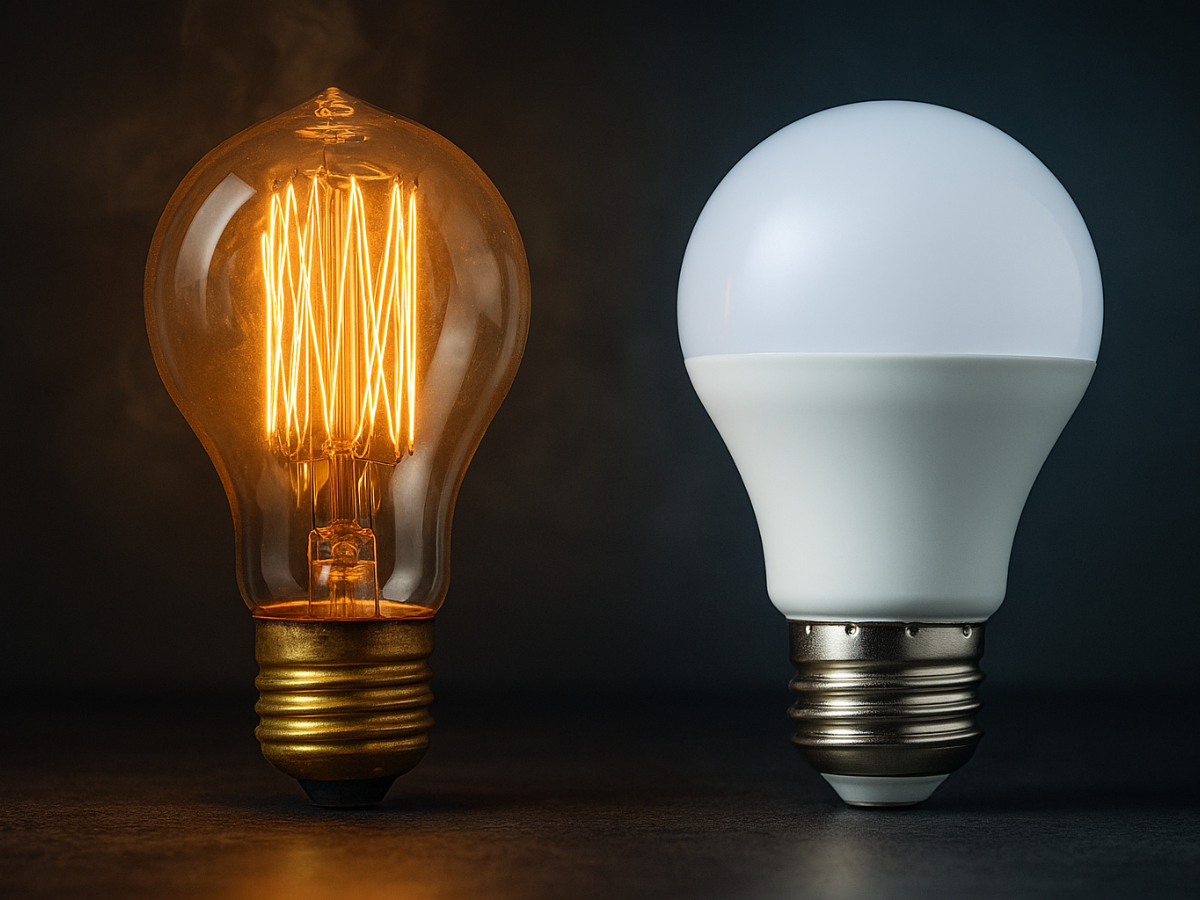


From The Thomas Edison Revolution To The Rise Of LED, Discover The History Of The Invention That Illuminated The World And Why It Was Surpassed By More Efficient Technologies
The incandescent bulb is an indelible symbol of modernity. For over a century, it reigned as the primary source of artificial illumination, shaping how we live, work, and interact. The invention that illuminated the world not only dispelled the dark but also paved the way for new forms of production and leisure.
However, the trajectory of this iconic technology is also the story of its decline. Its profound energy inefficiency led to its banning in various countries, including Brazil, making way for the rise of LED.
Inventing The Incandescent Bulb
The journey to practical electric lighting was an evolutionary process. In the early 19th century, British chemist Sir Humphry Davy demonstrated the electric arc lamp, the first practical electric light, proving the potential of electricity as a source of illumination.
-
Bruno Guimarães, 28, Misses Crucial Penalty Against Norway in World Cup After Replacing Vinicius Jr.

-
Inspired by a school lesson on Africa’s water crisis, a young boy raised money through chores to fund a well that transformed a Ugandan community.

-
Brazilian Construction Worker Moves to France, Earns Up to €2,500 Monthly with Home Renovations, Gains Social Media Attention

-
US Navy Sinks USS Oriskany with 230 kg of C-4, Creating World’s Largest Artificial Reef in 37 Minutes





In the following decades, various inventors sought a solution for household use. English physicist Joseph Swan succeeded with carbon filaments in the late 1870s. However, it was American Thomas Alva Edison who is widely credited with creating the first commercially viable incandescent bulb in 1879. His bulb, with a carbonized cotton filament and high vacuum, shone for 45 hours. Edison’s ingenuity extended further, creating the first electricity distribution system in 1882 at Pearl Street Station in New York, which included generators, cables, and switches.
The Impact Of The Invention That Illuminated The World On Society And Industry
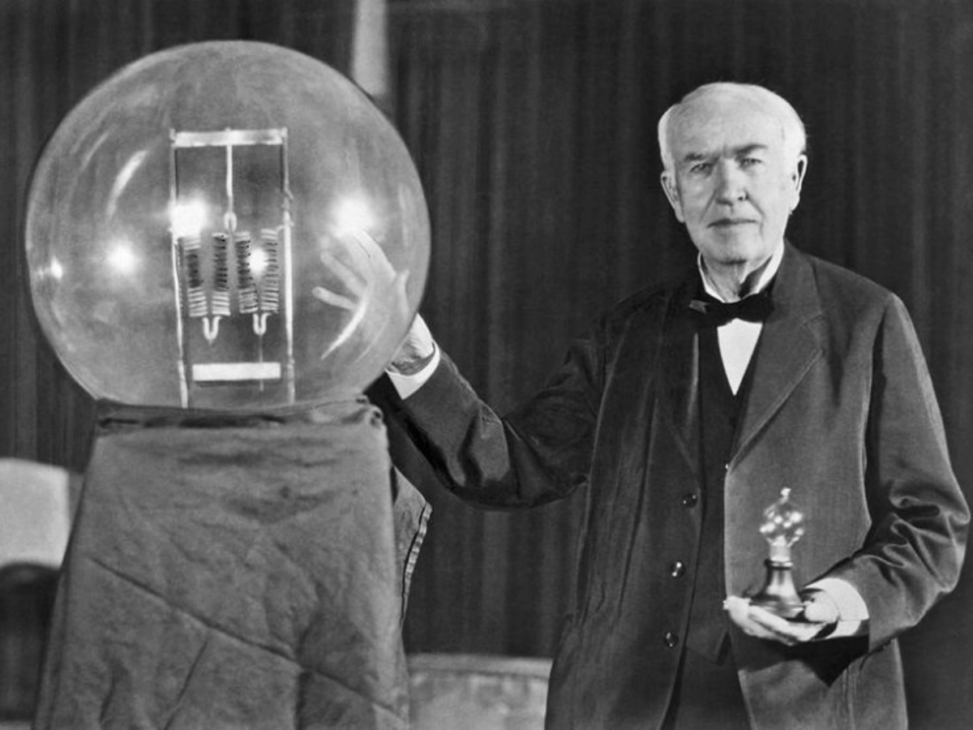
The spread of the incandescent bulb transformed society. The most immediate impact was the “extension of the day”. Human life, once confined by sunlight, was liberated. Nighttime activities like reading and socializing became commonplace. Street lighting improved public safety, and today, in Brazil, 99.8% of the population has access to electricity, a direct legacy of this revolution.
In industry, the impact was equally profound. Electric light allowed factories to operate 24 hours a day safely, drastically increasing productivity and driving the Second Industrial Revolution. Consistent, high-quality lighting was a catalyst for more complex manufacturing processes and the creation of the “24-hour economy”.
The Energy Inefficiency Of Incandescent Technology
Despite its impact, the incandescent bulb carried a fundamental flaw: its extremely low energy efficiency. The principle of operation is based on heating a tungsten filament by passing electric current until it glows.
The problem is that 90% to 95% of the electrical energy consumed is converted into heat, not visible light. Only a small fraction, from 5% to 10%, turns into useful light. With a luminous efficiency of only 10 to 20 lumens per watt (lm/W), the incandescent bulb is an inherently energy-wasting technology. For over a century, this was an acceptable trade-off, but with growing concerns about sustainability, its inefficiency became unsustainable.
The Banning Of The Incandescent Bulb And The Rise Of LED
The growing awareness of the need for energy conservation led to a global movement to ban the incandescent bulb. In Brazil, Interministerial Ordinance No. 1007 of 2010 established a timetable for its gradual withdrawal from the market, which was completed on June 30, 2016, when the sale of general-use incandescent bulbs was effectively banned.
Meanwhile, the Light Emitting Diode (LED) evolved from a simple indicator light to the dominant lighting technology. A crucial development was the invention of the high-brightness blue LED in the early 90s, an achievement that earned the Nobel Prize in Physics in 2014 and allowed for the creation of efficient white light. LEDs are semiconductors that convert electricity directly into light, with advantages such as:
High Energy Efficiency (savings of 50% to 80%).
Long Lifespan (20,000 to 50,000 hours).
Durability and Compact Size.
Low Heat Emission and No Mercury.
The Legacy Of The Bulb And The Future Of Lighting
The transition from incandescent technology to LED represents one of the most significant changes in the history of lighting. Comparatively, the efficiency, lifespan, and environmental impact of LEDs are immensely superior, resulting in a lower Total Cost of Ownership (TCO) for the consumer, despite the higher initial cost.
The invention that illuminated the world played an undeniable transformative role, but its legacy is also a lesson in technological evolution. The future of lighting is smart and connected. Technologies like Li-Fi (which uses light to transmit data at speeds exceeding Wi-Fi), flexible OLED panels, and Human-Centric Lighting (HCL) are transforming light from a passive utility into an active and intelligent infrastructure, integrated with the Internet of Things (IoT). The saga of lighting, far from finished, promises an even brighter tomorrow.





Boa matéria, porém poderia complementar falando sobre as lâmpadas fluorescentes, comentar sobre quem criou o LED etc.