






 Portuguese
  Spanish
  4 min of reading
  0 comments


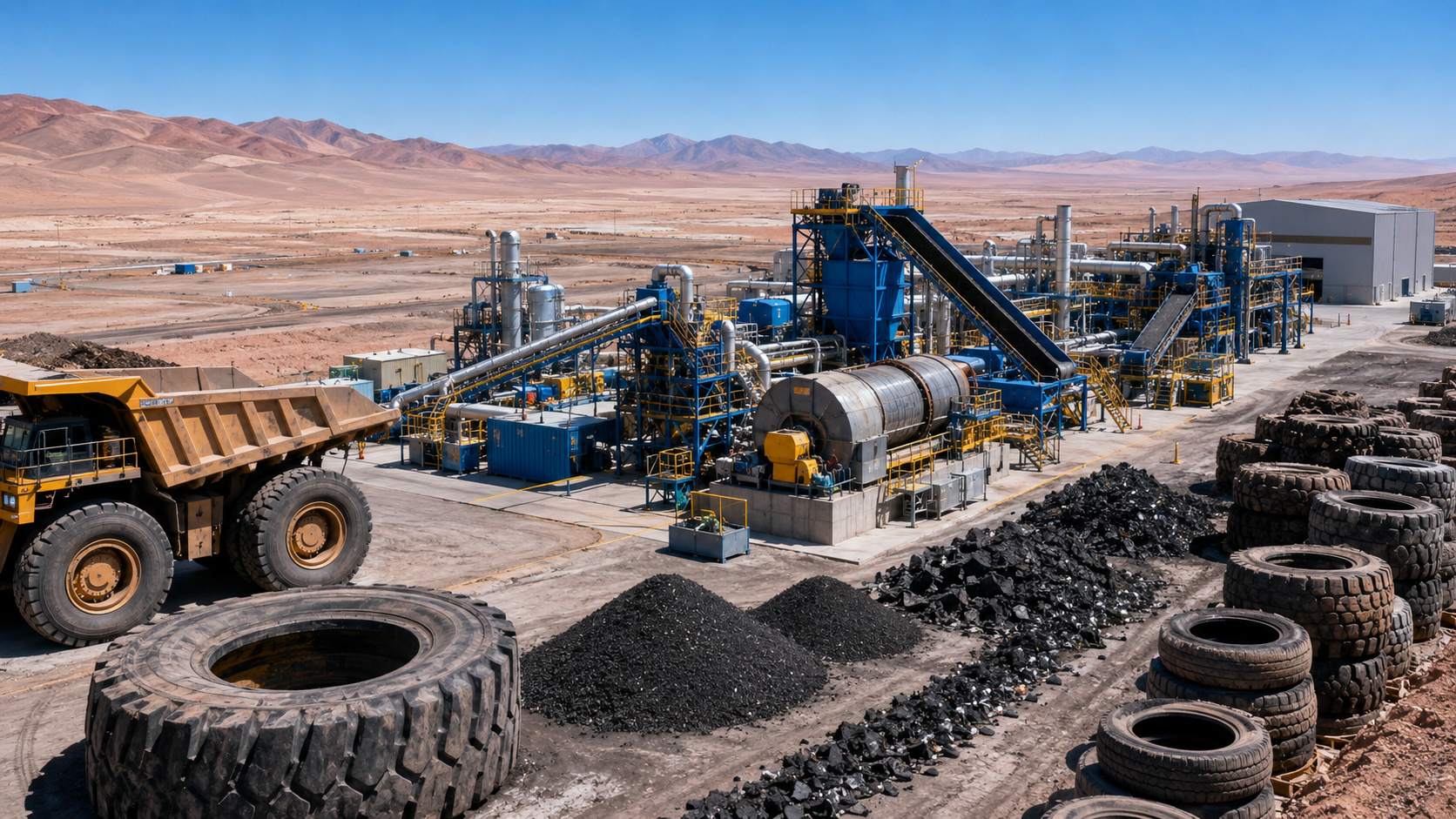
Chile inaugurated a recycling facility for giant mining tires with the capacity to process 30,000 tons per year in Antofagasta.
The giant tires used in Chilean mining have begun to give rise to a new industrial recycling front in one of the largest copper hubs on the planet. Instead of being accumulated as environmental liabilities in mining areas, these materials have entered a chain focused on large-scale reuse. According to InvestChile, the MSMR La Negra plant – (Michelin Specialty Materials Recovery), located in Antofagasta, was designed to cut and shred giant mining tires and transform the recovered material into new renewable and recyclable raw materials.
The project gained relevance because Chile hosts some of the largest mining operations in the world and, with them, a massive flow of out-of-use tires. According to the government of Chile, the unit inaugurated in the country is presented as the world’s first plant dedicated to recycling giant mining tires, reinforcing Chile’s strategy of combining mining, circular economy, and industrial innovation.
Giant mining tires became an environmental challenge in Chile
The tires used by off-road mining trucks are among the largest ever produced by the industry. They operate on high-capacity equipment used to transport enormous volumes of ore in open-pit mines, especially in regions like Antofagasta, in northern Chile.
-
Mother of 7 children leaves night job in São Paulo, invests only R$ 86 in artisanal ice creams and sees income become household support: business created at the gate reaches R$ 6,000 per month and aims for a physical store.

-
An empty spacesuit was launched from the ISS and became a “ghost astronaut” in orbit: the SuitSat floated alone around the Earth transmitting radio signals before burning up in the atmosphere.

-
Dissatisfied with seeing laptop batteries go to waste, a man collects more than 650 units and transforms the electronic waste into a solar energy storage bank to power his house.
-
Accessible only by boat, an old house from 1862 is up for sale for R$ 19.4 million in the USA with a famous artist’s studio, pier, and over 10 preserved hectares.



When they reach the end of their useful life, they cease to be just common industrial scrap and become a large-scale logistical and environmental challenge.


The problem is not just the volume. Tires of this size require cutting, fragmentation, and specialized processing, something very different from conventional automotive tire recycling.
For this reason, for years, the disposal of this material was treated as a difficult liability to resolve in mining regions. The opening of a specific industrial facility for this waste changes this logic by creating a reuse route on a relevant scale.
La Negra Plant in Antofagasta was designed to recycle 30,000 tons per year
According to InvestChile, the MSMR La Negra unit occupies an area of 7,725 square meters and has the capacity to cut and shred up to 2,200 giant 63-inch tires per year.
The operation was associated with an annual capacity of 30,000 tons, a level that placed the facility at the center of the debate on recycling industrial mining waste in Chile. This data is relevant because it shows that the project was not designed as a symbolic demonstration, but as an industrial structure with real weight within the Chilean mining chain.
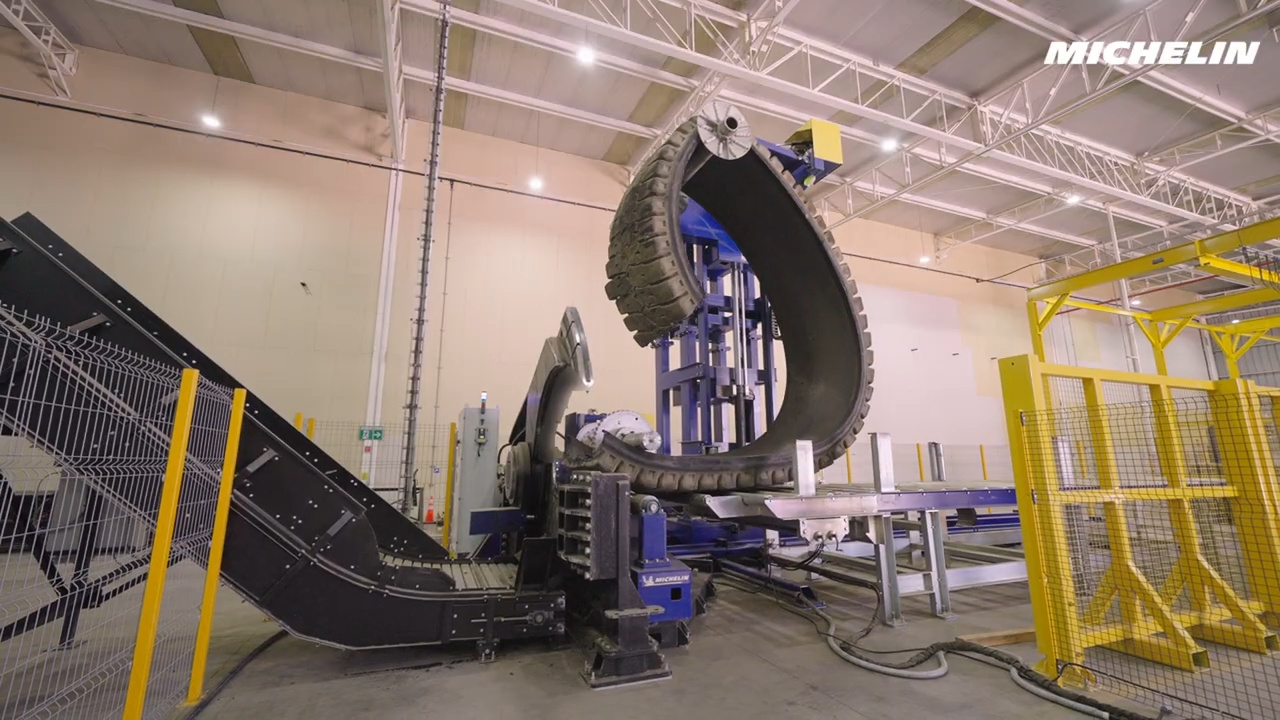
In a country that leads global copper production and hosts large-scale mining operations worldwide, the disposal of these tires has a direct impact on sustainability goals and waste reuse.
Recycling of giant tires transforms mining waste into industrial raw material
According to InvestChile, the materials recovered at the plant will be converted into renewable and recyclable raw materials to be used in the manufacture of tires and other brand products. This means that the waste generated by mining is no longer treated merely as disposal and is reintegrated into a value chain with concrete industrial application.
This point is central to the project’s appeal. What once occupied space in industrial and mining zones now becomes part of a circular economy logic, where rubber and other components return to the production system instead of remaining accumulated in the desert.
In a sector pressured by increasingly stringent environmental demands, this change helps explain why the project gained national and international prominence.
Chile uses mining tire recycling to reinforce circular economy
The advancement of the plant in Antofagasta also fits into a broader strategy by Chile to attract responsible investment and associate mining with environmental innovation.
According to InvestChile, the project reinforces the country’s commitment to technological development, sustainability, and innovation in strategic sectors, especially in the materials industry and mining.
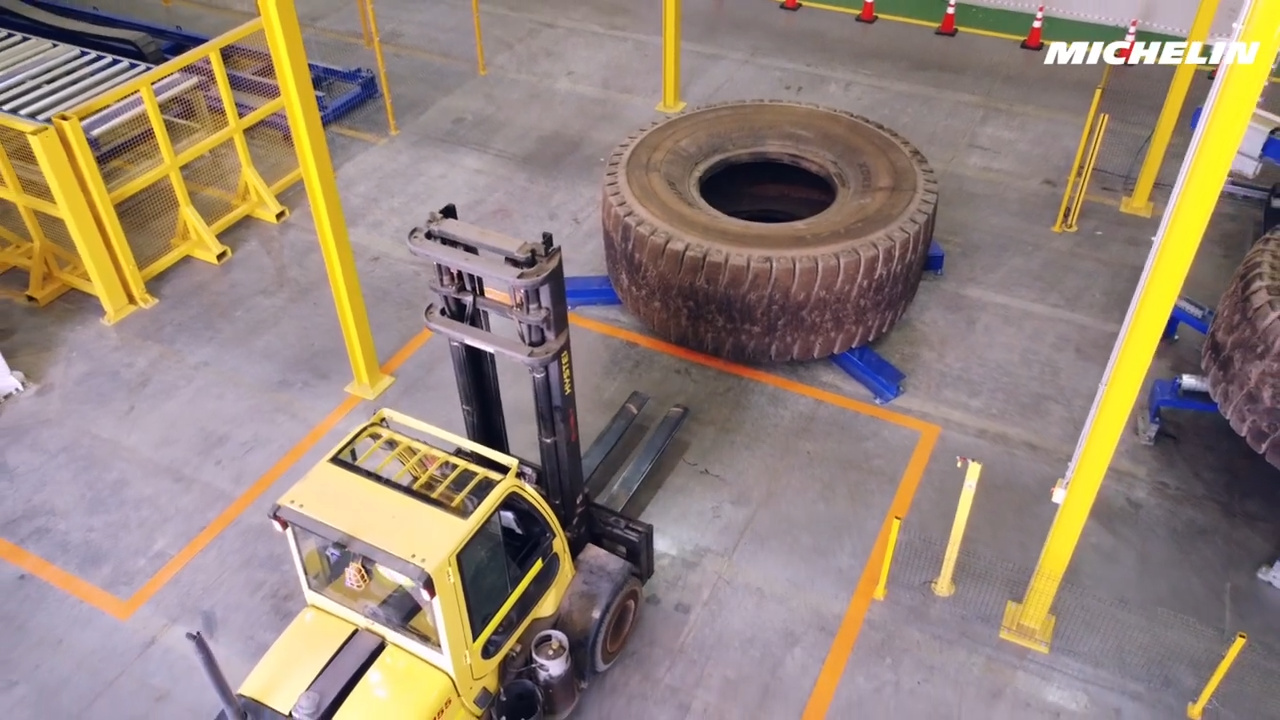
The Chilean government presented the inauguration of the unit as a milestone to strengthen the agenda of circular economy and sustainability in mining. In a context where the country continues to expand its importance as a producer of critical minerals, the ability to better handle heavy and highly complex waste is expected to gain increasing importance.
New recycling industry in the Atacama Desert shows how mining tries to reuse its own giants
The case of La Negra shows how Chilean mining is beginning to tackle one of its most difficult waste issues with its own industrial structure.
Instead of just extracting more ore and expanding its material footprint, the sector is now trying to reintegrate part of what it discarded into a new economic chain. This changes the perception of giant tires, which cease to be just a logistical problem and start being treated as a reusable input.
In the end, what is at stake is not just the fate of used tires. It is the attempt to show that the mining of the future will depend not only on the ability to extract copper and other minerals on a global scale but also on the ability to give industrial purpose to the very waste it generates.
The Chilean desert, which for decades accumulated these out-of-use giants, is now beginning to transform them into raw material for a new industry.







Be the first to react!