Portuguese
  Spanish


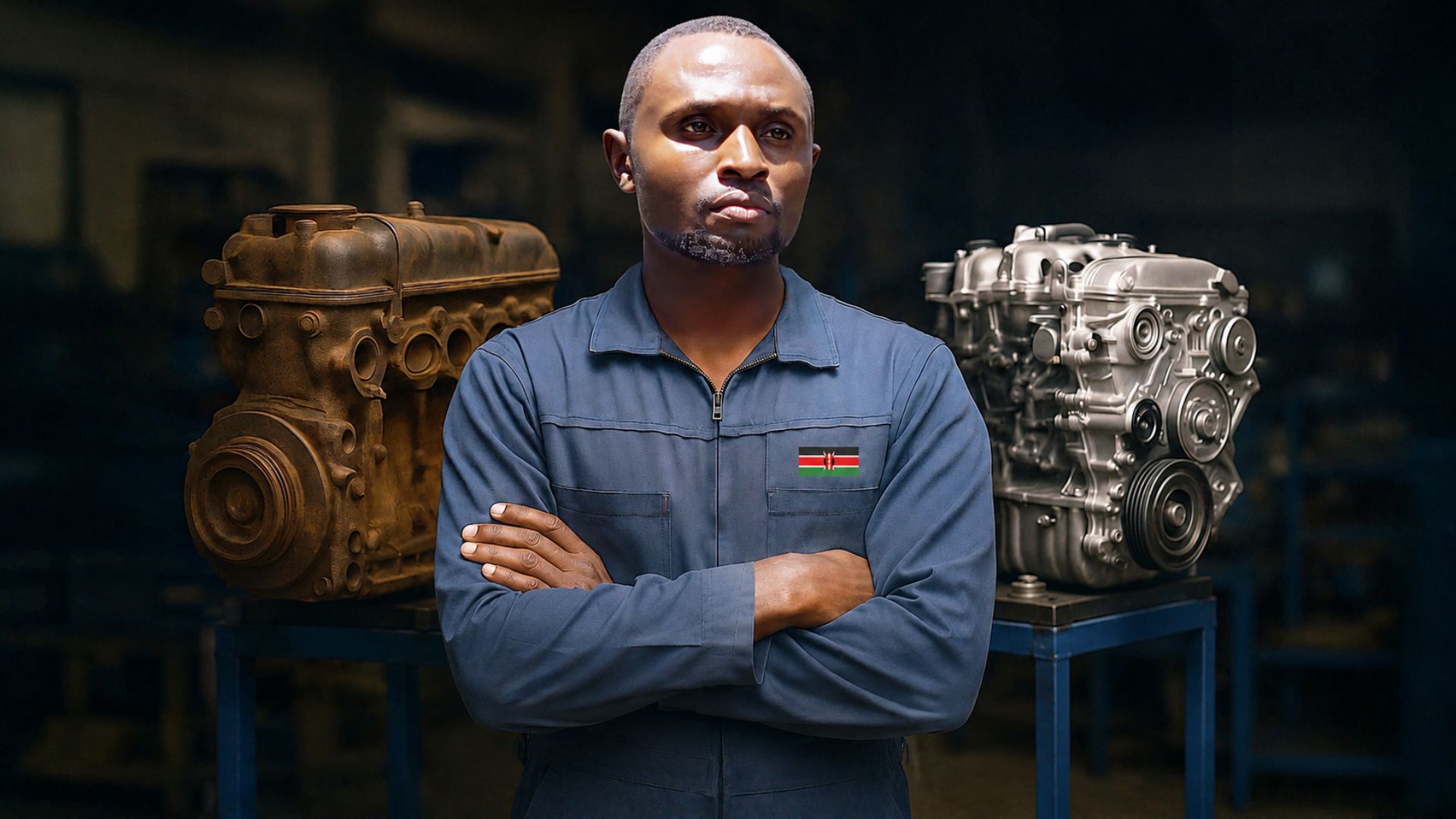

Peter Mberia is an electrical and electronic engineer, founder of Volter Engineering Limited in Tika, Kenya. His invention, the ECU Volterant, transforms old engines from the 50s to the 90s into modern systems. A Land Rover that did 1.8 km per liter now does 8 km with the same fuel.
Steven Bugwa is a farmer and travel enthusiast. For years, his carbureted vehicle forced him to spend between 11,000 and 13,000 Kenyan shillings on fuel in the same period that a common vehicle would consume about 5,000. He changed the cabin three times, contacted brands, sought solutions. None worked. The car was idle for almost a year. It was through a mutual friend that Steven met Peter Mberia, the Kenyan engineer who would become the solution the market didn’t have.
Peter didn’t show up with an imported part or a makeshift adaptation. He came with a technology he designed, patented, and manufactures, named Volterant SCU. When Steven saw the engine data in real-time on Peter’s laptop screen, with the revs rising and the fuel parameters responding precisely, he realized he was witnessing something different. “This car is as modern as new inside,” he said. “It may not look any different from the outside.“
From 5 km per liter to 14 km: what the ECU changes in the engine
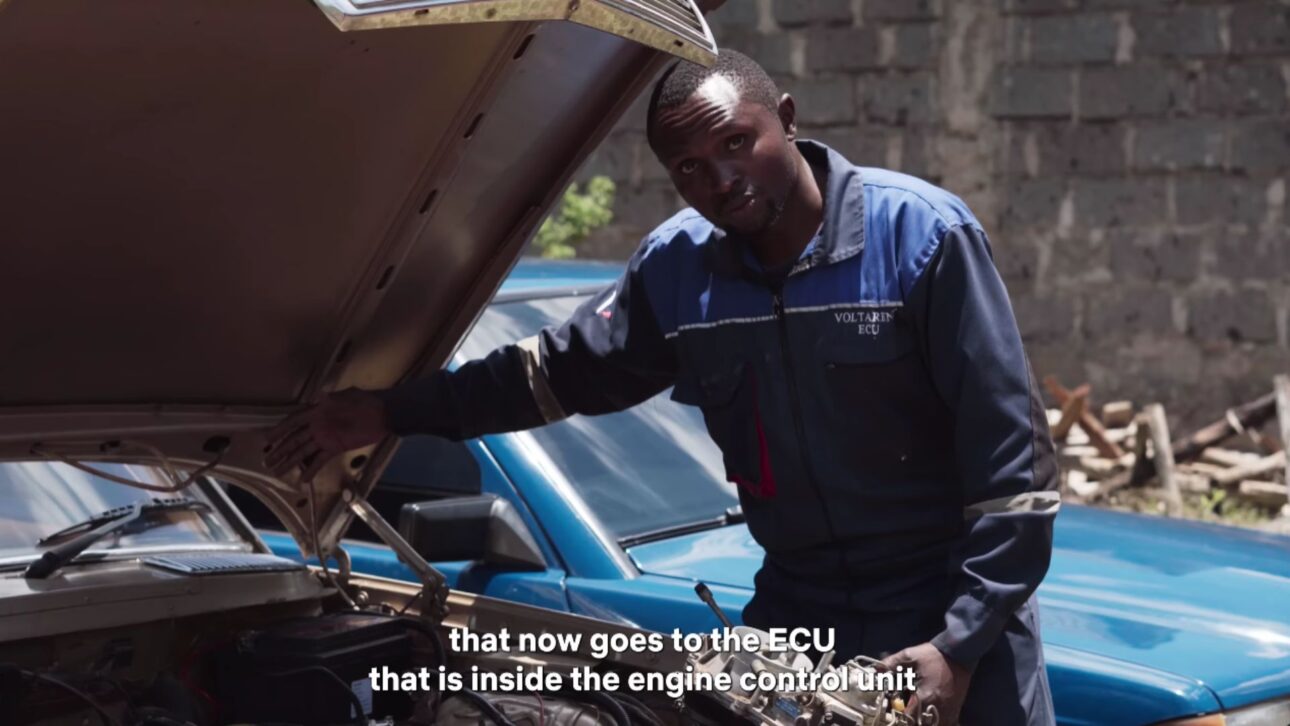
Steven’s case is not isolated. A Mercedes-Benz that did 5 km per liter now does 14 km with the same liter after installing the ECU from Kenyan engineer Peter Mberia. A Land Rover V8 3.9 that barely managed 1.8 km per liter went to 6 to 8 km per liter. For the Land Rover owner, the return on investment, according to Peter, should happen in less than a month of daily use.
-
Japanese Fisherman Spends 18 Hours Alone at Sea in a Portable Floating Shelter, Launches Limited Edition Model via Crowdfunding

-
73-Year-Old Chemical Engineer Turns Luxury Shoe, Bag, and Jacket Restoration into Family Business in São Paulo, Showcasing the Timeless Value of Craftsmanship

-
Japanese Botanist’s Miyawaki Method Grows Native Forests in Small Spaces in Just Years, Not Decades

-
800-Year-Old Cliffside Temple in Greece Amazes with Secret Cave, Drawbridge, and Stunning Views




The mechanism is not magic. It is precision. The Volterant ECU calculates the exact amount of fuel each cylinder needs at any given moment and determines the correct ignition angle in real-time. The engine stops wasting fuel in moments when it is not under load, such as when the driver releases the accelerator at cruising speed. The computer detects that the engine is no longer loaded, cuts the fuel, and only resumes injection when the RPM drops to idle level. This level of control did not exist in the systems of the 80s and 90s.
What Peter removes and what he installs in its place
The systems that Peter replaces are mainly two: the carburetor, popular in the 80s and 90s, which mixed fuel and air mechanically without any electronic control, and the Bosch Jetronic system, an intermediate electromechanical solution between the carburetor and modern electronic injection. Both were efficient in their time. The problem is that genuine replacement parts for these systems are increasingly difficult to find. When they fail in the middle of the road, the vehicle goes to the tow truck.
In place of these systems, Peter installs fuel injectors, a custom fuel regulator, individual ignition coils for each spark plug, and all the necessary wiring to connect everything to the Volterant ECU. The ECU takes control of the engine with a minimal set of sensors: engine temperature, absolute manifold pressure, camshaft position, and throttle position. Simple enough to be reliable. Precise enough to make decades-old engines run like new.
Four driving modes in a 60s engine
One of the differentiators of the Kenyan engineer’s ECU is that it gives the owner something old engines never had: choice. The Volterant comes factory-equipped with four driving modes. Eco Plus is the most economical, suitable for long trips. The Economy mode balances efficiency and performance, allowing speeds of 140 to 150 km/h with controlled consumption. Comfort delivers more power in acceleration with marginally higher consumption. The Sport mode extracts the maximum from the engine.
Peter explains that, in practical terms, an engine specified by the manufacturer as having 120 horsepower can, with precise fuel dosing and the correct ignition timing, produce between 160 and 180 horsepower. It is not structural modification. It is harnessing the potential the engine always had but that old control systems could not release with sufficient precision.
The journey of someone who started with a guinea pig engine

Peter Mberia is 34 years old, hails from Tika, Kenya, and graduated in electrical and electronic engineering. His motivation to create Volterant was his own problem: he owned a 1984 Mercedes-Benz W201 with an M102 engine that he had overhauled to the limit. Replacing the engine would cost 100,000 Kenyan shillings, an amount he couldn’t justify. The solution was to design his own ECU.
He bought a test engine for research and began developing a board to control only the fuel supply. One thing led to another: he tested Nissan injectors, then Toyota, and finally Mercedes-Benz. He studied ignition coils, dwell times, voltages. He designed the ECU according to what he learned. In April 2022, he migrated the test engine system to his own W201 and posted a video on social media. The people who had followed the research process and doubted him said, “This guy was serious.” Orders started coming in.
From Kenya to the world: Zambia, Canada, and Pakistan
Volter Engineering Limited now receives international orders. Peter mentions Zambia, Canada, and Pakistan as destinations where the kits have already been sent. The sales process is careful: before sending anything, Peter collects the exact engine configuration from the customer. There is no generic kit. Each solution is compatible with the specific engine of the purchaser. This avoids the nightmare of receiving an incompatible kit.
Peter’s vision goes beyond performance. More efficient engines emit fewer pollutants. He believes there are millions of old vehicles in circulation around the world that could operate within modern emission standards with the technology he developed. The stated dream is to reach the global market. And by the pace of orders coming from three different continents to the workshop of a 34-year-old Kenyan engineer in Tika, that dream doesn’t seem far off.
The content is from the Afrimax English channel on YouTube.
Do you have or have you ever had an old car with consumption problems that no workshop could solve? Do you believe technology like Peter’s can change the automotive market in developing countries? Tell us in the comments.