






 Portuguese
  Spanish
  3 min of reading
  0 comments


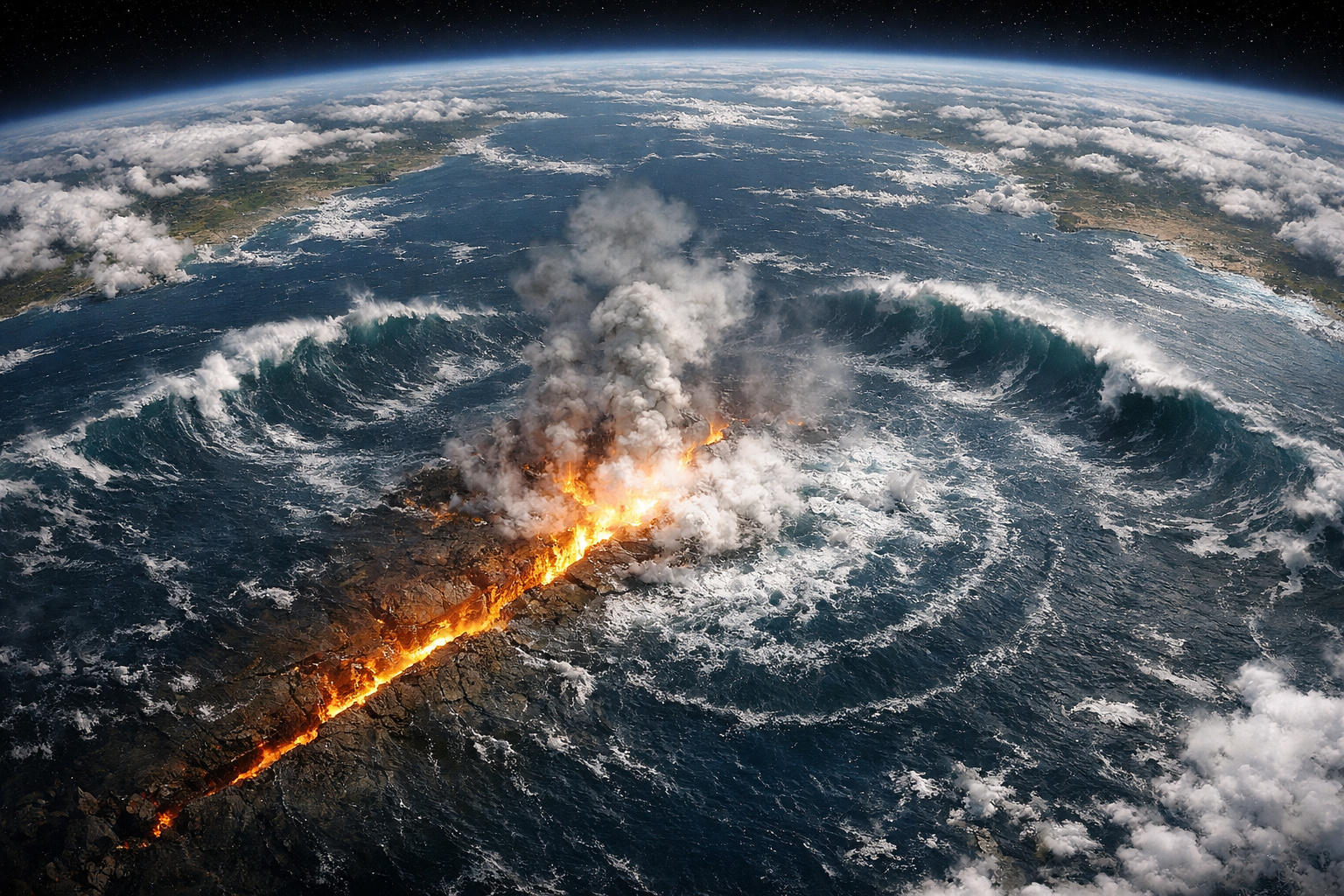
Study reveals extreme risk in active geological zone that could release accumulated energy and cause unprecedented natural disaster on the west coast of North America
The possibility of a mega earthquake in the United States has once again raised concerns among scientists and authorities following new analyses of the so-called Cascadia Subduction Zone. This geological fault, which extends over 965 kilometers between Canada and northern California, is considered one of the most dangerous on the planet.
The information was released by geology experts and widely reported in recent scientific studies, highlighting that this region concentrates a huge potential for the release of seismic energy accumulated over centuries. Furthermore, data indicates that an event of this magnitude could trigger a catastrophic scenario with a direct impact on the population and infrastructure.
What is the Cascadia fault and why does it worry scientists
First of all, it is important to understand how this geological structure works. The Cascadia Subduction Zone marks the meeting point between two tectonic plates: the Juan de Fuca plate and the North American plate. In this process, one plate slowly slides beneath the other, accumulating tension over time.
-
They wanted artificial intelligence, but they drained the water from a village in Mexico: the water consumption of data centers caused a hepatitis outbreak, and big tech companies Amazon, Microsoft, and Google were forced to halt billion-dollar projects.

-
System created to save lives in disasters turned ‘against’ Brazilians overnight: a hacker attack sent out a false alert from Civil Defense with the word “misantropia” that went off on the phones of half the country, even in silent mode, and took down the Cell Broadcast.
-
In the cold desert of Ladakh, where it hardly rains, engineer Sonam Wangchuk created the ice stupa, a tower that freezes winter water and stores it for irrigating crops in the spring, a simple engineering feat that mimics nature.
-
For the first time in history, solar and wind energy generated more electricity than natural gas worldwide in a single month, April 2026, a milestone in the energy transition that shows renewable sources taking the lead in the global electric system.




However, when this tension reaches a critical limit, there is an abrupt release of energy, resulting in extremely strong earthquakes. Thus, experts warn that Cascadia has the potential to generate one of the largest earthquakes ever recorded in history.
Moreover, studies indicate that this type of event does not occur frequently, which further increases the risk. This happens because energy accumulates over long periods, potentially resulting in a high-magnitude tremor when finally released.
Therefore, the concern is not only about the occurrence of the phenomenon but mainly about the intensity it could reach.
Possible earthquake could generate devastating megatsunami

In addition to the direct seismic impact, another factor worries researchers even more: the possibility of a megatsunami forming. This is because the abrupt displacement of the ocean floor can generate gigantic waves within minutes.
According to projections, these waves could quickly reach densely populated coastal areas, causing widespread destruction. Consequently, entire cities along the west coast of the United States and Canada could be affected.
Moreover, the short response time exacerbates the situation. In many cases, coastal communities would have only a few minutes to evacuate, making prevention and monitoring even more essential.
On the other hand, scientists emphasize that similar events have occurred in the past. Historical and geological records indicate that a major earthquake in the region occurred about 300 years ago, accompanied by a tsunami that even reached Japan.
Thus, the risk is not just theoretical but based on concrete evidence.
Monitoring and preparation are essential to reduce impacts
In light of this scenario, experts emphasize the importance of monitoring and preparation systems. Currently, various sensors and technologies monitor the seismic activity of the region in real-time.
Additionally, local governments have invested in evacuation plans and awareness campaigns. This is because, although it is not possible to predict exactly when the earthquake will occur, it is possible to significantly reduce damage with proper planning.
At the same time, researchers continue to study the region to better understand the behavior of tectonic plates. With this, new information may help anticipate signs of a possible event.
Still, the alert remains. After all, the Cascadia Subduction Zone continues to accumulate energy, indicating that a major earthquake is inevitable; the only uncertainty is when it will happen.
Therefore, the combination of science, technology, and preparation becomes essential to face one of the greatest natural risks on the planet.
Do you believe that coastal cities are really prepared for a disaster of this level?






-

1 person reacted to this.