






 Portuguese
  Spanish
  5 min of reading
  0 comments


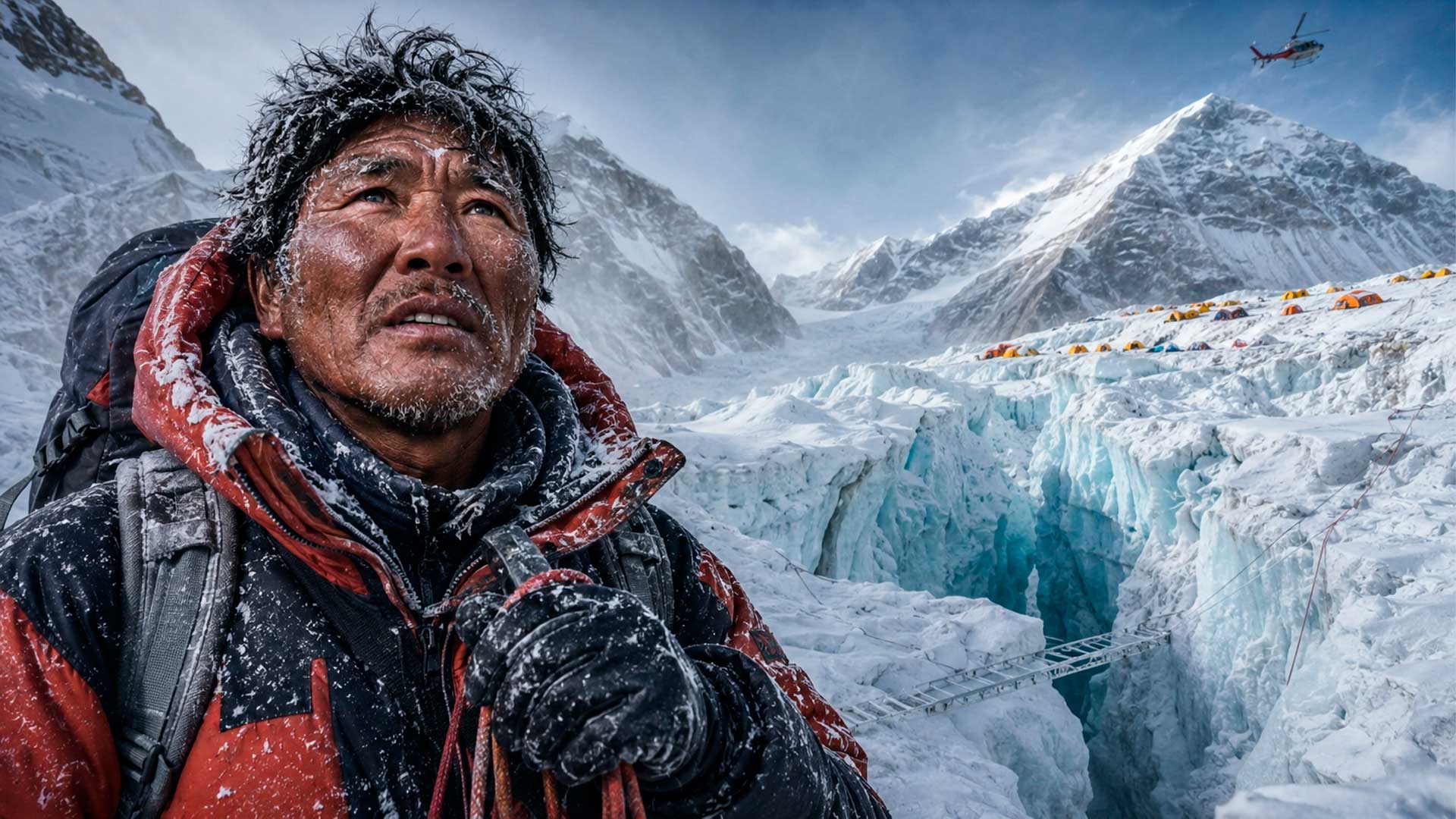
Dawa Sherpa disappeared during the descent of Everest, was declared dead by his own family, and reappeared alive near Base Camp after days of cold, fall, hunger, and isolation
The Nepalese guide Dawa Sherpa survived an extreme ordeal on Mount Everest after being missing for six days on the slopes of the world’s highest mountain. He was last seen on May 29, 2026, during the descent, and was found alive on June 4, near the Khumbu Icefall region, just above Base Camp.
According to Reuters and the Associated Press, Dawa was descending after a summit attempt when he became separated from the group between Everest’s high camps. The situation became even more severe as he faced sections of the mountain without supplemental oxygen, with little food, and unable to activate his communication equipment.
The story gained attention because the guide not only endured the cold and altitude. According to reports released after the rescue, he also fell into an ice crevasse, was trapped for days, and only managed to escape after an avalanche accumulated enough snow to allow him to climb back to the route.
-
Painting a tree white seems like care, but the mistake many people make, replacing lime can suffocate the trunk and turn sun protection into a risk for the plant.

-
Without money to print a resume, a 19-year-old writes everything by hand, reveals that he lives by collecting recyclables to help his family, and ends up sparking an unexpected wave of support on social media, with users tagging companies and trying to turn a simple sheet into his first big opportunity for formal employment.

-
Light blue, black, red, or green-yellow wire? Understand what each color indicates in electrical installation and why confusing phase, neutral, and ground can become a risk inside the house.
-
Brown scar tearing through the blue of the ocean seen from space stretches over 8,000 km in the Atlantic, reaches the route of Northern Brazil, and raises an alert about sargassum on the beaches.


The disappearance began in the most dangerous part of the descent
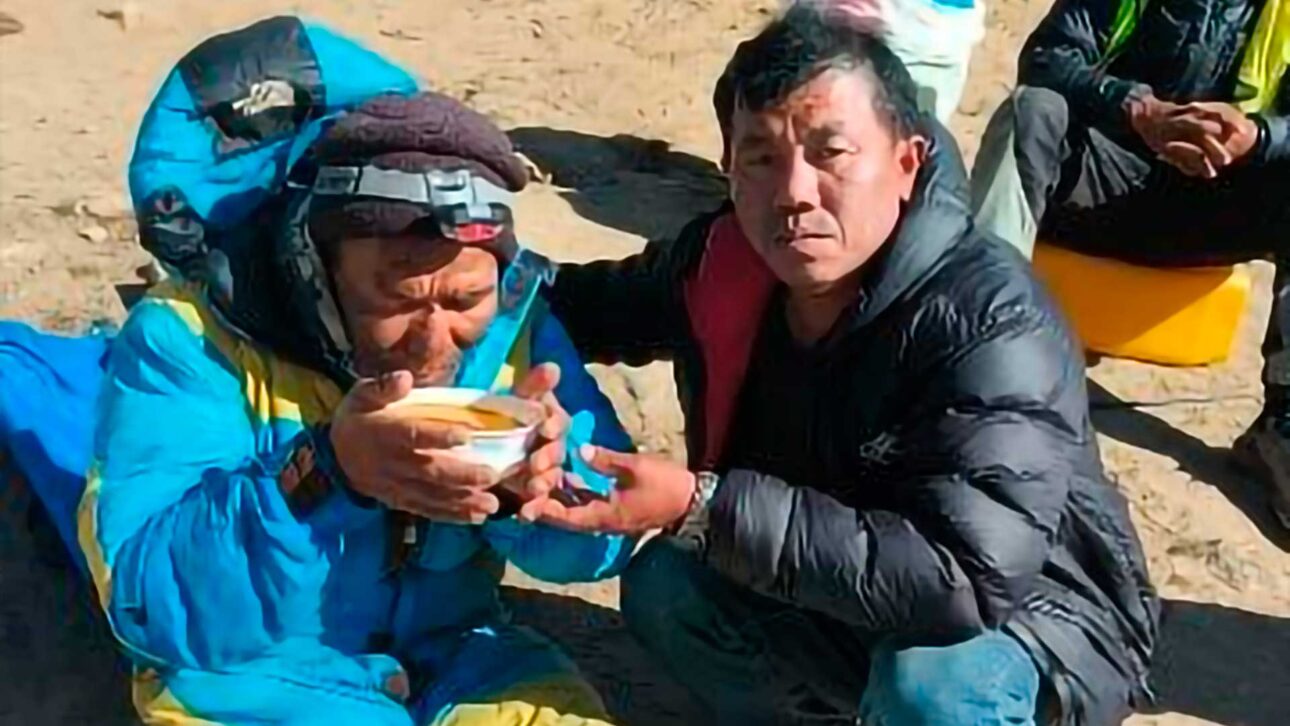
Dawa Sherpa worked for the company Himalayan Traverse and accompanied foreign climbers on the Everest route. According to the AP, he was last seen during the descent, near the region known as Yellow Band, above Camp 3, which is about 7,200 meters in altitude.
The point is critical because the descent is often as dangerous as the ascent. The body is already worn out, oxygen becomes scarce, the temperature drops rapidly, and any delay can turn a difficult situation into an emergency.
According to the Guardian, the Briton Chris Thrall was among the climbers who saw Dawa before the disappearance. Thrall reported that he had to continue descending to help another climber in a serious situation, while Dawa indicated he would continue afterward.
From there, the guide did not reach Base Camp with the others. As the climbing season was already ending, part of the route was beginning to be dismantled, making the journey even more risky.
Without supplemental oxygen, extreme cold turned every meter into a struggle for life


Everest is 8,849 meters high and the area above 8,000 meters is known as the death zone, precisely because the human body cannot remain there for long without serious risks. National Geographic explains that, in this range, low pressure and lack of oxygen increase the chance of altitude sickness, mental confusion, and loss of strength.
Dawa would have run out of supplemental oxygen during the descent, which compromised his movements and ability to react quickly. In extreme mountains, this type of failure can be decisive because hands and feet lose sensitivity and reasoning becomes slower.
He managed to find some food along the way, including simple items like instant noodles and supplies he carried in his pockets. These small resources helped maintain minimal energy to continue trying to descend.
Even so, the cold, dehydration, and exhaustion advanced. Dawa had a satellite phone and radio, but the equipment did not resolve the emergency, either due to malfunction or lack of battery.
The fall in the Khumbu Icefall placed the guide inside an ice crevasse
The most dramatic moment occurred when Dawa reached the Khumbu Icefall region, one of the most unstable and dangerous passages on the Nepalese side of the Everest route. The area is formed by ice blocks, ladders, crevasses, and structures that change with the glacier’s movement.
According to Reuters, he was found near this region by a team from the Sagarmatha Pollution Control Committee, the SPCC. The group works on environmental protection in the Khumbu region and also participates in the maintenance and removal of structures used on the climbing route.
According to the AP, the SPCC team is responsible for installing ladders and ropes at the beginning of the season and removing this equipment when climbers leave the mountain. This explains why the rescue drew so much attention: Dawa was crossing an area already emptier, with the season practically over.
During this crossing, he fell into a crevasse. As he reported later, he was carrying a heavy load and ended up losing strength. At the bottom of the ice, he spent days trying to survive with biscuits, frozen chocolate, freeze-dried coffee, and pieces of ice used to quench his thirst.
The avalanche that could have killed ended up helping in the escape
The most impressive detail of the case is that an avalanche, normally associated with tragedies on Everest, helped Dawa escape. According to the report released by CBS News and other outlets, the snow accumulated inside the crevasse created a kind of natural ramp.
With this, he managed to climb slowly, using crampons and holding onto the ice. The process took about an hour, in already very weakened physical conditions.
After getting out of the crevasse, Dawa found a rope and followed it towards the main route. Even injured, dehydrated, and showing signs of frostbite, he continued advancing until he was seen by SPCC members near the Base Camp.
The scene surprised even experienced climbers. The guide, who was already considered dead by many, reappeared alive after a sequence that combined lack of oxygen, isolation, fall, injuries, and extreme temperatures.
Rescue reignited debate on risks, delay in searches, and pressure on sherpas
After being located on June 4, 2026, Dawa was taken by helicopter to Kathmandu. According to CBS News, doctors treated frostbite, severe dehydration, and a femur fracture.
However, the guide’s family questioned the delay in the searches. According to the AP, relatives filed complaints against the company Himalayan Traverse and also with the Nepal Department of Tourism, alleging negligence and slowness in the rescue operation.
The 2026 season reinforced this pressure. According to Reuters, Nepal issued 494 permits to climb Everest that year, and more than a thousand people, including climbers and guides, reached the mountain during the season. On May 21, 274 climbers reached the summit from the Nepalese side in a single day, a record that reignited criticism about overcrowding and safety.
What do you think of this case: was Dawa Sherpa’s survival a miracle of human endurance or does it also reveal serious flaws in how commercial expeditions treat local guides? Leave your opinion in the comments and join the discussion.





Be the first to react!