






 Portuguese
  Spanish
  5 min of reading
  0 comments


The colors of electrical wires help identify phase, neutral, and grounding, but the appearance of the cable should never be used as the sole guarantee of safety in renovations, outlets, and showers
Replacing an outlet, installing a shower, or opening a junction box often reveals a detail that many people only notice during renovation: electrical wires have different colors because they serve different functions. Light blue, green, green-yellow, black, red, and brown are not there for aesthetics, but to facilitate the identification of conductors.
The problem is that this visual reading is not always sufficient. In old properties, improvised renovations, or services done without standardization, the color of the wire may have been used incorrectly, increasing the risk of electric shock, short circuit, equipment damage, and even fire.
Electricians and engineers treat the standardization of colors as a safety resource that helps residents and professionals better understand the installation. But the safest recommendation remains not to tamper with the network without technical knowledge.
-
Brown scar tearing through the blue of the ocean seen from space stretches over 8,000 km in the Atlantic, reaches the route of Northern Brazil, and raises an alert about sargassum on the beaches.

-
The woman who heard a silent alert in the villages of Kenya and transformed the lack of firewood, water, and food into a movement that began with simple seedlings and grew to over 51 million trees planted.

-
Brazil launches the new national identity in Paraguay, where more than 250,000 Brazilians live, and the document eliminates the need for a passport in 8 South American countries and provides access to 5,000 digital government services.
-
17-year-old balances manual labor on the farm, up to 10 hours of study per day, and gets into Medicine at UFT through Sisu.





The first confusion is between the wire that supplies and the wire that returns
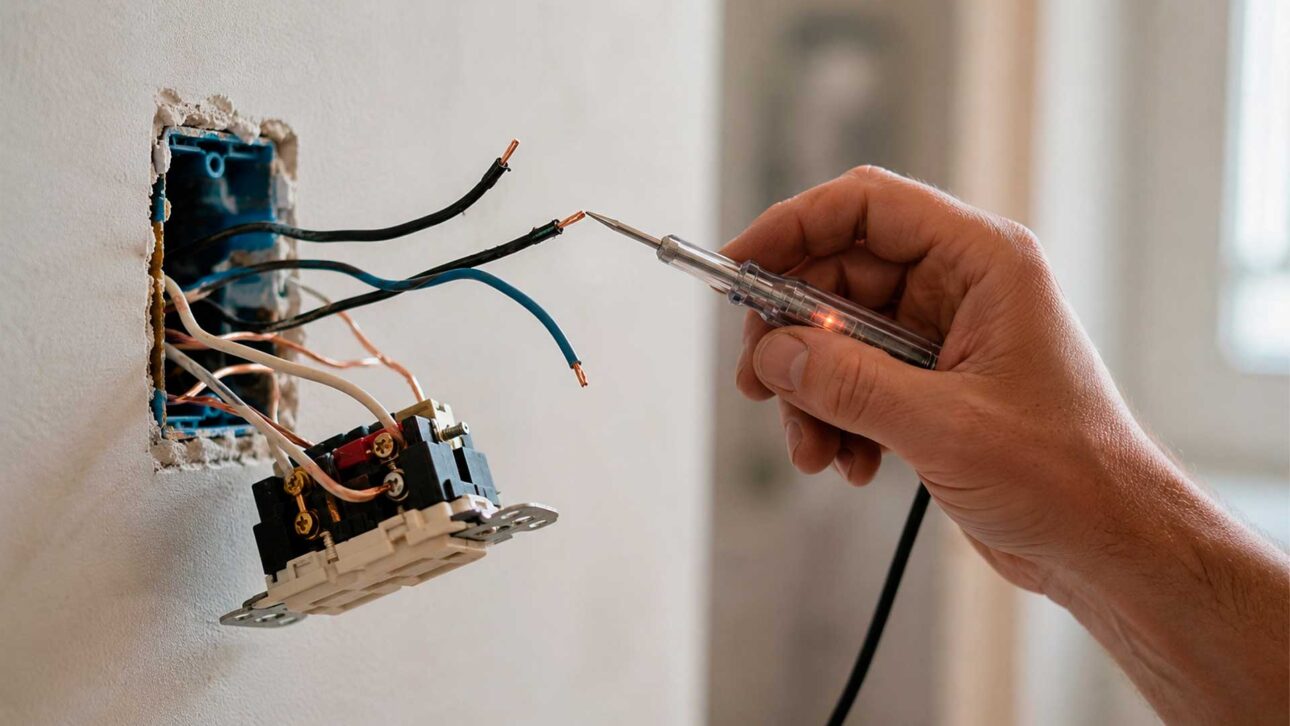
In practice, the most dangerous wire in a common installation is the phase conductor. It is responsible for carrying electrical energy to outlets, lamps, switches, and equipment, and can operate at voltages such as 127 V or 220 V, depending on the network and installation.
The most common colors for phase in Brazil are black, red, brown, and in some cases, gray. However, an important point needs to be clarified: these colors are usual, but the technical rule does not limit the phase to just them. The essential is that the reserved colors for neutral and protection are not used.
That’s why a seemingly simple outlet can hide risk. If someone connects a phase in the wrong place, the device may operate improperly, the circuit breaker may trip, or a metal part may become energized. In more severe situations, the error paves the way for domestic accidents.
Light blue indicates neutral, but this does not authorize touching the wire
According to NBR 5410, the Brazilian reference for low voltage electrical installations, the neutral conductor must be identified by the color light blue when identification is done by color. It functions to close the circuit and allow the return of electric current.
In a simplified explanation, the neutral is usually associated with the lowest potential point of the circuit. Even so, treating it as a “harmless wire” is a mistake. In faulty, reversed, poorly grounded installations or with improper return, the neutral can also pose a risk.
Therefore, the light blue color helps with organization, but does not replace measurement, design, and inspection. In a correct installation, it facilitates maintenance and reduces the chance of confusion. In an irregular installation, it can give a false sense of security.
Green and green-yellow are reserved for the ground wire
The green or green with yellow wire identifies the protective conductor, popularly known as the ground wire. It does not exist to “make the device work,” but to help protect people and equipment when there is a current leak.
This conductor creates a safety path for electricity in case of failure. If the metal casing of a refrigerator, washing machine, electric oven, or shower presents a current leak, grounding helps direct this energy to an appropriate path, reducing the risk of shock.
According to technical material from Obramax on NBR 5410, the protective conductor must use green or green-yellow, while the PEN conductor may require specific identification with light blue and green-yellow markings at visible points. This detail shows that the electrical installation should not be interpreted just “by eye.”
The central point is simple: green and green-yellow should not be used as phase or neutral. When this rule is violated, the installation loses an important layer of protection and future maintenance becomes more dangerous.
Black, red, and brown usually indicate phase, but the standard requires attention to prohibited colors
In construction and renovations, it is common to find black, red, or brown wire as phase. These colors help the electrician distinguish circuits, separate lighting outlets, and organize distribution panels.
Tecnogera, in technical content about cable color standards, highlights that red, black, or brown are colors generally associated with the phase conductor, while light blue is linked to neutral and green or green-yellow to protection. The technical reading itself reinforces that old or irregular installations may not follow this pattern.
This is why you should not simply open an outlet and trust that “black is phase” or “blue is neutral.” The standard exists to facilitate work, but the person who confirms the function of the conductor is the qualified professional, with appropriate instruments and following safety standards.
The greatest risk is in old houses and renovations done without standard
Old houses, extensions, enlargements, and renovations done over the years can accumulate invisible errors. Sometimes, a wire of the wrong color was used due to lack of material. In other cases, the connection was made by someone without sufficient knowledge.
The result may only appear later, when a new shower is installed, an outlet starts to heat up, or a circuit breaker begins to trip frequently. These signs indicate that the network may be overloaded, poorly sized, or with inadequate connection.
According to the Ministry of Labor and Employment, NR-10 addresses safety in installations and services with electricity, including control measures and preventive systems to protect workers and people who interact directly or indirectly with electrical installations. Although the standard is aimed at the work environment, the logic of prevention also helps to understand why electricity does not go well with improvisation.
Before any intervention, the safest option is to seek a qualified electrician. This advice is especially valid for showers, distribution boards, circuit breakers, grounding, and high-load outlets.
Understanding the colors helps, but does not replace an electrician
Knowing that light blue indicates neutral, that green or green-yellow indicates protection, and that black, red, or brown usually indicate phase helps the resident to better communicate with the professional and understand what is being done in the installation.
Even so, the information should serve as a warning, not as an incentive to improvise. Electrical energy does not allow for trial and error, especially when there is a risk of shock, fire, or damage to expensive equipment.
The color of the wire is a safety language within the wall. When it is respected, the installation becomes more organized, maintenance becomes clearer, and risks decrease. When it is ignored, a simple repair can turn into a serious problem.
Have you ever encountered wires of different colors or confusing installations at home, in an outlet, shower, or renovation? Leave your comment sharing if you have experienced a similar situation and if the standardization of wires helped or hindered during maintenance.


Be the first to react!