Portuguese
  Spanish


The advancement of Brazilian bakeries shows how a simple habit, buying fresh bread near home, has transformed into an economic force. Data from Sebrae reveals significant growth of small businesses related to the production and resale of bread in 2025.
In just part of 2025, Brazil had already opened more than 26.4 thousand small businesses related to the production and resale of bread. The data, released by the Sebrae Agency based on information from the Federal Revenue, shows a pace hard to ignore: about 240 new CNPJs per day, 10 establishments per hour, and a new bakery every six minutes.
The number is striking because it transforms a common habit into an economic portrait. The trip to the bakery, often seen as a simple part of the routine, now appears as one of the strongest signs of the expansion of small businesses in the country.
A new bakery every six minutes
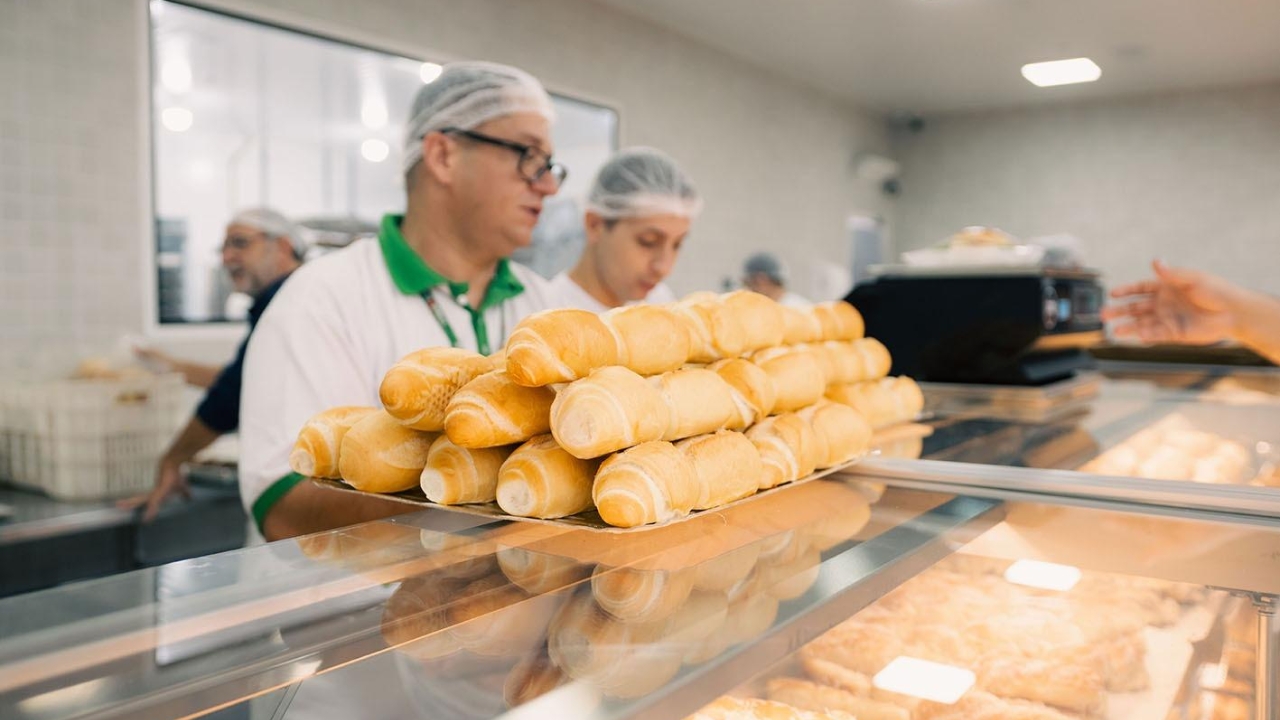
According to the survey by the Sebrae Agency, the sector grew 17.3% compared to the same period in 2024. In the previous period, 22.5 thousand new small businesses were registered in the segment.
-
Brazil’s Lula Government Allocates $463 Million Quota for Electric Car Parts, Waives Import Tax Until December, Sparking Competition Among BYD, Automakers, and Unions as Consumers Question Impact on Prices and Local Industry

-
Clarification and Right of Reply Notice

-
Elon Musk Becomes World’s First Trillionaire with $1.1 Trillion Fortune; Could This End Global Hunger?
-
Brazilian Executive Takes Helm of Heineken Amid Decline in Sales: 51-Year-Old Has Led Operations Across Four Continents and Managed a $7 Billion Empire




The count includes activities of industrial bakery product manufacturing, bakery and confectionery product manufacturing with a predominance of own production, and retail bakery and confectionery trade with a predominance of resale.
In practice, the statistics include both businesses that produce their own bread, cakes, and sweets and sales points that work with resale. It’s a broad scope, but it helps to show the strength of the sector in Brazilian cities.
Growth comes from small entrepreneurs
The most significant data is the profile of those who open these companies. According to Sebrae, 86% of the new businesses registered in the period were MEIs. Another 11.6% were micro-enterprises and 2.14% small businesses.
This shows that the expansion is not concentrated only in large networks or traditional brands. It involves smaller entrepreneurs, family businesses, neighborhood operations, and simpler formats, often created to meet demands very close to home.
For Sebrae’s Competitiveness Analyst, Jane Blandina da Costa, the advancement is related to the search for fresh, local, and personalized foods, as well as the reactivation of neighborhood markets after the pandemic and the Brazilian tradition of bread consumption.
The French bread remains strong, but the bakery has changed
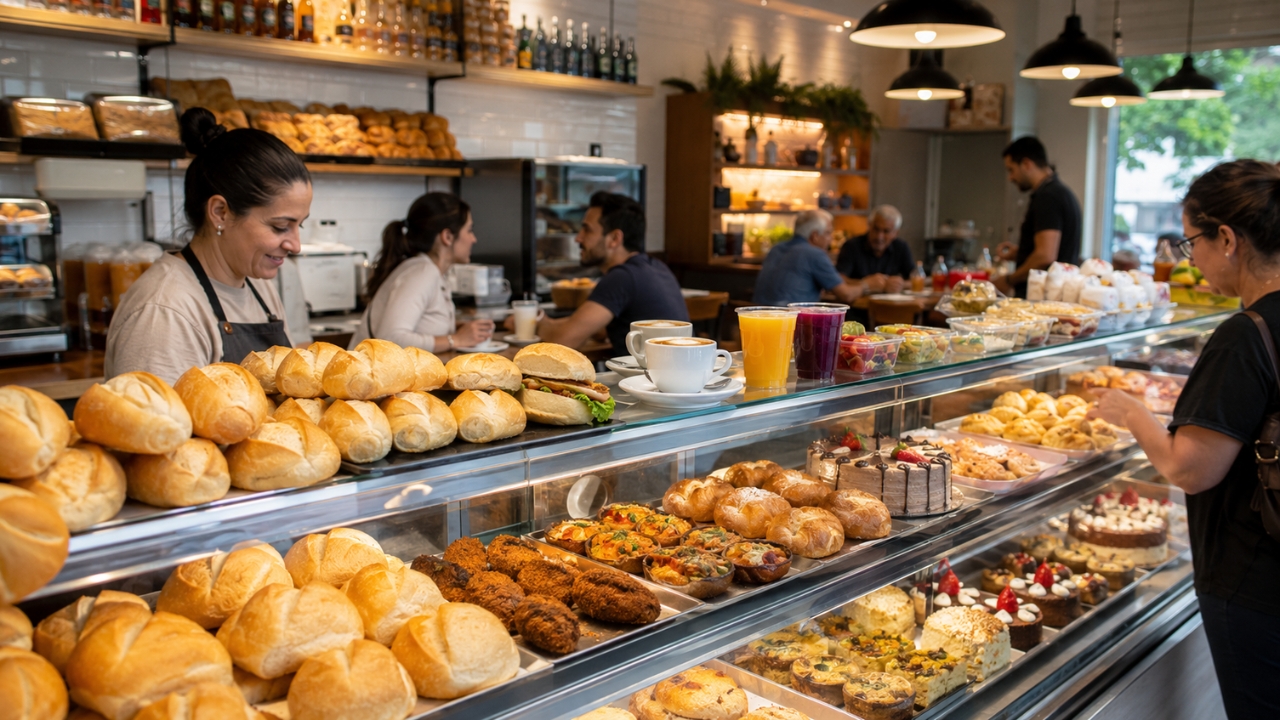
The French bread continues to be a symbol of the Brazilian bakery. Data cited by ABIA, in a study with Wise Sales, show that it is present in 63% of the establishments analyzed.
But the bakery has ceased to be just the place for hot bread. Consumers now find coffee, savory snacks, sandwiches, juices, cakes, desserts, and products for quick consumption. In many neighborhoods, the bakery has become a meeting point, work stop, quick meal, and emergency purchase spot.
The same survey shows this diversification. Cheese appears in 74% of bakeries, chicken in 64%, chocolate in 62.5% of bakeries and 77% of confectioneries. Cakes appear in 49% of bakeries, while pies are present in 26%.
Billion-dollar market reinforces the phenomenon’s dimension
The strength of the sector also appears in the revenue. According to data from the Institute of Development of Food Companies cited by Agência Brasil and Sebrae, the bakery sector earned R$ 153.3 billion in 2024, an increase of 10.9% compared to the previous year.
Abip linked this result to the increased flow of customers in bakeries, which grew 4.57% in 2024. The sector’s performance report also pointed to a 10.92% growth in sales, a 6.37% increase in the average ticket, and a 5.17% advance in the volume of French bread sold in kilograms.
Another number helps to gauge the presence of this commerce in daily life: according to Sebrae, more than 47 million people pass through bakeries in Brazil daily, equivalent to 22.1% of the population.
Southeast concentrates a good part of the batches
The distribution of the sector also reveals regional concentration. According to Agência Brasil, São Paulo leads among the capitals, with 21,358 establishments. Next are Rio de Janeiro, with 12,191, Belo Horizonte, with 4,809, Brasília, with 4,723, and Salvador, with 4,005.
The Ideal report indicates that 48.66% of Brazilian bakeries of ME, EPP, and other sizes are in the Southeast region. The same material shows that 53.17% of the country’s bakeries are concentrated in four states: São Paulo, Minas Gerais, Rio de Janeiro, and Paraná.
This map helps explain why the sector has such strength in dense urban areas. Where there is daily circulation, work routine, and quick consumption, the bakery gains space as an essential proximity service.
Digital, convenience, and experience have entered the oven
The expansion also aligns with a change in behavior. Sebrae points out opportunities in artisanal baking, natural fermentation, gluten-free, lactose-free, whole grain, vegan products, specialty coffees, and ready-to-eat snacks.
Beyond the counter, there is delivery, digital presence, local online campaigns, loyalty programs, and financial control. The bakery that once relied almost exclusively on street traffic now needs to compete for attention on the customer’s phone as well.
The ABIA study with Wise Sales shows that there is still room for higher value-added products. Croissants appear in 17% of establishments, ciabattas in 5%, and focaccias in 3%, indices that suggest room for diversification in part of the market.
The challenge is to grow without losing control


Despite the progress, the sector also faces obstacles. Ideal’s material estimates 1.08 million direct jobs and 3.01 million direct and indirect jobs in 2024, but points to a 20% labor shortage.
There is also the challenge of maintaining quality, productivity, and efficiency. In November 2024, Sebrae and Abip signed an agreement of R$ 5.9 million for digital development, competitiveness, and productivity actions. Among the goals are to reduce energy consumption by 5%, increase the quality of French bread by 30%, raise the productivity of participating entrepreneurs by 7%, and make 80% of the businesses served documentarily apt.
The case goes beyond a curious statistic. A new bakery every six minutes shows that the daily bread has become a thermometer of entrepreneurship, local consumption, and adaptation of small Brazilian businesses. Behind the counter, there is a billion-dollar sector trying to combine tradition, neighborhood, technology, and economic survival in the same batch.