Portuguese
  Spanish


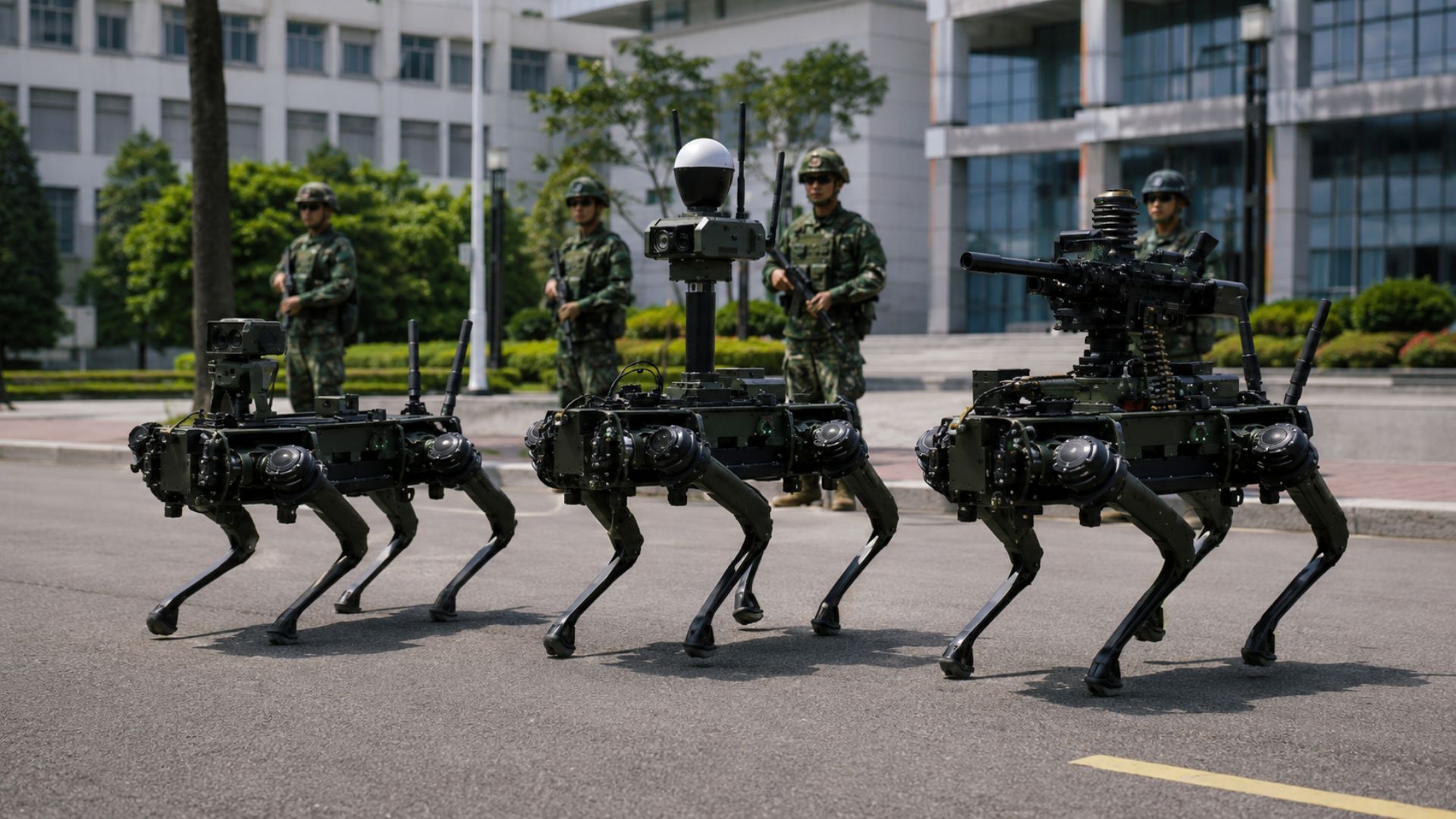

Taiwan’s main military institute presented in Taipei three robot dogs, one for reconnaissance, one for surveillance, and one armed for fire support. Built on the platform of the American Ghost Robotics, they can patrol islands disputed with China, but there is still no confirmed purchase.
Taiwan unveiled its latest autonomous war machines amid tension with China: the robot dogs. On Tuesday (2), in Taipei, the island’s main military research institute presented three versions of the quadrupeds, one for reconnaissance, one for surveillance, and an armed one, aimed at fire support, with a weapon installed on top of the structure.
The equipment is built on the Vision 60, a quadruped robot from the American company Ghost Robotics, with systems developed by the institute itself, the NCSIST. According to Jen Kuo-kuang, deputy director of a research division of the institute, the military of Taiwan has already expressed interest in the robot dogs, although no formal purchase has been made so far.
The three versions of Taiwan’s robot dogs
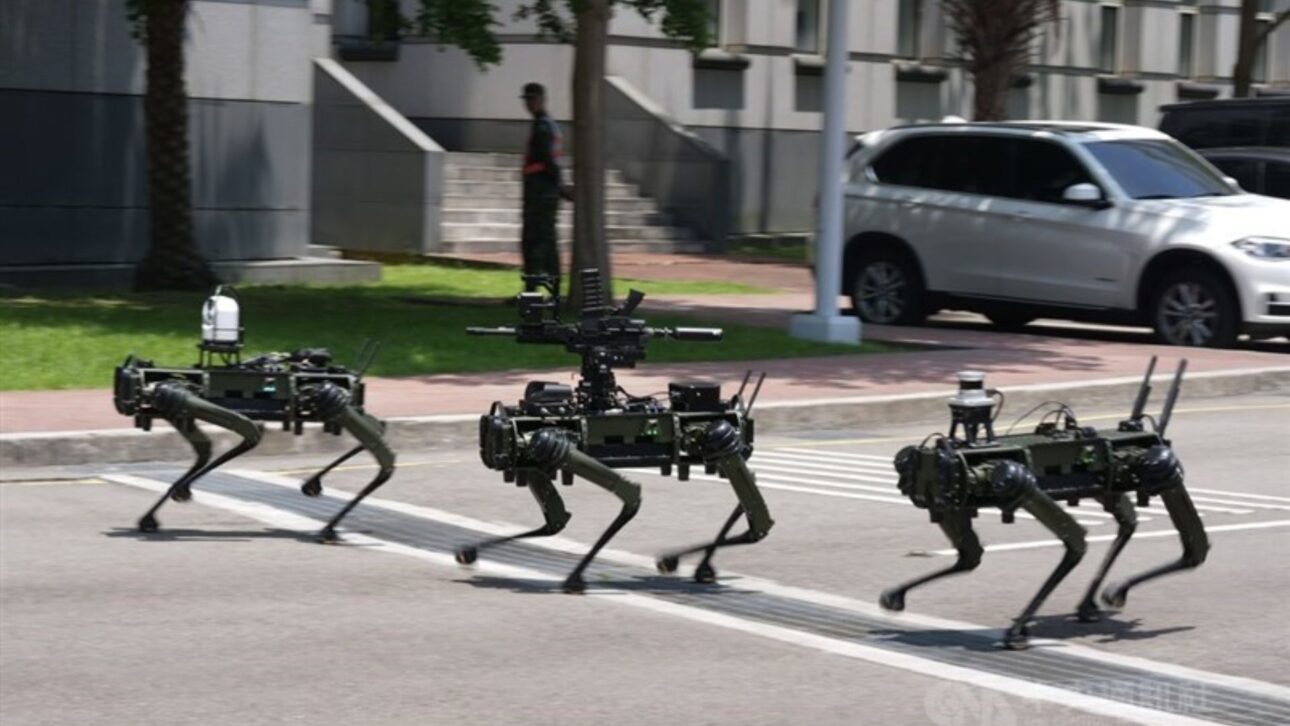
Each of the robot dogs was designed for a different function. The first version is aimed at patrol and surveillance, equipped with a three-dimensional LiDAR system and thermal imaging cameras.
-
3,000-Ton, 81-Meter Attack Submarine Begins Sea Trials, Equipped with Heavy Torpedoes and Anti-Ship Missiles

-
Boat Made from 10 Tons of Plastic and 30,000 Discarded Flip-Flops Sails Along African Coast, Serving as a Floating Classroom on Ocean Pollution
-
Welder Discovers 16th-Century Diamond Ring in England After 7 Hours with Metal Detector; Gold Jewel Linked to Edward I Pattern Auctioned for £17,000
-
Former Merchant Marine Captain Invents Fuel-Free Barrier, Removes 20,000 Tons of Trash from Chennai Rivers




With this, according to the NCSIST, the robot can navigate independently, avoid obstacles, detect heat sources, and map the environment in real-time, which serves for the security of bases and night monitoring of sensitive installations.
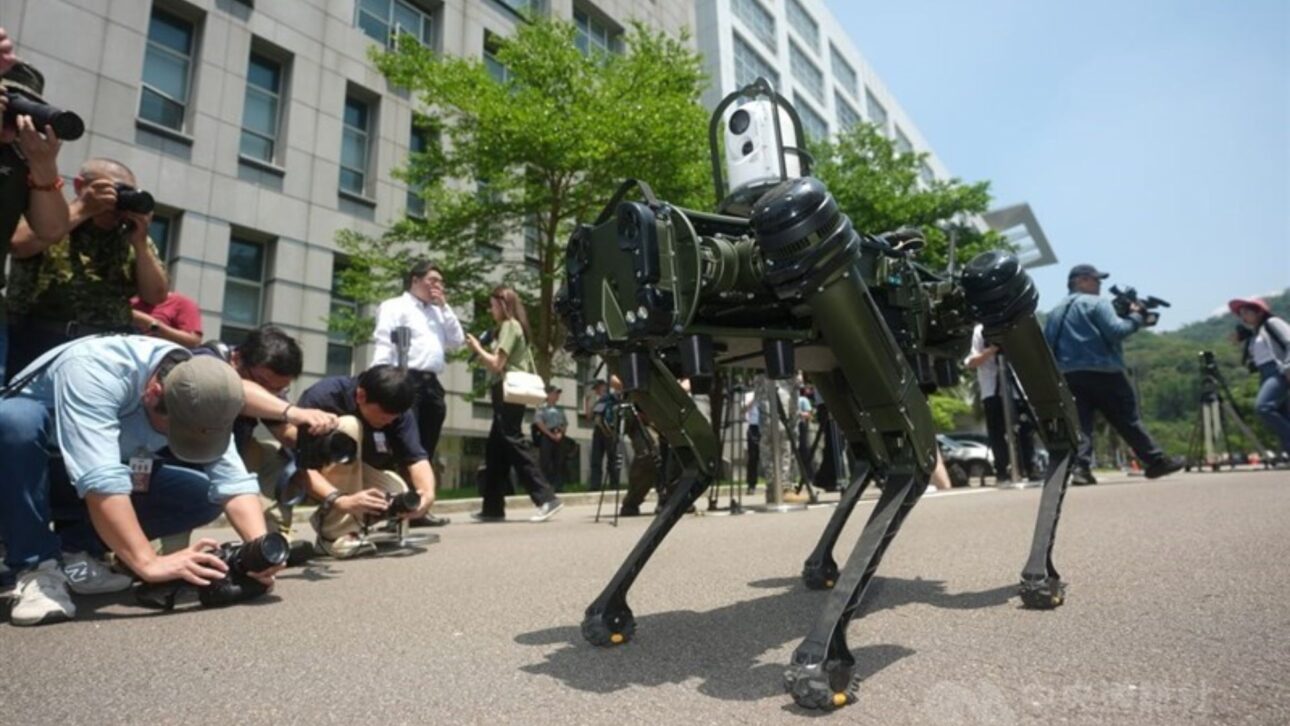
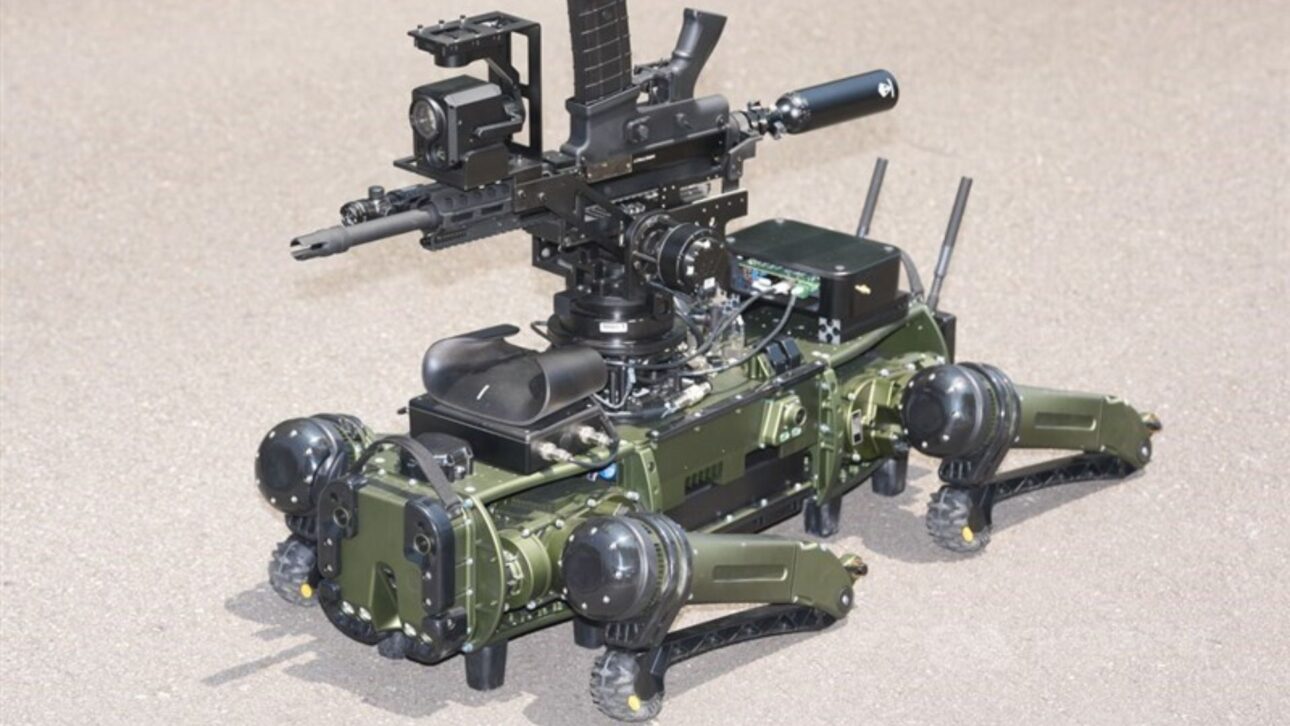
The second version is dedicated to reconnaissance, with an electro-optical system that searches, identifies, and tracks targets, sending the information to an intelligent command and control center. The third version is the most attention-grabbing: the fire support version, which carries a remotely controlled weapon station on its back.
According to the institute, the recognition systems could, in the future, integrate with unmanned ground vehicles and drones, forming a kind of three-dimensional combat network.
Why Taiwan Wants Robots to Patrol Islands in the South China Sea


The intended destination for the robotic dogs helps to understand the project. The idea is to use them on islands controlled by Taiwan in the disputed South China Sea, such as the groups that the Taiwanese call Nansha, the Spratly Islands, and Dongsha, the Pratas Islands.
These are remote and sparsely populated outposts, mainly guarded by the Coast Guard, where maintaining a constant human presence is difficult and risky.
Therefore, autonomous machines become attractive for patrol and inspection tasks. According to Jen Kuo-kuang, the marines believe there is an urgent need for this type of support on beaches and the coastline.
The move is part of a larger effort by Taiwan to modernize its armed forces and strengthen deterrence, at a time when, according to island authorities, Beijing has increased the presence of patrols and drones in the region, fueling fears of a future invasion.
The American Platform and the Non-Red Chain
A central point is the origin of the technology. The base of the robot dogs is the Vision 60, manufactured by Ghost Robotics, a major military supplier in the United States, on which the NCSIST mounted its own sensors and weapon systems.
According to the institute, opting for an already established platform accelerates development and helps maintain a reliable supply chain, without dependence on Chinese components.
This caution has a name: Jen Kuo-kuang spoke of building a “non-red” chain, meaning free of parts coming from China, in addition to local production capacity.
It is worth noting that Ghost Robotics, unlike competitors like Boston Dynamics, does not prohibit its quadrupeds from being armed, which explains why Ghost Robotics robots have been appearing in military programs around the world.
Chips, Asymmetric Warfare, and What Is Still Undecided

The economic backdrop is enormous. Taiwan is the largest manufacturer of semiconductor chips in the world, and a potential armed conflict would have economic consequences difficult to calculate for the entire global technology chain.
The robot dogs fit into the island’s asymmetric warfare strategy, which seeks to use emerging technologies to offset the size difference compared to China’s forces.
Even so, it is necessary to separate the announcement from what will actually happen.
The fire support version places these robots in a delicate zone, between a simple patrol tool and an autonomous weapon, a topic that generates ethical and international debate.
And for now, despite the declared interest of the military, no purchase or deployment has been confirmed, so the robot dogs remain in the phase of demonstrated prototypes.
Beijing, it is worth remembering, considers Taiwan part of its territory, which keeps the tension always on the horizon.
Armed robot dogs patrolling islands amid the fear of a Chinese invasion is the kind of scene that seems like fiction, but is already being tested.
Tell us in the comments if you see robot dogs as a smart defense or as a dangerous step towards autonomous weapons.