Portuguese
  Spanish


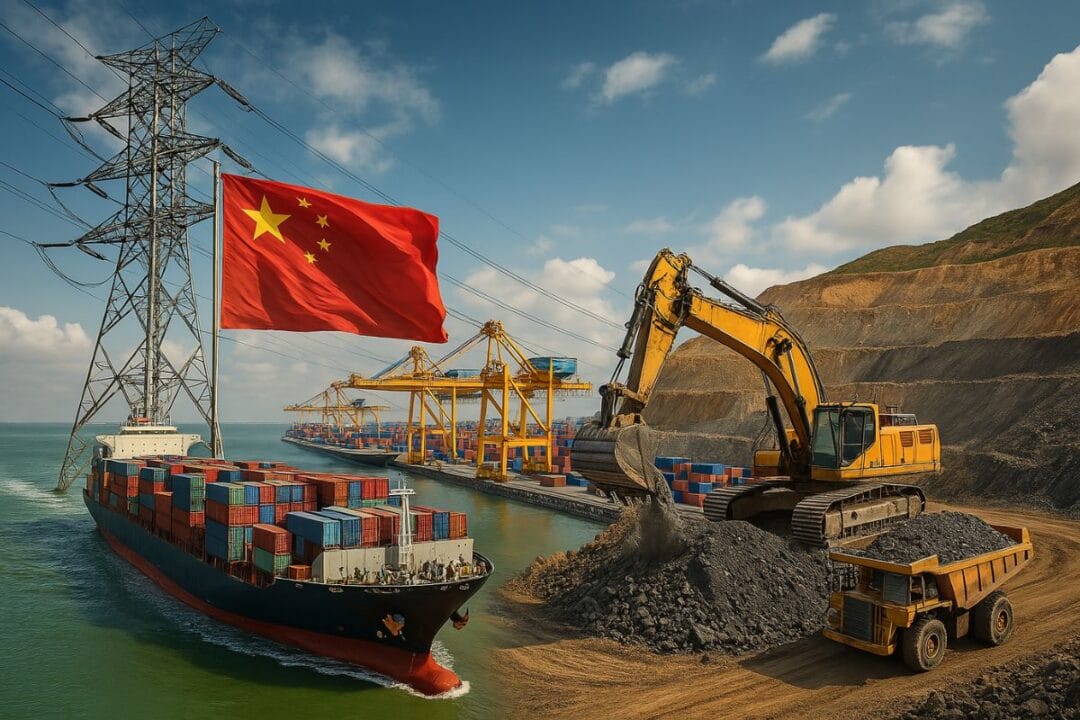

China’s Investments in the Country Have Already Surpassed US$ 28 Billion and Are Advancing in Vital Sectors Such as Energy, Logistics, and Mining, Even Without Formal Adherence to the Global Project
The New Silk Road is Passing Through Brazil, even without an official signature. Chinese companies are already operating power transmission lines, ports, railways, and mining companies. The movement is quiet, but it advances over strategic areas of the national economy, with billions of dollars in structural investments.
The global project of China, known as the Belt and Road Initiative (BRI), aims to create a network of economic influence through infrastructure, credit, and direct business presence. In Brazil, the effects of this plan are already concrete — and profound.
China Operates Infrastructure in Brazil, Even Without Formal Adherence to the New Silk Road
Although Brazil has not officially signed its entry into the New Silk Road, the reality on the ground already shows a practical adherence. According to data from the Perseu Abramo Foundation, between 2005 and 2017, US$ 28.9 billion in funding was released by institutions such as the China Development Bank and the Exim Bank for projects in Brazilian territory.
-
Family Quietly Transforms Old Sawmill into $700 Million Business, Opens 25 Stores in Two Years Across 22 Brazilian States

-
Couple Sold Their Home to Save Business, Now Run Platform Handling $180 Million Monthly and Managing Over 51 Million Listings
-
Brazil’s 2026 Tax Refund: Record 9.58 Million Filers in Largest Payout Ever, But a Key Detail on Priority Recipients Draws Nationwide Attention

-
Itaú Alters Hybrid Work Model, Increasing Office Days from 2028, Prompting Employees to Adjust to New Routine




Among the main targets of these investments are:
- Power transmission lines operated by State Grid, which already serves more than 22 million Brazilians in the Southeast
- Railways and strategic logistics corridors for the flow of agribusiness
- Mining and electric power, with a growing presence in plants and export terminals
- Ports and maritime terminals in key regions such as the North and Northeast
These investments not only boost infrastructure but also place critical assets under the control of state or private Chinese companies, raising questions about sovereignty and strategic autonomy.
New Silk Road is Passing Through Brazil: Increasing and Discreet Economic Presence
The advance of the New Silk Road in Brazil occurs through the acquisition of assets and the direct entry of Chinese companies in fundamental sectors of the economy. This includes:
- Purchase of shares and stock control in energy and transportation companies
- Construction of infrastructure funded by Chinese banks, with counter commitments in operation contracts
- Partnerships with states and municipalities for long-term local operations
The Chinese ambassador in Brazil has already stated that formal adherence to the BRI “would bring more Chinese companies and further strengthen the strategic partnership”. In other words, what is missing is just a political formality — the economic movement is already underway.