






 Portuguese
  Spanish


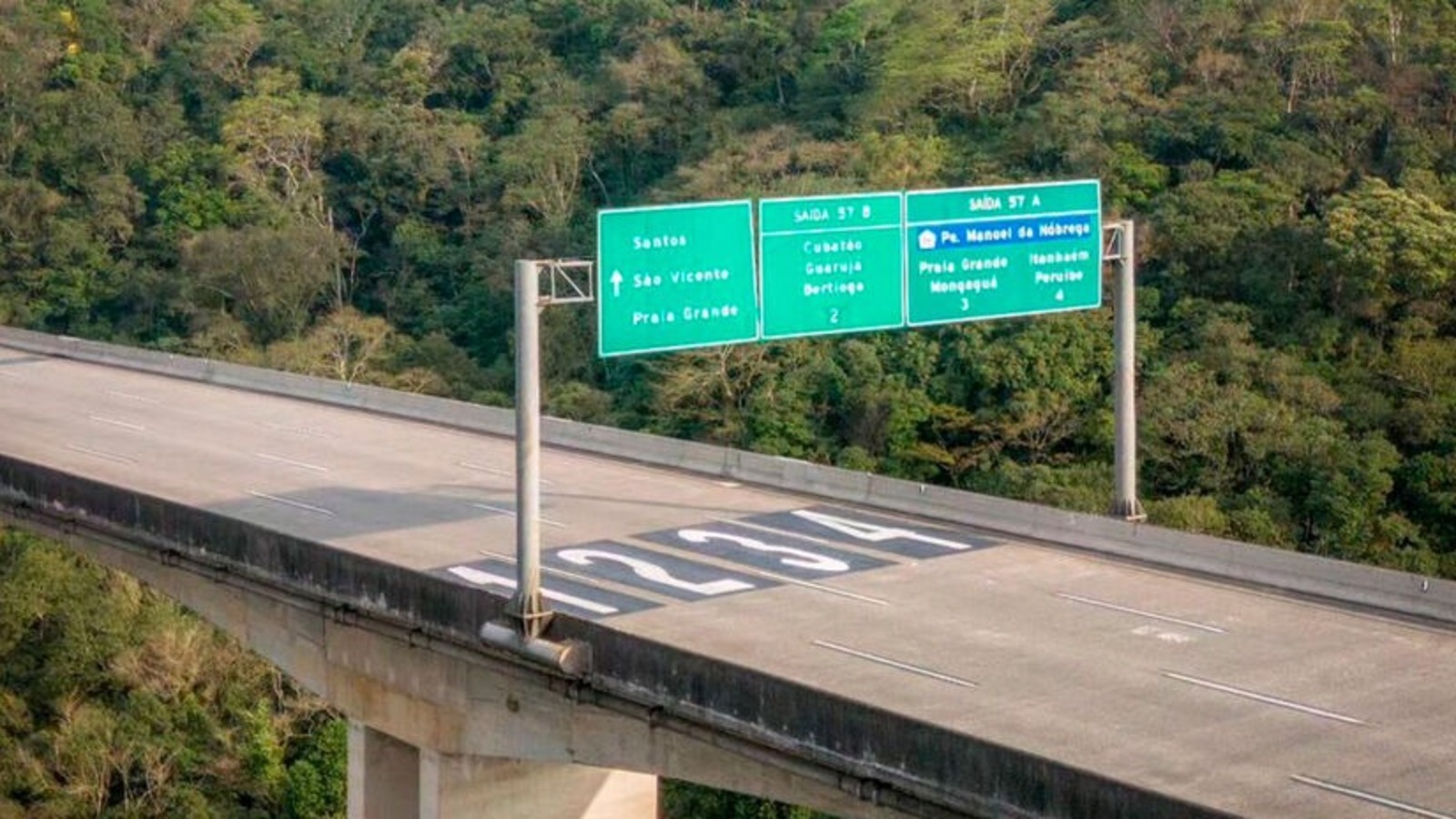


The Journey Along the Immigrants Highway Holds a Symbolic Moment That Goes Beyond the Road: The Iconic Green Sign of the Coastal Cities Marks the Arrival, Awakens Emotion, and Has Become a Collective Affectionate Memory
Traveling to the coast of São Paulo is one of the favorite programs for those living in the capital and metropolitan area. Whether in summer, on long holidays, or even on a regular weekend, the journey along the Immigrants Highway always carries expectation.
With enchanting beaches, lush nature, and a varied cuisine that ranges from fried fish in kiosks to sophisticated restaurants, Baixada Santista has established itself as a destination for generations.
But there is a special detail in this journey. A moment that represents the peak of excitement. The famous green sign with the names of the coastal cities.
-
Brazilian Airport to Receive $2.8 Million Investment, Completion Expected Within a Year

-
UN Warns of AI’s Environmental Impact and Calls for Greater Corporate Transparency

-
Former Atacadão Employee Turns Online Cake-Baking Lessons into a Confectionery Brand with Factory, Store, Delivery, and Nearly $400,000 in Revenue
-
Brazilian Startup Sells Nearly 9 Million Surprise Bags of Near-Expiry Food, Prevents Thousands of Tons of Waste, Aiming for $42 Million Revenue by 2026





The Sign That Marks the Arrival
Those who descend the Immigrants Highway, managed by the concessionaire Ecovias, are well aware of the scene.
Shortly after the final stretch of the mountain, when the road approaches the urban area, the big green sign appears.
It lists the main cities of Baixada Santista: Santos, São Vicente, Guarujá, Praia Grande, Cubatão, Bertioga, Mongaguá, Itanhaém, and Peruíbe.
In addition to the overhead signage, the asphalt displays numbered lanes, usually from 1 to 4, indicating to the driver where to go according to their route.
This moment is symbolic because it announces that the destination is near. Many even report smelling the sea in the air.
More Than Traffic, Emotion
For those facing hours of congestion on long holidays, the sign holds emotional value. It signifies the end of the long wait and the beginning of the fun.
On social media, there is no shortage of records of this moment. Photos, videos, and even comments celebrate the arrival at the sign as if it were an attraction in itself.
Some drivers say they feel immediate relief, while others speak of an almost automatic happiness. For many, the scene has become a landmark of affectionate memory.
The Importance of the Immigrants Highway
Inaugurated in 1974, the Immigrants Highway (SP-160) is now one of the main connections between São Paulo and the southern coast.
With a length of 58 kilometers, it became famous for its dual carriageways, viaducts, and tunnels. The descent, surrounded by Atlantic forest, is considered one of the most beautiful in the country.
On days of heavy traffic, the so-called descent operation comes into effect. The Anchieta-Imigrants system opens up more lanes towards the coast, seeking to facilitate the flow.
Even so, traffic jams are almost inevitable.
Therefore, when the green sign appears, drivers and passengers share the same sensation: the collective relief of knowing that the sea is right there, waiting.
With information from Diário do Litoral.








Realmente…..
Chegando na cabeça da serra, você já sente até o cheirinho da praia.
Só que com uma sensação…..
Você irá tomar umas 4 cervejas a menos, qdo estiver na areia.
Pois deixou $ 40,00 contos no pedágio…
Kkkkkkkk
🍺🍺🍺
Sensação de chegar em casa!
Verdade Dá aquele sentimento de :enfim,vou descansar!