Portuguese
  Spanish


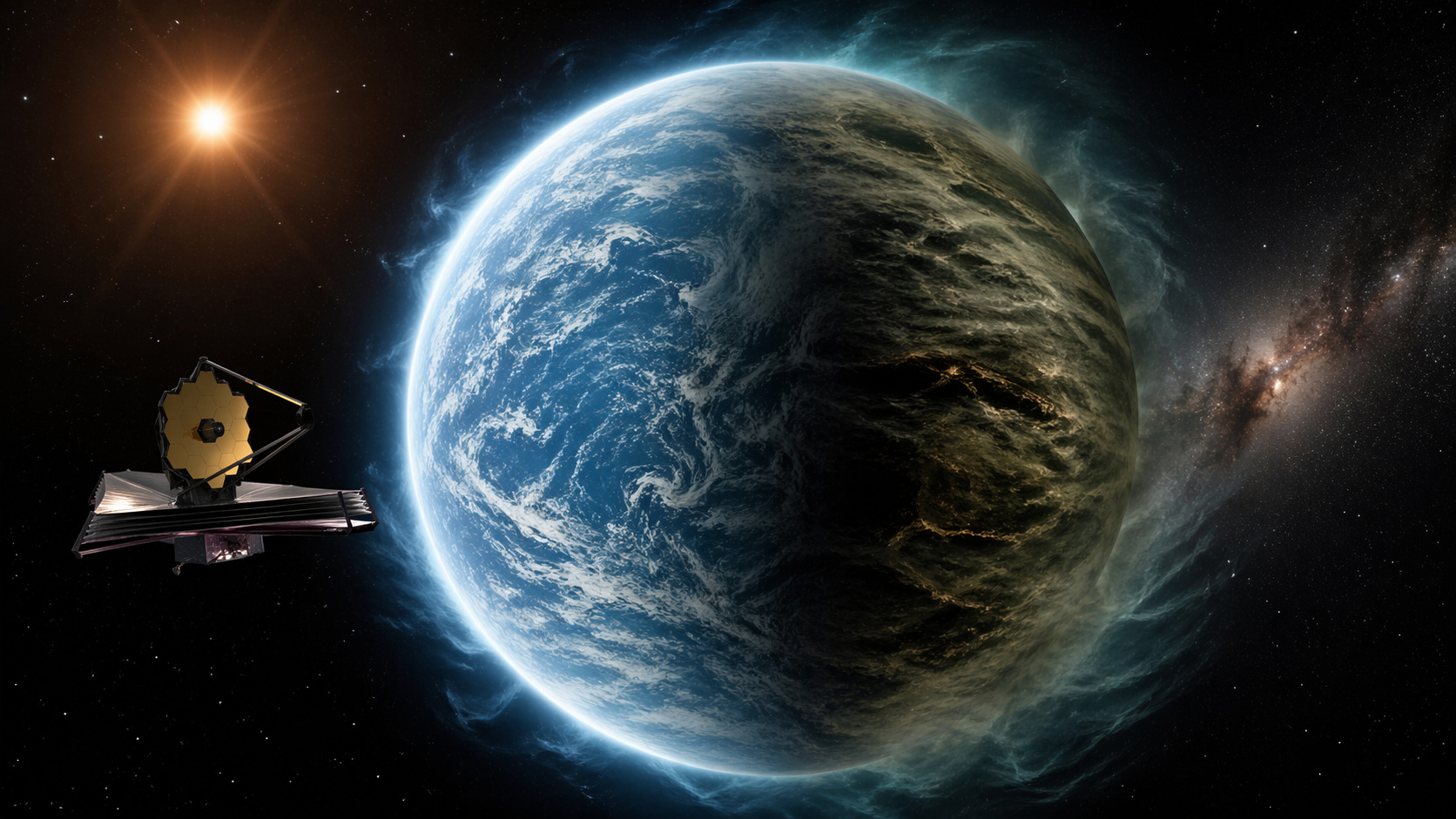

James Webb’s ability to detect these gases represents a significant advance, as it demonstrates that it is now possible to study the atmospheres of relatively small planets outside the Solar System.
The Hycean world hypothesis that places global oceans at the center of the scientific debate
One of the most discussed interpretations is that TOI-270 d could be a so-called Hycean world. This type of planet would be characterized by:
- An atmosphere rich in hydrogen
- A global ocean covering much of the surface
- Potentially stable temperatures beneath the atmosphere
If confirmed, TOI-270 d could represent a new type of habitable environment, completely different from Earth, but still capable of sustaining microbial life.
-
Six Helicopters to Drop 550 Tons of Poison on Island Near Antarctica to Eradicate Mice Threatening Albatrosses and 19 Seabird Species.

-
Russia Unveils Poseidon: A 20-Meter Nuclear Torpedo-Drone with 10,000 km Range, 185 km/h Speed, and 100-Ton Capacity Threatening Coastal Cities with Radioactive Waves
-
Brazilian Innovator Converts Old Car into Electric Vehicle Using Laptop Batteries and Forklift Motor, Achieves Nearly 90 km/h in Urban Settings

-
Samsung Unveils Smart Oven with Built-In Camera, AI Food Recognition, and Real-Time Monitoring via Smartphone.



This hypothesis gained traction because the combination of detected gases is compatible with theoretical models of this type of planet.
The other side of science: planet may be too hot for any liquid ocean
Despite the initial enthusiasm, other researchers advocate for a more conservative interpretation. According to these studies, TOI-270 d could be a hot planet with a thick atmosphere, where temperatures would be too high to allow the existence of liquid water.


In this scenario, the detected water would only be in the form of vapor, without the formation of oceans. This would turn the planet into a hostile environment, more akin to a hot and dense world than a habitable ocean.
This divergence shows how the same evidence can lead to completely different conclusions, depending on the models used.
Why the interpretation of data is still uncertain even with the most advanced telescope in the world
The James Webb represents the state of the art in astronomical observation, but still faces significant limitations.
The analysis of exoplanetary atmospheres depends on:
- Quality of spectral data
- Atmospheric models used
- Interference from the host star
Small variations in these factors can completely change the interpretation of the results. In the case of TOI-270 d, the complexity of the atmosphere and the distance involved make the problem even more challenging.
Even without a definitive answer, the study of TOI-270 d represents an important advance. It shows that it is already possible to:
- Detect multiple gases in exoplanet atmospheres
- Study complex chemical compositions
- Test hypotheses about habitability in non-Earth worlds

This type of analysis marks a transition in astronomy, moving from the simple discovery of planets to the detailed characterization of their environments.
The role of James Webb in the new era of astrobiology and what comes next
The James Webb was designed precisely to answer questions like this. In the coming years, the telescope will continue observing TOI-270 d and other similar planets, accumulating more data and refining analyses.
The trend is that new observations will reduce uncertainties and allow for distinguishing between scenarios like a global ocean or a hot and uninhabitable atmosphere. Additionally, future missions and even more advanced telescopes should complement these analyses.
What makes TOI-270 d one of the most important cases studied in the search for habitable worlds
TOI-270 d stands out because it combines several rare factors:
- Relatively close distance on an astronomical scale
- Detectable atmosphere
- Complex chemical composition
- Possibility of multiple interpretations
It represents exactly the type of planet that could redefine what we understand as a habitable environment. At the same time, it shows that this search is far from simple.
The case of TOI-270 d presents science with an unusual situation: a planet that could be extremely promising or completely inhospitable, depending on how the data is interpreted.
The same chemical signature that suggests a global ocean could also indicate a hot and hostile environment, creating one of the most interesting debates in recent astronomy.
The question that remains is straightforward and without a definitive answer: are we observing a new type of habitable world or just another planet that shows how little we still know about the universe.
The TOI-270 system as a whole had already attracted attention since its discovery, but it was with James Webb’s observations that it came to occupy a central position in modern astrobiology.
The discovery of methane, carbon dioxide, and possible signs of water in the atmosphere
Data obtained by James Webb showed clear signatures of:
- Methane (CH₄)
- Carbon dioxide (CO₂)
- Possible traces of water (H₂O)
The simultaneous presence of these gases is particularly relevant because it indicates a complex and active atmosphere.

This chemical set is often associated with processes that, on Earth, can be linked to both geological and biological phenomena, although this does not automatically mean the presence of life.
James Webb’s ability to detect these gases represents a significant advance, as it demonstrates that it is now possible to study the atmospheres of relatively small planets outside the Solar System.
The Hycean world hypothesis that places global oceans at the center of the scientific debate
One of the most discussed interpretations is that TOI-270 d could be a so-called Hycean world. This type of planet would be characterized by:
- An atmosphere rich in hydrogen
- A global ocean covering much of the surface
- Potentially stable temperatures beneath the atmosphere
If confirmed, TOI-270 d could represent a new type of habitable environment, completely different from Earth, but still capable of sustaining microbial life.
This hypothesis gained traction because the combination of detected gases is compatible with theoretical models of this type of planet.
The other side of science: planet may be too hot for any liquid ocean
Despite the initial enthusiasm, other researchers advocate for a more conservative interpretation. According to these studies, TOI-270 d could be a hot planet with a thick atmosphere, where temperatures would be too high to allow the existence of liquid water.
In this scenario, the detected water would only be in the form of vapor, without the formation of oceans. This would turn the planet into a hostile environment, more akin to a hot and dense world than a habitable ocean.
This divergence shows how the same evidence can lead to completely different conclusions, depending on the models used.
Why the interpretation of data is still uncertain even with the most advanced telescope in the world
The James Webb represents the state of the art in astronomical observation, but still faces significant limitations.
The analysis of exoplanetary atmospheres depends on:
- Quality of spectral data
- Atmospheric models used
- Interference from the host star
Small variations in these factors can completely change the interpretation of the results. In the case of TOI-270 d, the complexity of the atmosphere and the distance involved make the problem even more challenging.
Even without a definitive answer, the study of TOI-270 d represents an important advance. It shows that it is already possible to:
- Detect multiple gases in exoplanet atmospheres
- Study complex chemical compositions
- Test hypotheses about habitability in non-Earth worlds
This type of analysis marks a transition in astronomy, moving from the simple discovery of planets to the detailed characterization of their environments.
The role of James Webb in the new era of astrobiology and what comes next
The James Webb was designed precisely to answer questions like this. In the coming years, the telescope will continue observing TOI-270 d and other similar planets, accumulating more data and refining analyses.
The trend is that new observations will reduce uncertainties and allow for distinguishing between scenarios like a global ocean or a hot and uninhabitable atmosphere. Additionally, future missions and even more advanced telescopes should complement these analyses.
What makes TOI-270 d one of the most important cases studied in the search for habitable worlds
TOI-270 d stands out because it combines several rare factors:
- Relatively close distance on an astronomical scale
- Detectable atmosphere
- Complex chemical composition
- Possibility of multiple interpretations
It represents exactly the type of planet that could redefine what we understand as a habitable environment. At the same time, it shows that this search is far from simple.
The case of TOI-270 d presents science with an unusual situation: a planet that could be extremely promising or completely inhospitable, depending on how the data is interpreted.
The same chemical signature that suggests a global ocean could also indicate a hot and hostile environment, creating one of the most interesting debates in recent astronomy.
The question that remains is straightforward and without a definitive answer: are we observing a new type of habitable world or just another planet that shows how little we still know about the universe.
The TOI-270 system as a whole had already attracted attention since its discovery, but it was with James Webb’s observations that it came to occupy a central position in modern astrobiology.
The discovery of methane, carbon dioxide, and possible signs of water in the atmosphere
Data obtained by James Webb showed clear signatures of:
- Methane (CH₄)
- Carbon dioxide (CO₂)
- Possible traces of water (H₂O)
The simultaneous presence of these gases is particularly relevant because it indicates a complex and active atmosphere.
This chemical set is often associated with processes that, on Earth, can be linked to both geological and biological phenomena, although this does not automatically mean the presence of life.
James Webb’s ability to detect these gases represents a significant advance, as it demonstrates that it is now possible to study the atmospheres of relatively small planets outside the Solar System.
The Hycean world hypothesis that places global oceans at the center of the scientific debate
One of the most discussed interpretations is that TOI-270 d could be a so-called Hycean world. This type of planet would be characterized by:
- An atmosphere rich in hydrogen
- A global ocean covering much of the surface
- Potentially stable temperatures beneath the atmosphere
If confirmed, TOI-270 d could represent a new type of habitable environment, completely different from Earth, but still capable of sustaining microbial life.
This hypothesis gained traction because the combination of detected gases is compatible with theoretical models of this type of planet.
The other side of science: planet may be too hot for any liquid ocean
Despite the initial enthusiasm, other researchers advocate for a more conservative interpretation. According to these studies, TOI-270 d could be a hot planet with a thick atmosphere, where temperatures would be too high to allow the existence of liquid water.
In this scenario, the detected water would only be in the form of vapor, without the formation of oceans. This would turn the planet into a hostile environment, more akin to a hot and dense world than a habitable ocean.
This divergence shows how the same evidence can lead to completely different conclusions, depending on the models used.
Why the interpretation of data is still uncertain even with the most advanced telescope in the world
The James Webb represents the state of the art in astronomical observation, but still faces significant limitations.
The analysis of exoplanetary atmospheres depends on:
- Quality of spectral data
- Atmospheric models used
- Interference from the host star
Small variations in these factors can completely change the interpretation of the results. In the case of TOI-270 d, the complexity of the atmosphere and the distance involved make the problem even more challenging.
Even without a definitive answer, the study of TOI-270 d represents an important advance. It shows that it is already possible to:
- Detect multiple gases in exoplanet atmospheres
- Study complex chemical compositions
- Test hypotheses about habitability in non-Earth worlds
This type of analysis marks a transition in astronomy, moving from the simple discovery of planets to the detailed characterization of their environments.
The role of James Webb in the new era of astrobiology and what comes next
The James Webb was designed precisely to answer questions like this. In the coming years, the telescope will continue observing TOI-270 d and other similar planets, accumulating more data and refining analyses.
The trend is that new observations will reduce uncertainties and allow for distinguishing between scenarios like a global ocean or a hot and uninhabitable atmosphere. Additionally, future missions and even more advanced telescopes should complement these analyses.
What makes TOI-270 d one of the most important cases studied in the search for habitable worlds
TOI-270 d stands out because it combines several rare factors:
- Relatively close distance on an astronomical scale
- Detectable atmosphere
- Complex chemical composition
- Possibility of multiple interpretations
It represents exactly the type of planet that could redefine what we understand as a habitable environment. At the same time, it shows that this search is far from simple.
The case of TOI-270 d presents science with an unusual situation: a planet that could be extremely promising or completely inhospitable, depending on how the data is interpreted.
The same chemical signature that suggests a global ocean could also indicate a hot and hostile environment, creating one of the most interesting debates in recent astronomy.
The question that remains is straightforward and without a definitive answer: are we observing a new type of habitable world or just another planet that shows how little we still know about the universe.
James Webb detects gases on TOI-270 d and raises critical doubt: planet could have a global ocean or be uninhabitable.
In 2024, researchers from the University of Cambridge and other international institutions analyzed data from the James Webb Space Telescope on the exoplanet TOI-270 d, located about 73 light-years from Earth, and published results in the scientific journal Astronomy & Astrophysics. The study revealed the presence of methane and carbon dioxide in the atmosphere, along with consistent indications of water, placing the planet among the most intriguing candidates ever observed in the search for worlds with the potential to harbor oceans.
The most impactful data, however, was not just the detection of these gases, but the fact that the same evidence allows for completely different interpretations, creating a real division among scientists about the planet’s nature. While some argue that TOI-270 d could be an ocean world, others warn that it might be too hot to sustain any known form of life.
What is TOI-270 d and why has it become one of the most studied planets of the moment
TOI-270 d belongs to an intermediate class known as sub-Neptune, larger than Earth but smaller than gas giants like Neptune.
It orbits a red dwarf star and has characteristics that place it in a zone considered interesting for habitability studies. Its size and mass indicate that it may have a significant atmosphere, unlike smaller rocky planets.

This type of planet is considered one of the most promising for studies with James Webb, because its thicker atmosphere facilitates the detection of chemical molecules.
The TOI-270 system as a whole had already attracted attention since its discovery, but it was with James Webb’s observations that it came to occupy a central position in modern astrobiology.
The discovery of methane, carbon dioxide, and possible signs of water in the atmosphere
Data obtained by James Webb showed clear signatures of:
- Methane (CH₄)
- Carbon dioxide (CO₂)
- Possible traces of water (H₂O)
The simultaneous presence of these gases is particularly relevant because it indicates a complex and active atmosphere.
This chemical set is often associated with processes that, on Earth, can be linked to both geological and biological phenomena, although this does not automatically mean the presence of life.
James Webb’s ability to detect these gases represents a significant advance, as it demonstrates that it is now possible to study the atmospheres of relatively small planets outside the Solar System.
The Hycean world hypothesis that places global oceans at the center of the scientific debate
One of the most discussed interpretations is that TOI-270 d could be a so-called Hycean world. This type of planet would be characterized by:
- An atmosphere rich in hydrogen
- A global ocean covering much of the surface
- Potentially stable temperatures beneath the atmosphere
If confirmed, TOI-270 d could represent a new type of habitable environment, completely different from Earth, but still capable of sustaining microbial life.
This hypothesis gained traction because the combination of detected gases is compatible with theoretical models of this type of planet.
The other side of science: planet may be too hot for any liquid ocean
Despite the initial enthusiasm, other researchers advocate for a more conservative interpretation. According to these studies, TOI-270 d could be a hot planet with a thick atmosphere, where temperatures would be too high to allow the existence of liquid water.
In this scenario, the detected water would only be in the form of vapor, without the formation of oceans. This would turn the planet into a hostile environment, more akin to a hot and dense world than a habitable ocean.
This divergence shows how the same evidence can lead to completely different conclusions, depending on the models used.
Why the interpretation of data is still uncertain even with the most advanced telescope in the world
The James Webb represents the state of the art in astronomical observation, but still faces significant limitations.
The analysis of exoplanetary atmospheres depends on:
- Quality of spectral data
- Atmospheric models used
- Interference from the host star
Small variations in these factors can completely change the interpretation of the results. In the case of TOI-270 d, the complexity of the atmosphere and the distance involved make the problem even more challenging.
Even without a definitive answer, the study of TOI-270 d represents an important advance. It shows that it is already possible to:
- Detect multiple gases in exoplanet atmospheres
- Study complex chemical compositions
- Test hypotheses about habitability in non-Earth worlds
This type of analysis marks a transition in astronomy, moving from the simple discovery of planets to the detailed characterization of their environments.
The role of James Webb in the new era of astrobiology and what comes next
The James Webb was designed precisely to answer questions like this. In the coming years, the telescope will continue observing TOI-270 d and other similar planets, accumulating more data and refining analyses.
The trend is that new observations will reduce uncertainties and allow for distinguishing between scenarios like a global ocean or a hot and uninhabitable atmosphere. Additionally, future missions and even more advanced telescopes should complement these analyses.
What makes TOI-270 d one of the most important cases studied in the search for habitable worlds
TOI-270 d stands out because it combines several rare factors:
- Relatively close distance on an astronomical scale
- Detectable atmosphere
- Complex chemical composition
- Possibility of multiple interpretations
It represents exactly the type of planet that could redefine what we understand as a habitable environment. At the same time, it shows that this search is far from simple.
The case of TOI-270 d presents science with an unusual situation: a planet that could be extremely promising or completely inhospitable, depending on how the data is interpreted.
The same chemical signature that suggests a global ocean could also indicate a hot and hostile environment, creating one of the most interesting debates in recent astronomy.
The question that remains is straightforward and without a definitive answer: are we observing a new type of habitable world or just another planet that shows how little we still know about the universe.