Portuguese
  Spanish


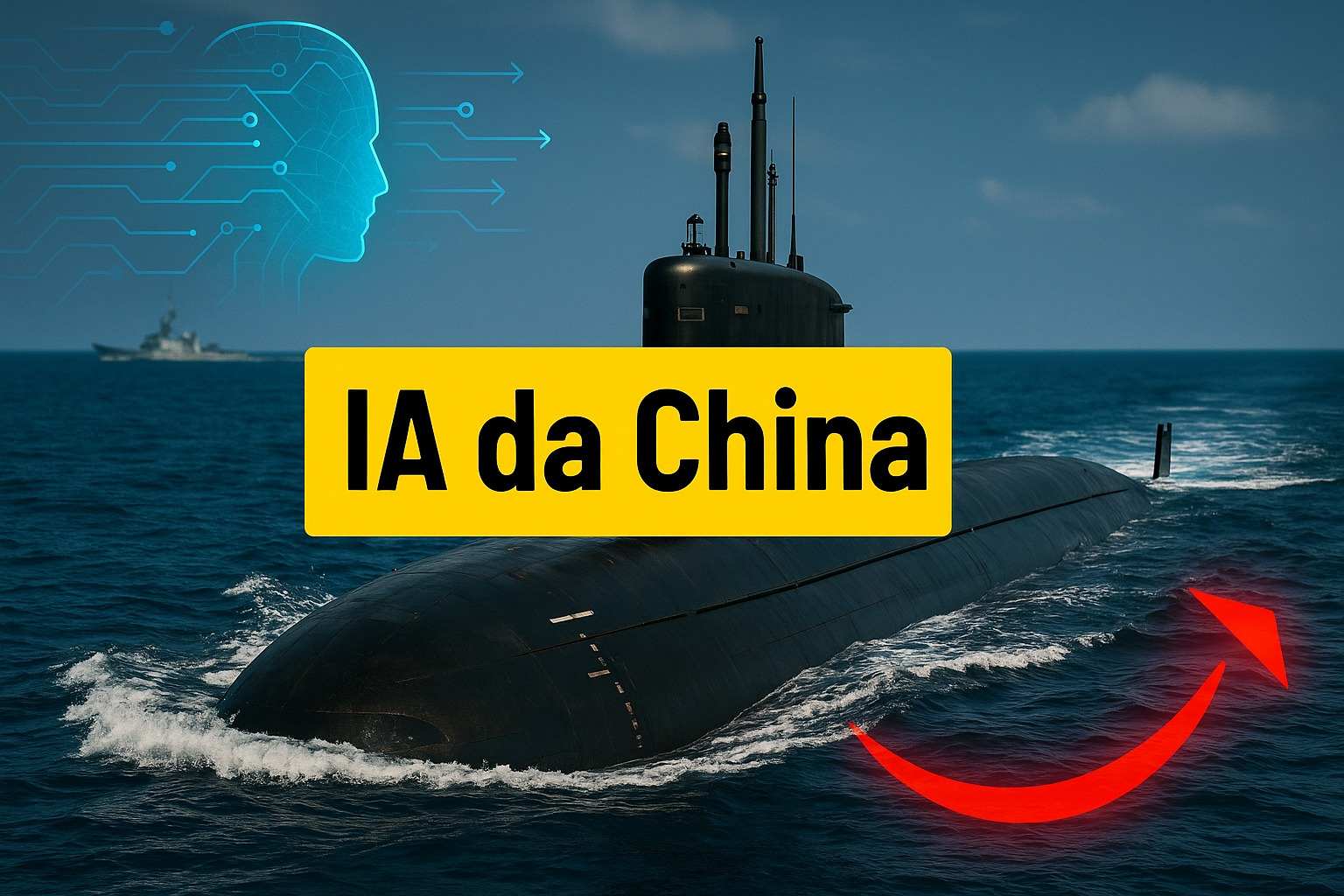


Revised Study Describes AI-Based ASW System That Locates Submarines Even During Evasive Maneuvers and Drastically Reduces the Chance of Escape.
A Chinese study, published in August in the journal Electronics Optics & Control, with peer review, presents an AI-based ASW anti-submarine system.
The research, led by Meng Hao from the China Helicopter Research and Development Institute, describes the detection and tracking of silent submarines with a high success rate.
AI Anti-Submarine and Acting as “Commander” at Sea
The system operates in an integrated manner, combining data from sonar buoys, underwater sensors, radar, and oceanographic variables such as temperature and salinity to create a real-time situational picture. This approach aims to guide searches, position sensors, and react to evasive maneuvers.
-
The Trap of Modern Technology: How Screen Overload and Digital Connections Can Impact Your Mental Health and Well-being

-
Wyoming Couple Grows Tropical Fruits Year-Round in -40°C Using Geothermal Greenhouse, Demonstrating Earth’s Heat Can Produce Oranges and Lemons in Snow Without Traditional Heating

-
Ship Returns from Brazilian Coast with Thirty Newly Discovered Life Forms
-
Nigerian Professor Invents Electricity-Free Refrigerator Using Clay Pots and Wet Sand, Extending Shelf Life of Vegetables to 27 Days; 7,000 Units Distributed in Energy-Deprived Villages



According to the study, the probability of a submarine escaping can be reduced to 5%, equivalent to one in every 20 cases.
In computational simulations, location and tracking rates of nearly 95% were reported, even in the presence of decoys and drones employed to confuse the search.
The AI anti-submarine system reportedly maintained pursuit under different adversarial tactics, preserving contact with the target.
Decisions are dynamically adjusted when there are zigzags, noise silencing, or deployment of decoys, as reported by the South China Morning Post.
Architecture of the AI-Based ASW System
The solution is structured in three layers: perception, decision-making, and human-machine interaction.
In the perception stage, data from sonar, radar, magnetic anomaly detectors, and oceanographic sensors are fused, considering background noise, temperature, and salinity to form a real-time underwater panorama.
In the decision-making stage, search and tracking strategies are optimized in light of changes in the environment and the behavior of the target.
The human-machine interface provides the operator with supervision and control, maintaining the operational consistency of the AI-based ASW system.
Submarines and Strategic Role
Submarines are considered central components of naval strategy due to their stealth and long-range strike capabilities, including nuclear armament.
By mid-2025, open sources indicated around 70 nuclear-powered submarines in operation by the United States Navy.
The same fleet is cited as a deterrent against the expansion of the People’s Liberation Army Navy.
Submarine platforms can mask signatures in the ocean’s background noise and employ advanced drones to disperse adversarial tracking efforts.
Interfaces with LLMs and Network Expansion
The research team developed interfaces supported by large language models to assist operators in managing multiple AI agents.
Natural language recommendations synthesize sensor data and algorithmic strategies, reducing cognitive load in high-complexity missions.
Future iterations are described with integration to aerial drones, surface ships, and unmanned underwater vehicles, forming a three-dimensional hunting mesh.
In this configuration, the AI anti-submarine system would be employed as the coordinating core of a distributed surveillance and engagement network.
In technical summary, the study reports an overall performance close to 95% for detection and tracking, associated with an estimated escape rate of 5%.
The modular design of the AI-based ASW system is presented as a foundation for continuous operations in contested and variable environments.